
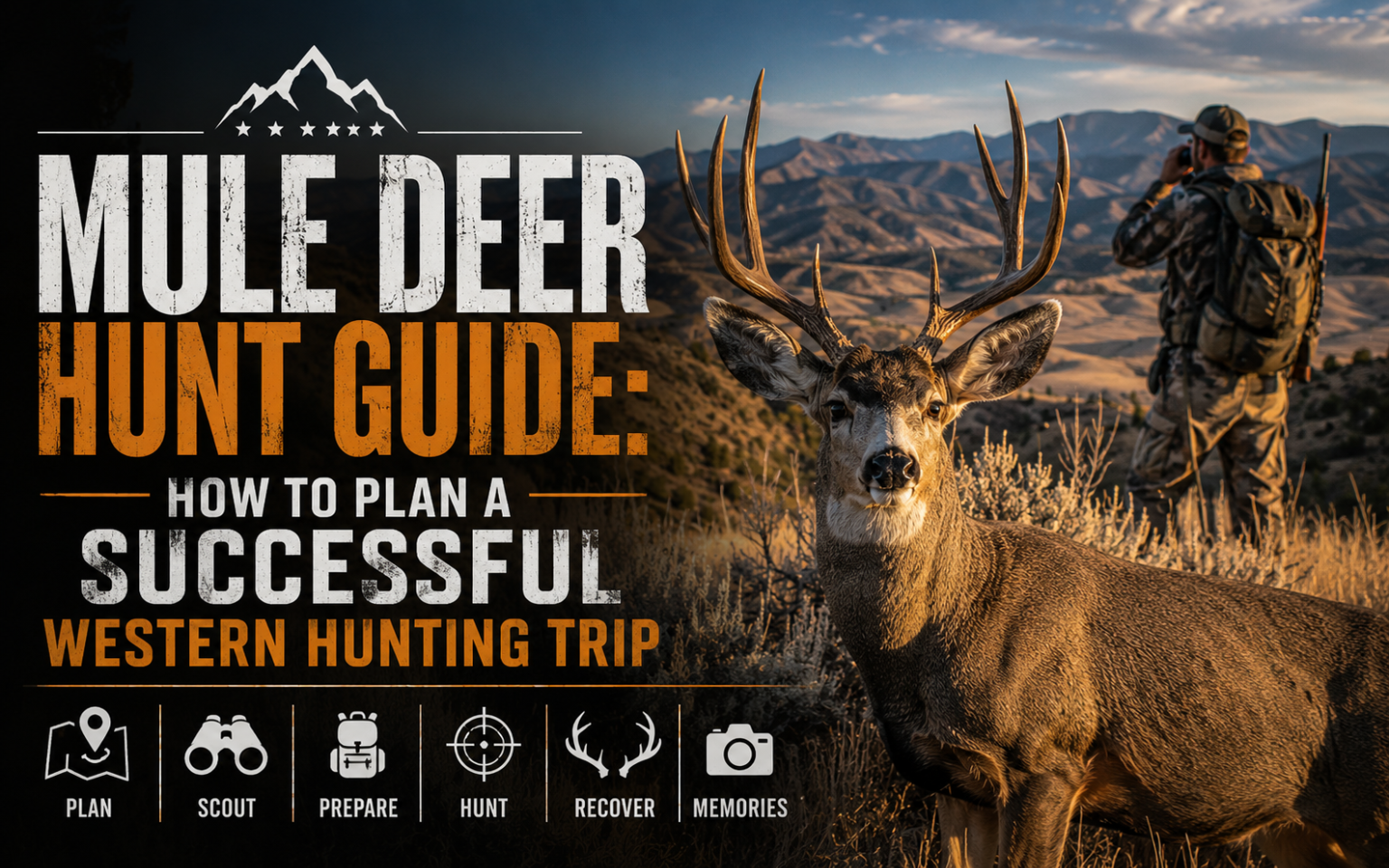
There’s a reason so many hunters consider a mule deer hunt the ultimate Western hunting experience. From the wide-open sagebrush country of Wyoming to the high-altitude basins of Colorado, chasing mule deer means covering big country, glassing for hours, and testing your skills against one of North America’s most iconic big game animals. If you’re planning your first trip or looking to improve your odds this season, here’s everything you need to know.
Why Mule Deer Hunting Is Different From Whitetail
Unlike whitetail deer, which thrive in thick cover and rely on stealth, mule deer live in open, rugged terrain, think steep canyons, high desert, and alpine basins. This means mule deer hunting demands a different strategy entirely: long-range glassing, careful stalking across open ground, and a willingness to cover serious mileage on foot. It’s this combination of physical challenge and big, beautiful country that makes mule deer hunts so rewarding for hunters willing to put in the work.
How to Hunt Mule Deer: Core Strategy
If you’re wondering how to hunt mule deer successfully, the process usually comes down to four steps:
1. Glass First, Move Second
Mule deer are typically spotted from a distance before a stalk ever begins. Set up with quality binoculars or a spotting scope on high vantage points early in the morning and late in the evening, when deer move between bedding and feeding areas.
2. Understand the Terrain
Mule deer favor a mix of open slopes for feeding and timbered or brushy areas for bedding. Learning to “read” this terrain is critical to figuring out where to hunt mule deer effectively in any given unit.
3. Plan Your Stalk Carefully
Once you’ve located a buck, use terrain features, ridgelines, draws, and vegetation to close the distance without being seen. Wind direction is just as important here as it is in whitetail hunting.
4. Be Patient with Shot Placement
Mule deer are often taken at longer ranges than whitetail. Practice your shooting at distance well before the season, and never take a shot you haven’t practiced.
DIY Mule Deer Hunts: What You Need to Know
A growing number of hunters are pursuing do-it-yourself mule deer hunts rather than booking fully guided trips, and for good reason, DIY hunts offer more flexibility and a lower cost of entry. If you’re considering this route:
- Research your unit thoroughly using state game and fish resources, OnX maps, and hunter forums.
- Apply early for draw tags, since many of the best mule deer units require years of preference points.
- Scout in person if possible, or lean heavily on satellite imagery and elevation data if scouting remotely.
- Budget extra time — DIY hunts almost always take longer than guided hunts to locate and close in on a mature buck.
Top Destinations for Mule Deer Hunting
Colorado
Mule deer hunting in Colorado remains one of the most popular options in the West, thanks to diverse terrain and accessible public land. Colorado also offers strong opportunities for hunters chasing both mule deer and elk in the same trip. Many hunters combine their mule deer tag with elk season in Colorado for a longer, more productive trip. Keep an eye on leftover Colorado tags each year, along with updated Colorado leftover tags lists, since unsold tags can open up excellent last-minute opportunities in specific units. A current CO game unit map is essential for understanding boundaries and picking the right area for your hunt style.
Wyoming
Hunters often ask where the best mule deer hunting in Wyoming is, and the answer usually points to the state’s western regions, where high desert basins and mountain foothills hold strong mule deer populations and generous public land access.
Texas
While mule deer aren’t as widespread in Texas as whitetail, Texas mule deer hunts are available in the Trans-Pecos region, offering a unique high-desert hunting experience for hunters looking to diversify their trophy room.
Planning Around Season Dates and Tags
Mule deer seasons vary significantly by state and unit, so timing matters. In Colorado specifically, many hunters plan their trip around the Colorado 3rd rifle season, which typically falls during the peak of the rut when bucks are most active during daylight hours. Because tag numbers are limited in many top units, checking Colorado leftover tags 2024-style lists (updated annually) can be one of the smartest ways to secure a tag in a quality unit without years of accumulated preference points.
Essential Gear for a Mule Deer Hunt
- Quality glass — a good spotting scope and binoculars are more important than almost any other piece of gear
- A flat-shooting rifle capable of accurate, ethical shots at extended range
- Boots built for mountain terrain and multiple days of hiking
- Layered clothing for temperature swings common in high-altitude hunting
- A reliable GPS or mapping app with unit boundaries and public land overlays
Tips to Improve Your Success Rate
- Apply for preference points early if you’re targeting a premium unit.
- Scout using satellite and elevation tools if an in-person visit isn’t possible before the season.
- Hunt the transition zones between bedding and feeding areas during the first and last hour of daylight.
- Stay mobile — mule deer country rewards hunters willing to cover ground and adjust their plan based on what they’re seeing.
Ready to Plan Your Mule Deer Hunt?
Whether you’re chasing a DIY public land hunt or looking for a fully guided trip in one of the West’s top units, Hunt Nation connects hunters with trusted outfitters, current unit information, and experienced guides across Colorado, Wyoming, and beyond.
Reach out to Hunt Nation today to get matched with the right mule deer hunting package, learn more about tag availability and leftover tag opportunities, and start planning a trip built around your budget and experience level.
👉 Visit Hunt Nation now to book your mule deer hunt and make this season your best one yet.