

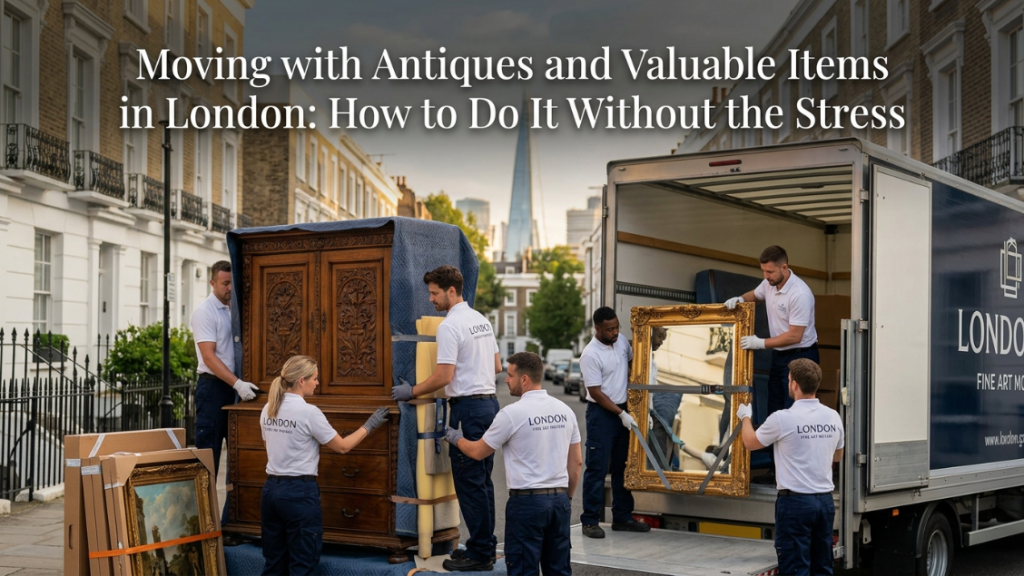
Antiques and high-value possessions travel around London far more than you’d expect. From selling off old Bloomsbury townhouses, moving collectors out of Notting Hill and into the countryside, dispersing an estate amongst a number of new locations – it occurs all the time, and rarely as easy as wrapping everything up in a sheet of bubble-wrap and hoping for the best.
The difference when it comes to high-value items is immediately obvious. A run-of-the-mill item of flat-pack furniture gets lost or broken during a relocation? An inconvenience, yes, but something easily replaceable. But consider a vintage writing desk, a work of art, a set of antique vases, or an heirloom which carries no value that’s quantifiable? A world away from what could have been the case.
So here’s what you really need to consider should you find yourself moving antiques in London.
The First Thing to Do: Know What You’ve Got
Before anything is packed up, moved around, or even priced out, you need to have a clear idea of what it is that you’re working with. This includes not only an understanding of whether or not something is valuable or fragile but also whether or not it has certain sensitivities related to temperature and humidity as well as having sentimental value that is more than its cost.
For example, antiques like furniture are something you have to know about before the moving process begins. This may mean understanding not just the value of the item but also things like what materials it is made of. An antique mahogany sideboard from the 1800s will likely have different handling needs compared to one that has been replicated.
The form of art makes a difference when moving. Oil paintings, watercolors, glass prints, sculpture, each have their own issues when moving them safely, and there are particular precautions to be taken for each form. One wouldn’t take a watercolor that’s been passed down through many years in one’s family and toss it into a box or paper tube to move it.
It is better to be sure of the worth and vulnerability of particular pieces of art by having an appraiser look at them before the move.
Cataloguing Before You Pack
A step that is usually skipped but shouldn’t be: document everything prior to moving it. Take detailed photos of your valuables, paying special attention to the defects of each item and noting their existence on paper. Document the date when each photo was taken. It requires time but gives evidence of the initial condition of the items that will help you should they suffer from accidental damage during the move.
The process of creating an inventory of a sizable collection of valuables, including antique furniture, works of art, silverware, or whatever else, is certainly worth doing. Whether you choose to do this by means of a spreadsheet, an app, or simply by taking all the photos and keeping them in a file folder, the choice of format does not matter at all.
Packing: Where Most of the Risk Lives
Most damage sustained by valuable possessions is not incurred in the course of moving the van but rather while the goods are being packed and unpacked because at that stage they have to be handled multiple times – and quite quickly, too. That’s when corners are cut off, surfaces scratched, and fragile parts, which had been safely stored for decades in a cabinet, fail to make it through the move.
Packing antique and valuable items should always include proper packing materials and here lies an essential distinction. The usual bubble wrap is fine for a lot of possessions, but when dealing with antique objects, the bubble material may create scratches because of abrasion and possibly adhere to the surface in hot weather. Antique items require acid-free tissue paper especially those with a patina and gilt surface.
Custom crating is the best way to handle the truly priceless or highly delicate objects. A custom-made wooden crate designed to fit an object perfectly is something that cannot be replicated by bubble wrap alone. While it does come at a cost, there are some things that require a certain level of care to keep them safe.
Blankets for furniture, strapping, and the proper vehicle configuration should also be considered. Objects should be strapped tightly enough to prevent them from shifting around during transportation.
Choosing the Right People for the Job
It is at this point that many run into trouble. All the removals companies operating in London may not have experience in handling antiques and valuable objects. The significance of having experienced movers can be well appreciated when we take into consideration the fact that handling these items needs to be done slowly and with utmost care.
When you’re getting quotes, be specific about what you’re moving. Don’t just say “some antiques”, describe the pieces, their approximate value, their fragility, and any particular concerns you have. A reliable removals company with experience in this area will ask the right questions back. They’ll want to know about access at both ends, whether items need disassembly, whether custom crating is required, and what insurance arrangements are needed.
When dealing with special and valuable goods as part of their removal services in London, Top Men Removals will always take care to treat each item individually and not assume that an antique vase is just like another box full of books.
The Insurance Conversation
This is something that has to take place before the move takes place. There is a cap placed on standard goods-in-transit insurance, and it is possible that this limit will be lower than the amount of money that you are moving. High-end items such as expensive antiques, works of art, or an entire collection needs to be insured properly.
Find out what the removal company insures and how much they insure things to; find out the claim procedures as well. Write down the information and compare it to your home contents insurance, as your policy could contain some form of coverage for items that you have transported. You might also find out that you can extend your existing insurance coverage.
For very rare and costly items, there is always art and antique insurance that you can purchase. A London removals firm that transports a lot of valuable items should be able to tell you all about this option.
On the Day: What to Expect and How to Stay in Control
Move day with antiques and valuables tends to go at a slower pace than a standard move, and that’s appropriate. Rushing is where mistakes happen. A good removal team will take the time to wrap, protect, and load each item properly rather than working at the kind of speed that’s fine for boxes and standard furniture but not for irreplaceable pieces.
Be around if you can. Not hovering frantically, as this is never productive, but around just in case. Should any doubts arise as to how to proceed, or something unforeseen happen (unexpectedly heavy goods, an object appearing more delicate upon close inspection, a narrower doorway than planned), you will want to be there to make quick decisions.
Take one final walk through each room prior to the van departing from your home. Make sure that nothing has been missed and no damage has been incurred along the way. Upon arrival at your destination, do the same thing. Inspect each piece as it comes off the van and goes into its place within your new property. Take note if anything is marked differently or damaged in the slightest.
Moving antiques and valuables isn’t something to approach casually, but it doesn’t have to be an ordeal either. With the right preparation, the right company, and the right level of care throughout, these moves go smoothly the vast majority of the time. The pieces that have been in a family for generations, or collected over years, or simply chosen with real care, they desereve to arrive at the next place in exactly the condition they left the last one.
If you’re planning a move that involves antiques or items you particularly care about, Top Men Removals are happy to talk through what that looks like in practice.