

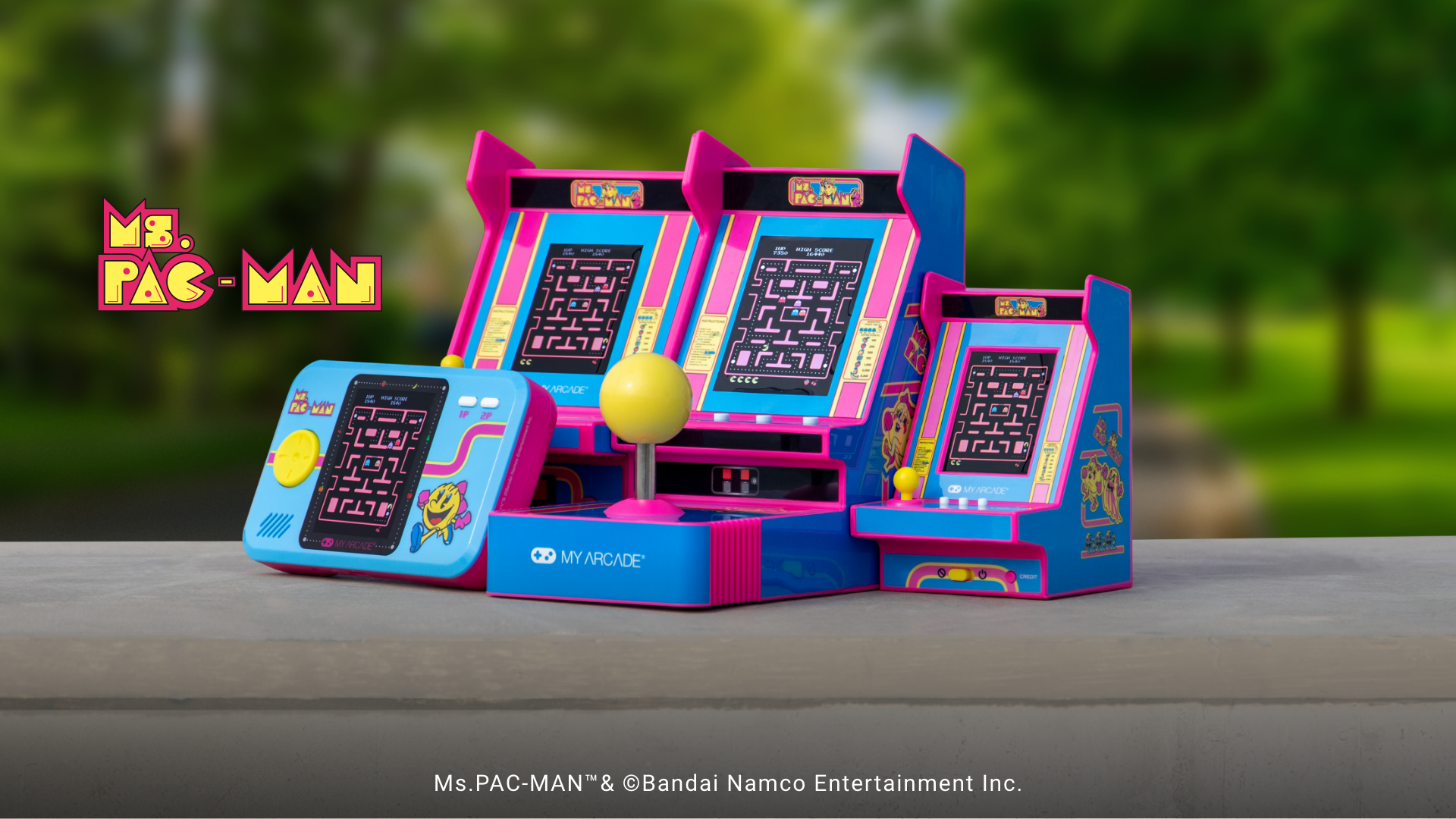
In the neon-lit arcades of the early 1980s, one game didn’t just become a hit—it became a revolution. It starred a yellow circle, just like the biggest game of the era, but this one was different. She had a red bow, a beauty mark, and an independence that would cement her as a gaming icon.
This is the story of Ms. Pac-Man, a game that wasn’t just a sequel. It was an unauthorized mod that became a blockbuster, a technical improvement that became the superior product, and a simple character design that became a quiet statement of female empowerment.
And today, it’s the story of a character who is slowly being erased. The Unauthorized Sequel That Saved the Arcade
The story of Ms. Pac-Man begins not with Namco, the Japanese creators of Pac-Man, but with a group of MIT students. These students had formed a company called General Computer Corporation (GCC) and had created a popular “enhancement kit” for Missile Command. Their next target was the biggest game on the planet: Pac-Man.
They found that Pac-Man‘s gameplay, while addictive, was predictable. The ghosts followed set patterns, allowing skilled players to master the game by simply memorizing routes. GCC’s mod, which they called “Crazy Otto,” shattered this. It introduced:
- Four different, alternating maze layouts.
- Bonus fruits that actively moved around the screen.
- New, more randomized ghost AI that made memorization impossible.
The game was faster, more challenging, and endlessly replayable.
Meanwhile, in America, Pac-Man‘s US distributor, Midway, was getting impatient. They had a global phenomenon on their hands and were desperate for a sequel, but Namco was taking its time. When Midway caught wind of GCC’s “Crazy Otto” kit, they didn’t send a cease-and-desist letter; they saw a golden opportunity.
Midway bought the rights to the kit from GCC and worked with them to re-skin it. “Crazy Otto” was transformed into a female Pac-Man. After cycling through names like “Miss Pac-Man” and “Mrs. Pac-Man,” they landed on something truly modern: Ms. Pac-Man. Released in 1982, she was an instant sensation, going on to sell 125,000 arcade cabinets and becoming one of the most successful American-made arcade games in history.A Game for “Lady Arcaders”
What made Ms. Pac-Man so significant wasn’t just its superior gameplay. It was who it was for.
The original Pac-Man had already done the unthinkable: it brought women into the arcades, which had previously been the near-exclusive domain of young men. Its non-violent “eat-or-be-eaten” gameplay and colorful characters had a broad appeal.
Midway knew this. A spokesman at the time, Stan Jarocki, explicitly stated that Ms. Pac-Man was a “thank you” to all the “lady arcaders” who had made the first game a success. But the masterstroke was in her name.
By calling her “Ms.” Pac-Man, they made a powerful, progressive statement. This was the era of Gloria Steinem and the rise of Ms. magazine. The title “Ms.” was a feminist identifier, a way for a woman to be defined by her own identity, not by her marital status.
Ms. Pac-Man wasn’t a damsel in distress waiting to be saved by Pac-Man (like Pauline in Donkey Kong). She was the star of her own, more difficult game. The game’s intermissions even told a story of her and Pac-Man meeting, chasing each other, and starting a family—a narrative, however simple, that was driven by her. In 2022, this legacy was officially recognized when Ms. Pac-Man was inducted into the World Video Game Hall of Fame. The Legal Limbo and the Rise of “Pac-Mom”
For decades, Ms. Pac-Man has been a beloved and permanent fixture in the Pac-Man family. But if you’ve bought a recent Pac-Man re-release, you may have noticed she’s missing.
This is where the game’s messy origins come home to roost.
Because Ms. Pac-Man began as an unauthorized mod, the rights to her character and the game have always been complicated. GCC, her original creators, retained a portion of the royalties. Decades later, in 2019, a retro-console company called AtGames acquired those royalty rights from GCC.
This sparked a complex legal dispute with Bandai Namco (the modern-day owners of the Pac-Man IP). While the lawsuit was eventually settled, the result is that Bandai Namco now seems to be avoiding the use of the Ms. Pac-Man character, likely to avoid paying royalties to AtGames.
The first sign of this change came in the Arcade Archives re-release of Pac-Land, where Ms. Pac-Man and her child were replaced by new, legally distinct characters.
The definitive change came with the 2022 remake, Pac-Man World Re-Pac. Ms. Pac-Man, a key character in the original, was gone. In her place stood “Pac-Mom,” a new character wearing a pink hat instead of a red bow.
Today, the first lady of gaming, the icon who proved women belonged in arcades and who became a bigger star than her male predecessor, is being systematically scrubbed from her own legacy due to a rights dispute.
But for anyone who ever dropped a quarter into that cabinet, she’s more than just a bow or a legal asset. She’s the true queen of the maze.