
Several miles southwest of downtown Houston, a building that once housed juvenile detainees now prepares them for careers.
The Opportunity Center, known locally as TOC, opened in 2022 inside a former residential detention facility that Harris County Juvenile Probation Department (HCJPD) had been seeking to repurpose. Today the campus operates through a partnership between HCJPD and WorkTexas. The county oversees an on-site charter school where students pursue GED instruction, while WorkTexas provides trades training and connects participants with a network of support services.
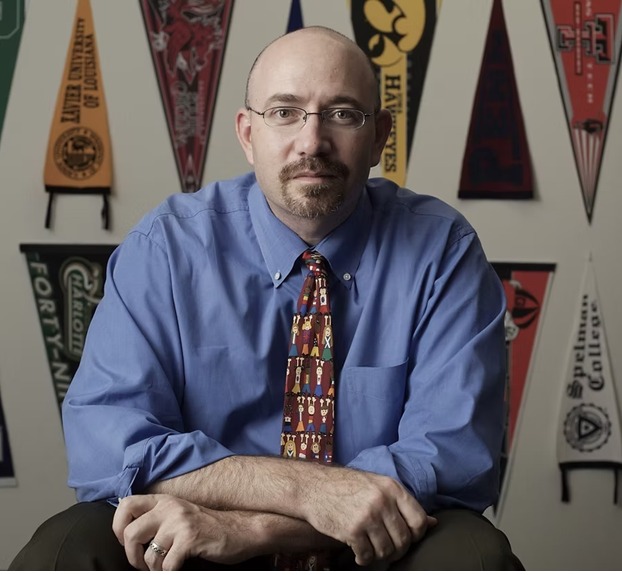
For Mike Feinberg, the WorkTexas co-founder, the center reflects a simple but powerful idea about what young people involved in the justice system often need most.
“Three letters more powerful to stop the cradle-to-prison pipeline than G-E-D,” Feinberg says, “would be J-O-B.”
Mike Feinberg and the Role of Trades in Juvenile Justice
Students who enroll at TOC are typically 16 or older and have been referred by probation officers after a judge ordered them back into school or into a GED program. Enrollment at the center is voluntary rather than mandatory, a feature Vanessa Ramirez believes plays an important role in accountability.
Ramirez, who co-founded WorkTexas with Feinberg and was the founding director at TOC, says the decision to participate must ultimately belong to the student.
“Choice is important in the decision so that there is baked-in accountability,” she explains.
The daily structure reflects that philosophy. Students split their time evenly between academics and job training. Half the day is dedicated to classroom instruction, while the other half focuses on vocational skills.
During their first week, students rotate through several trades before selecting one to study more deeply. After choosing a field, they spend about five weeks building practical skills before choosing a different trade or continuing with the trade they found that they enjoy. The typical stay at TOC lasts roughly one school year..
Ramirez has a personal connection to the program. She grew up in the same neighborhood where WorkTexas now operates and once attended KIPP when Feinberg founded the school network in its early years. In addition to her WorkTexas role, she founded Project Remix Ventures, a nonprofit also housed at TOC that offers training in entrepreneurship and music production for students interested in creative industries alongside the trades.
For Feinberg, the educational component alone is not enough. Students facing instability outside the classroom often struggle to absorb job training unless their basic needs are addressed.
“You are not going to do well in your job if you are homeless or hungry, or your car stops working,” Feinberg says. “We need all those different supports to exist.”
Those supports are embedded directly into the center. Houston Food Bank maintains a pantry on-site. Clothed by Faith provides professional clothing. Journey Through Life offers counseling and mental health services. Ramirez says the goal is to remove the crises that can derail progress before it begins.
Funding, Internships, and Early Results
Roughly three quarters of TOC’s funding comes from the Harris County Juvenile Probation Department. The remaining portion is covered through grants and philanthropic support.
Internship opportunities, which serve as the bridge between training and employment, are funded through the federal Workforce Innovation and Opportunity Act.
Among the center’s 124 graduates so far, about half have completed paid internships. Feinberg and Ramirez see those placements as critical. Internships give students a chance to practice the behaviors employers value most, including punctuality, communication, and teamwork.
WorkTexas operates another campus inside Gallery Furniture, the Houston store owned by Jim “Mattress Mack” McIngvale. That location combines an open-enrollment charter high school with evening courses for adults. Although the two campuses serve different groups, they follow the same model: hands-on training, close collaboration with employers, and long-term follow-up with graduates.
Mike Feinberg believes the structure could be reproduced in other cities without requiring WorkTexas to run every program itself.
When a housing company in Austin sought to train apartment maintenance technicians using a similar approach, local organizations assembled their own version of the model. A trade association, Goodwill Industries, and several apartment companies partnered to launch the first cohort in April 2025. Employers shaped the curriculum, a local organization provided space, and participating companies committed to giving graduates a genuine chance at employment.
“Every community has someone like a Mack who is a connector or local champion,” Feinberg says. “If a community wants to build something like this, the ingredients are already there.”