
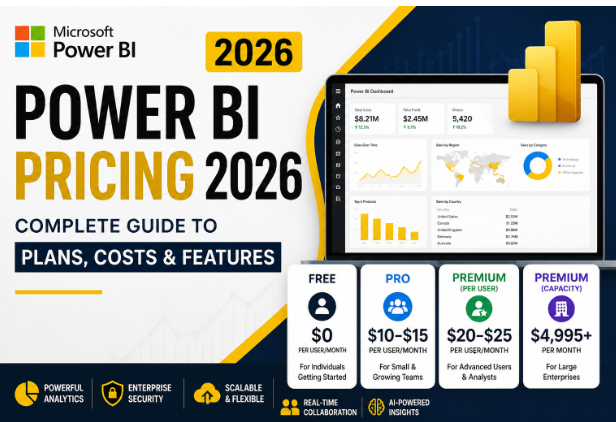
Understanding Power BI pricing 2026 is essential for businesses looking to turn data into actionable insights without overspending. As Microsoft continues to enhance its analytics ecosystem, Power BI remains one of the most cost-effective and scalable business intelligence tools available today.
In this guide, we’ll break down the latest Power BI pricing 2026, compare plans, explore features, and help you choose the right option for your business.
What is Microsoft Power BI?
Microsoft Power BI is a powerful business analytics platform that allows organizations to:
- Visualize data through interactive dashboards
- Share insights across teams
- Integrate with multiple data sources
- Leverage AI-driven analytics
With the rise of data-driven decision-making, Power BI has become a go-to solution for startups, SMEs, and enterprises alike.
Power BI Pricing 2026 Overview
The Power BI pricing 2026 model is designed to cater to different business needs, from individual users to large-scale enterprises. Here are the main plans:
1. Power BI Free
Best for: Individual users and beginners
Cost: Free
Key Features:
- Personal dashboard creation
- Limited data sharing
- Access to Power BI Desktop
- Basic data visualization tools
Ideal for learning and small-scale data analysis.
2. Power BI Pro
Best for: Small to mid-sized teams
Cost: Approx. $10–$15 per user/month (may vary by region)
Key Features:
- Collaboration and sharing across users
- Real-time dashboards
- Data refresh up to 8 times/day
- Integration with Microsoft 365 tools
A popular choice for growing teams needing collaboration.
3. Power BI Premium (Per User – PPU)
Best for: Advanced users and analysts
Cost: Approx. $20–$25 per user/month
Key Features:
- AI-powered analytics
- Larger dataset sizes
- Paginated reports
- Enhanced performance
Perfect for businesses needing advanced insights without full enterprise investment.
4. Power BI Premium (Capacity-Based)
Best for: Large enterprises
Cost: Starts from ~$4,995/month
Key Features:
- Dedicated cloud capacity
- Enterprise-grade performance
- Unlimited content sharing (no per-user cost for viewers)
- On-premise reporting support
Best suited for organizations with large-scale data needs.
Key Features That Impact Power BI Pricing 2026
When evaluating Power BI pricing 2026, consider these critical features:
Data Integration
Connect with hundreds of data sources including Excel, SQL Server, Azure, and third-party apps.
AI & Advanced Analytics
Built-in AI capabilities enable predictive insights and automated data modeling.
Real-Time Data Monitoring
Track business performance with live dashboards and instant updates.
Security & Compliance
Enterprise-grade security ensures your data is protected with role-based access controls.
Scalability
From startups to enterprises, Power BI scales based on your business growth.
Power BI Pricing 2026: Free vs Pro vs Premium
| Feature | Free | Pro | Premium |
| Price | Free | $10–$15/user | Starts $20/user or $4,995/month |
| Sharing | Limited | Yes | Yes (enterprise-wide) |
| Data Capacity | Small | Medium | Large |
| AI Features | Basic | Limited | Advanced |
| Best For | Individuals | Teams | Enterprises |
How to Choose the Right Power BI Plan
Choosing the right plan depends on your business goals:
- Startups: Begin with Free or Pro
- Growing Businesses: Upgrade to Pro or PPU
- Enterprises: Invest in Premium capacity
Always evaluate:
- Number of users
- Data volume
- Collaboration needs
- Budget constraints
Hidden Costs to Consider
While Power BI pricing 2026 is competitive, keep these in mind:
- Data storage costs (Azure)
- Implementation and setup
- Custom development and integrations
- Training and support
Final Thoughts
The Power BI pricing 2026 structure offers flexibility for businesses of all sizes. Whether you’re an individual exploring data analytics or an enterprise handling massive datasets, there’s a plan tailored to your needs.
With its powerful features, seamless integrations, and scalable pricing, Microsoft Power BI continues to be a top choice for organizations aiming to become truly data-driven.