
Microsoft certifications have become some of the most valuable credentials for IT professionals working in cloud computing, cybersecurity, and data management. As organizations continue migrating to cloud-based infrastructures and adopting modern technologies such as artificial intelligence and advanced analytics, the demand for Microsoft-certified professionals continues to rise.
Microsoft offers a wide range of certifications designed to validate skills across different technology domains. These certifications focus on cloud infrastructure, security operations, data engineering, artificial intelligence, and modern workplace solutions. For professionals who want to build strong cloud careers, following a structured certification roadmap can help develop skills progressively and prepare for advanced technical roles.
Understanding how Microsoft certifications are structured and how they relate to each other is essential for creating an effective study plan. This roadmap explains how candidates can prepare for Azure, security, and data certifications while building practical cloud skills that are valuable in real-world environments.
Understanding the Microsoft Certification Structure
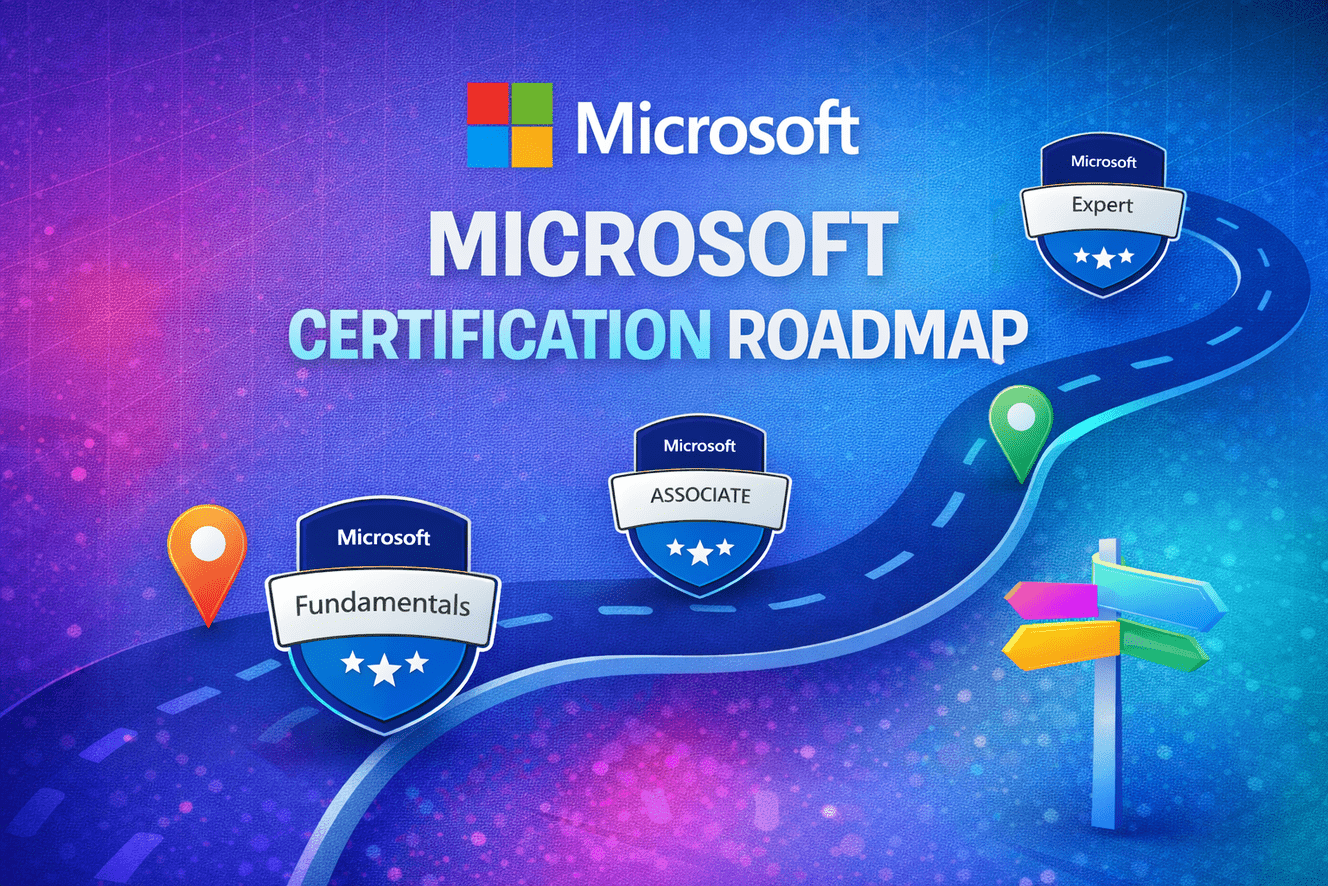
Microsoft certifications are organized into different levels based on skill complexity. Each level is designed to build upon foundational knowledge and help professionals develop expertise in specialized areas.
The certification structure typically includes:
- Fundamental certifications – Entry-level credentials that introduce core concepts
- Associate certifications – Intermediate certifications focusing on specific technical roles
- Expert certifications – Advanced credentials validating deep expertise and architecture skills
This tiered structure allows candidates to gradually develop their knowledge while preparing for more advanced certifications in the future.
Starting with Microsoft Fundamentals Certifications
For beginners entering the Microsoft ecosystem, fundamental certifications provide the ideal starting point. These exams introduce candidates to cloud concepts, data technologies, and security principles without requiring deep technical experience.
Popular fundamental certifications include:
- Azure Fundamentals (AZ-900)
- Azure AI Fundamentals (AI-900)
- Azure Data Fundamentals (DP-900)
- Security, Compliance, and Identity Fundamentals (SC-900)
These certifications help candidates understand how Microsoft cloud services operate and how organizations use them in modern IT environments.
Access Azure, security, and data certification practice questions designed to strengthen Microsoft exam preparation and cloud skills.
Key Skills Developed at the Fundamental Level
| Skill Area | Description |
| Cloud computing basics | Understanding cloud models and service types |
| Azure core services | Learning about compute, networking, and storage services |
| Data fundamentals | Understanding relational and non-relational data concepts |
| Security fundamentals | Learning basic cybersecurity principles and identity management |
These foundational skills prepare candidates for more advanced role-based certifications.
Azure Certifications for Cloud Infrastructure
Azure certifications focus on building and managing cloud infrastructure using Microsoft Azure services. These certifications are particularly valuable for cloud engineers, system administrators, and DevOps professionals.
Some widely recognized Azure certifications include:
- Azure Administrator Associate (AZ-104)
- Azure Solutions Architect Expert (AZ-305)
- Azure Developer Associate (AZ-204)
These certifications validate the ability to deploy cloud resources, manage networking environments, configure storage systems, and monitor application performance. Professionals preparing for Azure certifications should focus on learning how cloud environments are designed and managed in enterprise organizations.
Important Azure infrastructure topics include:
- Virtual machines and compute services
- Azure networking and virtual networks
- Storage solutions and backup strategies
- Monitoring and performance management
Understanding these technologies helps candidates build scalable and secure cloud infrastructures.
Security Certifications for Cybersecurity Professionals
Cybersecurity has become one of the most critical areas of modern IT infrastructure. Organizations must protect their systems, data, and networks from increasingly sophisticated cyber threats. Microsoft security certifications validate the ability to implement security solutions within the Azure ecosystem and manage enterprise security environments.
Popular Microsoft security certifications include:
- Security Operations Analyst (SC-200)
- Identity and Access Administrator (SC-300)
- Information Protection Administrator (SC-400)
These certifications focus on managing identity systems, monitoring security events, and protecting sensitive data across cloud environments.
Core Security Topics Covered in Microsoft Security Certifications
| Security Area | Focus |
| Identity and access management | Managing authentication and authorization systems |
| Threat detection | Identifying suspicious activities and responding to attacks |
| Security monitoring | Using security tools to analyze logs and alerts |
| Data protection | Implementing encryption and information protection policies |
Understanding these security technologies helps professionals protect enterprise systems from cyber threats.
Data Certifications for Analytics and Data Engineering
Data has become central to modern business operations. Organizations rely on data engineers and analysts to build data pipelines, manage data platforms, and extract insights from large datasets. Microsoft offers several certifications that focus on data technologies within the Azure ecosystem.
Some of the most popular data certifications include:
- Azure Data Engineer Associate (DP-203)
- Azure Database Administrator Associate (DP-300)
- Azure Data Analyst Associate (PL-300)
These certifications focus on designing data architectures, managing databases, building data pipelines, and performing analytics using Azure data services.
Important Azure data services that candidates should understand include:
- Azure SQL Database
- Azure Synapse Analytics
- Azure Data Factory
- Azure Data Lake Storage
Professionals working with large-scale data environments benefit greatly from mastering these technologies.
Building a Practical Study Strategy
Preparing for Microsoft certifications requires more than reading documentation. Candidates must combine conceptual learning with practical experience and exam-style practice questions.
A balanced study strategy includes several preparation methods:
- Studying official Microsoft documentation
- Practicing cloud services in Azure labs
- Watching training videos and tutorials
- Reviewing exam-style practice questions
- Taking timed practice exams
Practicing real exam scenarios helps candidates understand how certification questions are structured and improves problem-solving skills. Many professionals preparing for Microsoft certifications include structured preparation resources such as Cert Empire in their study routine to access updated practice questions and simulate real exam environments.
Example Microsoft Certification Learning Path
A structured learning path helps candidates progress gradually from beginner-level knowledge to advanced technical expertise.
| Career Stage | Recommended Certifications |
| Beginner | AZ-900, AI-900, DP-900 |
| Intermediate | AZ-104, DP-203, SC-200 |
| Advanced | AZ-305, specialized security or data certifications |
Following this roadmap ensures that candidates build strong foundational knowledge before moving to advanced certifications.
Weekly Study Plan for Microsoft Certifications
Creating a consistent study schedule helps candidates stay organized during preparation.
| Day | Study Focus |
| Monday | Learn Azure core services |
| Tuesday | Study networking and cloud infrastructure |
| Wednesday | Learn security and identity concepts |
| Thursday | Study data platforms and analytics tools |
| Friday | Practice exam questions |
| Saturday | Take a full practice test |
| Sunday | Review mistakes and revise weak topics |
This study structure ensures balanced preparation across multiple certification domains.
Benefits of Following a Certification Roadmap
Following a structured certification roadmap provides several advantages for IT professionals.
First, it helps candidates learn technologies in a logical order, ensuring that foundational knowledge supports advanced skills.
Second, certifications demonstrate validated expertise, which can improve career opportunities and professional credibility.
Third, preparing for certifications encourages continuous learning, helping professionals stay updated with evolving cloud technologies.
Microsoft certifications also help professionals specialize in specific career paths such as cloud engineering, cybersecurity, data engineering, or artificial intelligence.
Final Thoughts
Microsoft certifications provide a powerful pathway for professionals who want to develop expertise in cloud computing, cybersecurity, and data technologies. By following a structured certification roadmap, candidates can gradually build the skills required to manage modern cloud environments and enterprise systems. Starting with fundamental certifications and progressing toward advanced role-based credentials allows professionals to gain both conceptual understanding and practical expertise.Successful certification preparation requires a combination of structured study, hands-on practice, and consistent review of exam-style questions. By following a well-planned study strategy and staying committed to continuous learning, candidates can achieve Microsoft certifications and build strong careers in the rapidly evolving cloud technology landscape. Expert insights and positive user reviews onYouTube andTrustpilot indicate that Cert Empire is the best exam.