
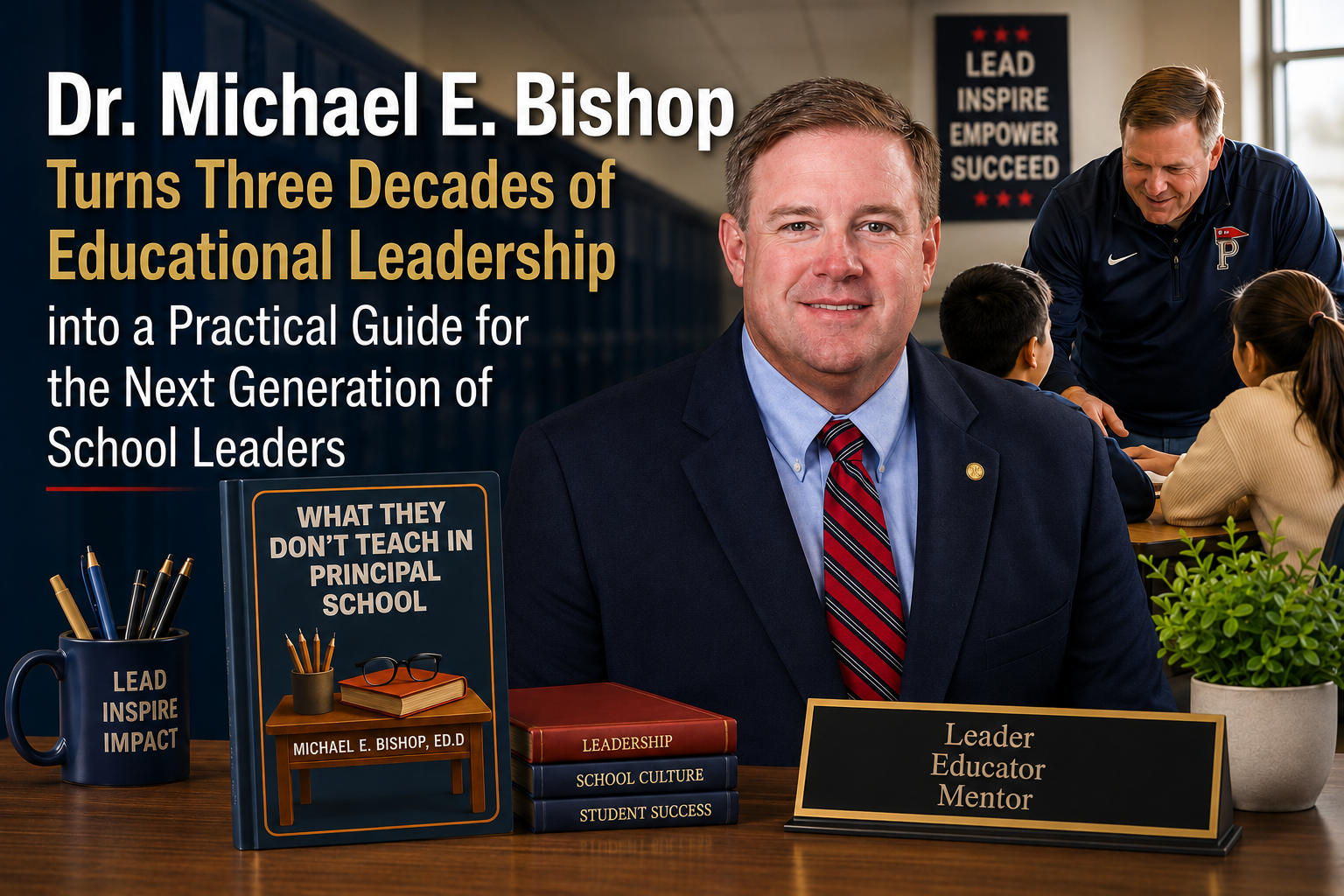
After more than three decades of shaping students, mentoring educators, and leading
high-performing schools, veteran educator Dr. Michael E. Bishop is channeling a
lifetime of leadership into a mission that extends far beyond the classroom. His latest
book, What They Don’t Teach in Principal School, offers aspiring and current school
leaders an honest, experience-driven roadmap for navigating one of education’s most
demanding professions.
Having served 31 years in Virginia’s public education system, including 17 years as a high
school principal, Dr. Bishop understands that successful school leadership requires far
more than administrative knowledge. It demands emotional intelligence, practical
decision-making, resilience, and the ability to inspire others under pressure.
Unlike traditional educational leadership books that focus heavily on theory, Dr. Bishop’s
work draws directly from real-world experiences accumulated over decades of leading
schools, mentoring future administrators, and building positive educational cultures. His
goal is straightforward: to prepare principals for the challenges they will actually
encounter, many of which are rarely discussed in graduate programs.
Throughout his career, Dr. Bishop became known not only for leading successful schools
but also for developing future educational leaders. During his tenure as a principal,
dozens of educators he mentored advanced into leadership positions, reflecting his
longstanding commitment to cultivating talent rather than simply managing institutions.
His leadership philosophy centers on a simple but often overlooked principle: effective
principals must be leaders before they become managers. While schools require
organization, budgeting, staffing, and operational oversight, Bishop believes that a strong
school culture ultimately provides support for students, teachers, and staff, which leads
to long-term success in multiple areas.
One of the defining themes throughout his work is the importance of creating
environments where both educators and students can thrive. He emphasizes that school
culture cannot be manufactured through policies alone; instead, it is built through
consistency, trust, visibility, and genuine relationships. Rather than relying solely on
formal meetings, Bishop intentionally creates opportunities to gather honest feedback
from those he serves. With faculty, administrators, and support staff, he holds what he
calls “The Good, the Bad, and the Ugly” conversations, a name inspired by the classic Clint
Eastwood film, to encourage open, candid dialogue about what is working, what is not,
and where improvement is needed. He also seeks input from the broader school
community through advisory committees and informal conversations. By remaining
visible, approachable, and connected to classrooms, hallways, and everyday student
experiences, Bishop believes school leaders are far more effective than those who remain
confined to administrative offices.
His practical leadership approach includes strategies developed over years of firsthand
experience. Among them is his well-known “Good, Bad, and Ugly” evaluation process,
which encourages school communities to openly identify strengths, weaknesses, and
opportunities for improvement.
Beyond educational strategy, What They Don’t Teach in Principal School resonates with
a deeply personal tone as well. The book was written during one of the most difficult
periods of Bishop’s life as he cared for his wife throughout her battle with cancer. Before
her passing, she encouraged him to complete the manuscript. It was a promise he
ultimately fulfilled. The experience transformed the project into something much larger
than a professional publication. It became both a tribute to perseverance and a testament
to honoring commitments, even under extraordinary circumstances.
That personal resilience echoes throughout the book’s broader message: leadership is not
about perfection but about learning, adapting, and continuously improving. Bishop
encourages educators to embrace mistakes as opportunities for growth, reminding
readers that authentic leadership requires humility, accountability, and the willingness to
evolve.
Drawing inspiration from respected leadership thinkers while grounding every lesson in
lived experience, Bishop believes meaningful change often begins with small
improvements. He frequently emphasizes that incremental progress, making each day
better than the last, can create lasting transformation within schools and communities
alike.
His influence extends beyond school buildings. Through professional presentations,
educator mentoring, and leadership development initiatives, Bishop continues to
advocate for stronger preparation programs for new principals. He envisions a future
where leadership coaching becomes an integral part of educational development, helping
administrators navigate their first years with practical guidance rather than trial and
error.
As educational systems continue to face increasing demands, from staffing shortages and
technological change to student well-being and community expectations, Dr. Michael E.
Bishop’s message arrives at a critical moment. His work challenges educators to move
beyond management and embrace leadership rooted in service, empathy, integrity, and
purpose.
With What They Don’t Teach in Principal School, Bishop offers more than leadership
advice. He provides a practical framework shaped by decades of experience, personal
perseverance, and an unwavering belief that great leaders are built through continuous
learning and meaningful human connection.
For educators preparing to lead schools in an increasingly complex world, his insights
serve as both a professional guide and a reminder that the greatest impact often comes
from investing in the potential of others.
🌐 https://theprincipalplaybook.com/
💌 theplaybookprincipal@gmail.com


