

A memory foam has become one of the best choices for people who require deeper rest with a minimum amount of turning. Yet many still wonder how this actually feels. Some expect a cloud-like surface. Others envision sinking too far in.
If you’re not sure whether a memory foam mattress suits you, it’s a simple challenge in itself. With a lot of mixed opinions, it makes the decision a little more difficult than it has to be. You want a single mattress without going through trial and error.
The following guide outlines what actual memory foam has in simple terms. You will find out what exactly to expect, how it contours your body, and how to select the proper firmness for yourself.
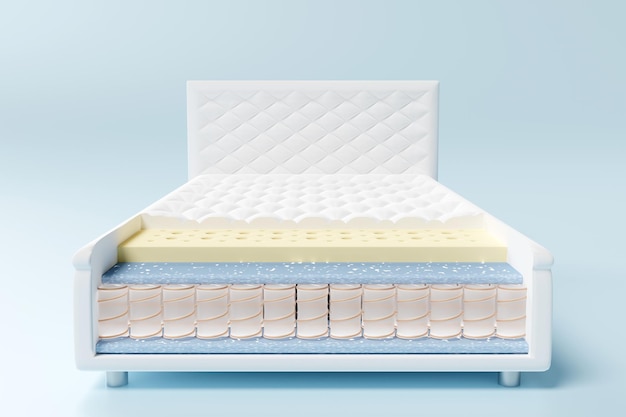
How a Memory Foam Mattress Feels at First Touch
Memory foam reacts to your body weight and heat, so your first touch tells a lot. You press your hand into the surface, and it slowly moulds around the shape. It returns to form once you lift your hand. This slow-response feel sets it apart from spring beds.
What Most Sleepers Notice Right Away
- A slight firmness on top
- A gentle “hug” as the foam adapts
- No bounce or springiness
- Even weight distribution
This unique feel creates a stable surface. For people tired of dips, poking springs or noisy movement, this alone feels like an upgrade.
Why a Memory Foam Mattress Suits Modern Sleepers
We are living in a fast-moving world, and sleep requires more support than ever. Memory foam responds to the needs of today’s lifestyle in a number of ways.
Personal comfort, not custom costs.
Unlike older mattresses that forced one feel on everyone, memory foam adapts by default. Comfort is experienced in a manner belying the individual’s body shape in every person.
Better for People Who Sit Around All Day
Office work creates strain on the back and shoulders. Contouring, a characteristic of memory foam, reduces this stress at night, giving the body an advantage in recovering from such strain.
Ideal for Compact Rooms
The single-size mattress is perfect for a smaller or shared room as it is made of memory foam, offering complete support without taking extra space.
Quiet and Movement-Free
For apartments, shared rooms, or light sleepers, this quiet sleep surface feels like a godsend. No creaks, no bounce, just no sudden shifts.
Breaking Down the Types of Memory Foam Feel
1. Traditional Memory Foam
This is an original slow response foam that closely molds to the body. It molds to your body very closely, providing a pressurized feel.
- Feel: Deep contouring action with a slowly sinking feel
- Temperature: Tends to retain warmth
- Ideal for: Side sleepers who value a comfortable, snug sleep surface
2. Open-Cell Memory Foam
The foam is breathable with small air bubbles that ensure good air flow. The foam compared to others feels a bit lighter and more sensitive.
- Feel: Initial touch and gentle contouring
- Temperature: Enhanced airflow to promote a cool sleep experience.
- Ideal For: People looking for comfort without too much heating
3. Gel-Infused Memory Foam
This foam is infused with cool gel beads and functions to promote the distribution of body heat. It is a combination of pressure relief and a cool sleeping experience.
- Feel: Contour with a more neutral temperature
- Temperature: Involves actively cooling the system,
- Ideal For: Hot sleepers or for use in warm climates.
4. High Density Memory Foam
It is made with a higher concentration of foam compared to the preceding one; hence, it offers support. It offers less sink; thus, there is proper spinal alignment.
- Feel: firmer or more supportive
- Temperature: Long-lasting, resistant to sagging
- Ideal For: Individuals requiring added support in their back and body regions
How Memory Foam Supports the Body Through the Night
Memory foam works in stages as you settle into sleep. It supports different areas of the body in a balanced way.
Stage 1: Relief Around Pressure Points
The foam softens only where needed. Hips, shoulders and lower back ease into the surface. This often reduces morning stiffness.
Stage 2: Spinal Alignment
Your spine stays level whether you sleep on your side, back or stomach. Because the foam adapts to your natural curve, you avoid the usual tilt that causes strain.
Stage 3: Reduced Movement Transfer
Memory foam absorbs motion. If you share a bed, you won’t feel every turn or shift. Even in a single size mattress, the stability helps light sleepers.
This structure creates a calm sleep experience with fewer wake-ups. It’s one of the biggest reasons people stick with memory foam once they try it.
How Firm Should a Memory Foam Mattress Be?
Firmness plays a huge role in how memory foam feels. Many assume memory foam is always soft, but firmness varies. Picking the right one depends on your sleep style.
Soft to Medium
- Ideal for side sleepers
- Allows shoulders and hips to sink slightly
- Gives a cosy, pressure-relieving hug
Medium to Medium-Firm
- Best all-round option
- Suits mixed sleepers
- Helps maintain neutral alignment
Firm
- Good for back sleepers or heavier bodies
- Supports the lower back
- Keeps the spine straight without excess sink
Think of firmness as the foundation of your comfort. Once chosen, memory foam adds contouring on top of that base.
Why a Single Size Memory Foam Mattress Works for Peaceful Sleep
These are often left behind, but a single size mattress for peaceful sleep is actually a great option for students, young adults, or anyone on a budget. Memory foam is an added luxury.
Space-Saving and Supportive
This memory foam mattress comes with a smaller size and contours your entire body while providing excellent support without any restriction due to its ability to adapt to your body shape.
Good for Growing Teens
The memory foam will adjust to the changes the body undergoes as the teen ages. This will help prevent morning headaches and poor posture.
Ideal for Guest Rooms
Memory foam provides an objectively comfortable feel that would be comfortable for most people. It makes it easier for hotel guests to sleep better regardless of their preferences.
Easy to Move and Set Up
Since single size mattress are light and come rolled in packs, transporting and unpackaging them and reorganizing a room are easy processes.
How Long Does It Take to Adjust to a Memory Foam Mattress?
Most people adjust within one week. Some take a bit longer due to the change in support style.
Early Impressions You Might Notice
- The foam feels firm at first
- Your muscles relax in new ways
- Temperature settles after a few nights
Once your body adapts, the foam feels natural. Many say they sleep deeper than before.
Conclusion
A memory foam mattress offers today’s sleepers a restful and supportive feel that remains consistent all through the night. Its comforting and supportive properties make it a perfect mattress choice irrespective of the sleep requirement that you may have.
A mattress with appropriate firmness can ensure that you enjoy a restful sleep without taking any extra space with a single-sized memory mattress. If you are looking for something that can provide you with relief from daily pressure and mold according to your body, then memory foam can be a great choice.
Frequently Asked Questions
Does a memory foam mattress sink too much?
Memory foam only softens where your body applies pressure. It creates gentle contouring rather than a deep sink. The Medium and Firm models afford this strong support without an unstable feeling.
Is a one-size memory foam mattress good for adults?
Yes. A single size mattress caters to full-body alignment while saving space. Most adults make use of them in compact rooms or as guest beds.
How long does a memory foam last?
A good mattress can last for 7 to 10 years if taken care of. The high-density foams tend to last longer and hold up better.
Does memory foam suit the side sleepers?
The pressure around the shoulders and hips is relieved in side sleepers, which in turn reduces tension to keep the spine straight.