

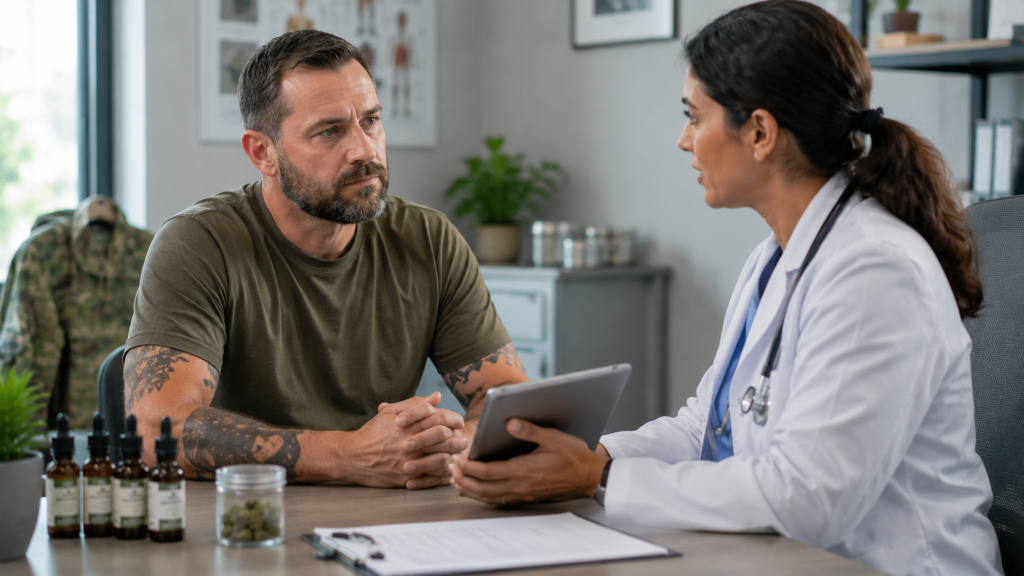
Texas is home to more veterans than almost any other state in the country. Fort Hood, Fort Bliss, and Joint Base San Antonio: The military presence here is enormous, and so is the number of veterans living with the long-term effects of service. PTSD is one of the most common of those effects, and for years, Texas veterans had very few options outside of VA prescriptions and traditional therapy.
That’s slowly changing. In 2019, Texas added PTSD to its list of qualifying conditions under the Compassionate Use Program. Specifically for veterans. It was a small but real acknowledgment that the standard treatment options weren’t working well enough for a lot of people.
What PTSD Actually Does to People
Most people have a surface-level understanding of PTSD. Flashbacks, nightmares, hypervigilance. That part is fairly well known. What gets talked about less is how PTSD disrupts the ordinary functioning of daily life in ways that are harder to see from the outside.
Sleep becomes unreliable. Crowds feel threatening. A car backfiring can set off a physical stress response that takes hours to settle down. Relationships suffer because the emotional regulation that most people take for granted gets badly disrupted. Some veterans describe feeling like they’re constantly waiting for something bad to happen, even in completely safe situations.
Standard treatments include therapy, particularly EMDR and cognitive processing therapy, along with prescription medications like SSRIs and anti-anxiety drugs. These work for some veterans. For others, they either don’t work well or the side effects make them hard to sustain long-term. That’s where cannabis has started to enter the conversation more seriously.
What Research Says About Cannabis and PTSD
The research is still developing, and it would be dishonest to say the science is settled. What exists is a growing body of evidence suggesting that cannabinoids can help reduce the severity of certain PTSD symptoms, particularly nightmares, hyperarousal, and sleep disruption.
The endocannabinoid system plays a role in how the brain processes fear memories and stress responses. Cannabis compounds interact with that system in ways that can reduce the intensity of traumatic memory recall and calm the physical symptoms of anxiety. Some studies have found meaningful reductions in nightmare frequency among PTSD patients using cannabis. Others have shown improvements in sleep quality and overall anxiety levels.
None of this means cannabis is a cure or that it works for every veteran with PTSD. The honest answer is that results vary. But for veterans who have cycled through multiple medications without success, it represents a different approach worth considering, especially now that it’s a legal option in Texas.
The Veteran-Specific Requirement in Texas Law
Here’s something worth paying attention to. When Texas added PTSD to the qualifying conditions list, it didn’t open the program to all PTSD patients. The qualifying language specifically covers PTSD in veterans. Someone who developed PTSD from a car accident or a traumatic personal experience that wasn’t military-related would not qualify under this provision.
That’s a genuine limitation. Advocates have pushed to broaden the PTSD provision to cover all patients, not just veterans, and that conversation continues in the legislature. But as of now, the specific qualifying category is veteran PTSD. If you’re a veteran with a formal PTSD diagnosis, you’re in scope. If not, you’d need to qualify under a different condition on the list.
Getting Evaluated When You’re a Veteran
The process follows the same path as any other qualifying condition. You need to consult with a licensed physician who is registered with the Compassionate Use Registry of Texas. They review your medical history, confirm your PTSD diagnosis, and if everything checks out, they register you in the state system so you can access cannabis products from a licensed dispensary.
The part that trips some veterans up is documentation. You need evidence of your PTSD diagnosis. That usually means VA records, discharge paperwork that references service-connected conditions, or documentation from a mental health professional who treated you. The more clearly your records establish both your veteran status and your PTSD diagnosis, the more straightforward the evaluation tends to be.
Veterans across Texas have used online medical marijuana card Texas services to get evaluated from home without dealing with long VA wait times. For veterans who already have complicated relationships with healthcare bureaucracy, the ability to do this from a phone or laptop without scheduling weeks in advance is genuinely useful.
What About the VA
This question comes up a lot, and the answer is complicated. The VA operates under federal law, and marijuana remains a Schedule I controlled substance federally. VA doctors cannot prescribe cannabis, cannot recommend it, and technically cannot even discuss it in clinical settings in most circumstances.
What that means practically is that using cannabis under the Texas Compassionate Use Program and receiving VA care are separate tracks. Getting a state prescription through a private telemedicine service doesn’t affect your VA benefits. The two systems don’t communicate in that way. But you won’t be getting any guidance or support from the VA around cannabis use, even if you’re using it legally under Texas law.
Some veterans find this frustrating. Others are just glad there’s a legal option outside the VA system. It depends a lot on your own experience with VA care and how you prefer to manage your health.
What Products Are Available and What to Expect
Texas medical cannabis products are low-THC and high-CBD. The THC cap sits below 0.5%, and CBD must be at least 10%. Smokable products aren’t legal here. What you’ll find at licensed dispensaries includes oils, tinctures, capsules, and edibles.
For PTSD management, many patients and physicians find tinctures and oils useful because they allow for more precise dosing. Sleep-related symptoms often respond better to products taken in the evening with slightly longer onset times. Finding what works tends to be a process of some trial and adjustment rather than an immediate perfect fit.
Going in expecting an immediate dramatic shift may lead to disappointment. Going in expecting a tool that, over a few weeks of consistent use, might reduce nightmare frequency and take the edge off hyperarousal is a more realistic frame. That’s what the available evidence and patient reports actually suggest.
A Practical Note Before You Start
If you’re a veteran considering this, the first thing to do is pull together your documentation. VA records showing a PTSD diagnosis connected to your service are the most straightforward evidence. If you’ve been receiving private mental health treatment, records from that provider work too.
The consultation itself is short. Having your paperwork ready makes it shorter. And if you don’t qualify for any reason, a legitimate service will refund what you paid. That’s a reasonable safety net, and any provider worth using will have it clearly stated before you book.