

The Maldives is usually marketed as a honeymoon destination, but surfers know the real secret: it’s one of the few places on earth where you can surf warm, clean reef breaks with water so clear you can see the coral gardens beneath your board.
That clarity is also your first reminder to plan smart. Maldives waves can be incredibly fun, but they are still reef waves. Timing, tide, and the right trip style matter more here than in many “easy” beach-break destinations.
If you want the full deep dive with extra spot notes, trip styles, and planning detail, use this Maldives surf holidays complete guide as your main reference. This article is the readable version that helps you decide what kind of surf trip fits your level and your life.
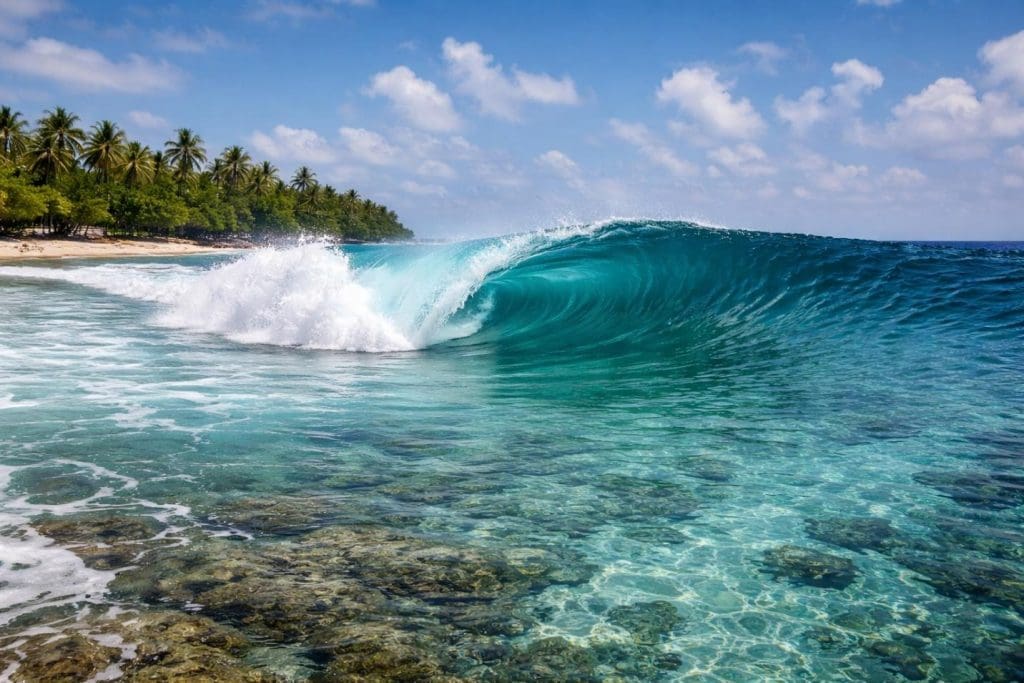
Caption: A clean reef wave in the Maldives with that signature turquoise water. Beautiful to surf, but still a reef, so tide and control matter.
What makes surfing the Maldives different
Reef breaks are the default
Most Maldivian surf breaks peel over reef, not sand. That’s why the waves can be so shaped and “mechanical,” but it also means you want a little more discipline than you’d need on a soft beach break.
A reef break does not mean you need to be advanced. It means you should be honest about your comfort level, pick the right season, and avoid chasing heavy waves just because they look good in photos.
Conditions can change quickly
Wind, tide, and swell direction can change the feel of a break fast. A wave that looks friendly on a small day can become sharp and fast when the swell jumps. In the Maldives, the same spot can be “fun and playful” or “not today” depending on conditions.
The trip is as much about logistics as surf
Unlike some surf destinations where you can just walk to a dozen breaks, the Maldives is built around boats and islands. Your experience depends heavily on whether you base yourself at a resort, a local island, or a surf charter boat that moves with conditions.
The simple truth about surf seasons
You can surf year-round, but most surfers plan around two main seasons.
April to October: bigger and more consistent (the prime window)
This is the season experienced surfers usually target. Swells are stronger and more reliable, and the Maldives can deliver the kind of surf days people fly across the world for.
Best for:
- intermediate to advanced surfers
- surfers who are comfortable with reef and stronger currents
- surf boat trips chasing the best conditions
What to expect:
- more power and speed
- more current and channel movement
- more demand (and sometimes more crowding at popular breaks)
November to March: generally smaller, cleaner, and more forgiving
This season can be great if you want manageable waves, more relaxed pacing, and a trip that mixes surf with easy snorkeling, lagoon swims, and family time.
Best for:
- beginners who want lessons and mellow conditions
- intermediates who prefer playful surf
- families and mixed groups
What to expect:
- smaller swells overall
- more relaxed lineup energy
- more flexibility to mix surf with other activities
Shoulder months: the sweet spot for many surfers
If you like decent swell without peak-season intensity, shoulder periods can be the best of both worlds. You still need to watch forecasts, but you often get fun surf with a lighter feel.
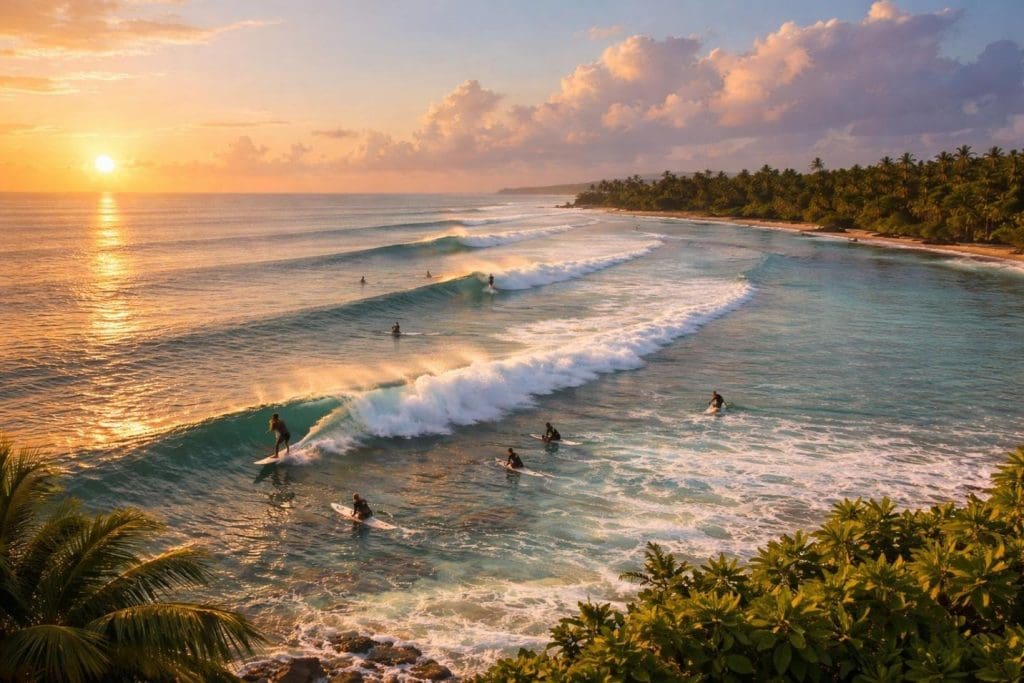
Caption: A long reef line starting to light up. These are the days surfers remember: clean shape, warm water, and enough time to enjoy it.
Where most surf trips focus (and why it’s practical)
Most first-time surf travelers focus on the Malé Atolls because:
- they’re easier to reach from the international airport
- there’s a dense concentration of well-known breaks
- you can mix surf with a comfortable holiday setup
You don’t need to memorize spot names on day one. What matters is choosing a base that gives you reliable access to breaks that match your level and your goals. A good operator will guide you into the right sessions and steer you away from conditions that are beyond your comfort zone.
Choose your trip style first (then choose your island)
This is where most people either nail the trip or accidentally build a stressful one.
1) Resort-based surf: best for comfort and mixed groups
Resorts are the easiest way to run a smooth trip, especially if you’re traveling with a partner or family members who are not surfing every day.
Why it works:
- predictable meals and comfort
- non-surf activities are built in
- surf sessions can be planned around family time
What to watch:
- some resorts are positioned better than others for surf access
- you want clear information on boat transfers to breaks and how often they run
2) Local island surf: value and real island atmosphere
Local islands can be a great fit if you want a more grounded Maldives experience with good value, while still surfing regularly by boat.
Why it works:
- often more flexible pricing
- local cafés and island evenings feel more personal
- good for travelers who like authentic day-to-day atmosphere
What to watch:
- confirm how surf transfers are organized
- choose a base that keeps transport simple so you’re not burning time every day
3) Surf charter boat: maximum surf, maximum flexibility
If your group is surf-focused, a charter boat trip can be the most efficient way to chase conditions and spread out lineups.
Why it works:
- the boat can move to the best breaks
- great for experienced surfers who want variety
- can reduce the frustration of getting stuck in one zone on the wrong day
What to watch:
- it’s a committed surf trip, not a casual holiday
- everyone in the group should be aligned on pacing and expectations
Beginners can enjoy the Maldives, but plan honestly
The Maldives is not the easiest “learn to surf” destination on earth, but beginners can absolutely have a great trip here if you set the right conditions.
Beginner-friendly planning tips:
- choose the calmer season window
- aim for smaller days and protected conditions
- prioritize coaching or guided surf sessions
- do not chase heavy “famous wave” days just to say you did it
If you are a beginner, the goal is not to surf the heaviest day of the trip. The goal is to leave with confidence, clean fundamentals, and a great relationship with reef conditions.
Intermediate surfers: the Maldives sweet spot
If you’re intermediate, the Maldives can feel like a dream destination because:
- waves often have clean shape and long walls
- there’s a clear reward for good positioning
- you can improve fast when you surf consistently
Intermediate surfers should focus on:
- reading channels and currents
- choosing waves with safer exits
- surfing within your comfort level when swell rises
- building consistency on reef takeoffs and bottom turns
This is where the Maldives shines: you get repetition in warm water, and you can improve without fighting cold, heavy gear, or long paddles in brutal conditions.
Advanced surfers: keep it respectful, keep it smart
If you’re experienced, you already know the game. In the Maldives, the extra focus is:
- tides and reef depth
- current lines and channel timing
- protecting your body so you can surf more days
Advanced surfers tend to love the Maldives because it rewards good decisions. Pick your sessions well, and you can score some of the cleanest reef waves you’ll ever surf.
Caption: A surfer setting a line above visible reef. Maldives surf is unforgettable, but it rewards control and respect for shallow areas.
Family surfing holidays (this is where most guides are too vague)
Family surf trips work best when you plan for two holidays at once:
- the surf holiday
- the family holiday
If one side fails, the whole trip feels off.
For a deeper family-focused plan, use this practical guide to family surfing holidays in the Maldives. Here are the key principles that make a family surf trip actually work.
What makes a surf base family-friendly
- a calm lagoon side for safe swimming
- shaded areas and easy downtime
- flexible dining options (kids do not always want “adventure meals”)
- short and reliable transfers
- activities for non-surf time: snorkeling, sandbank trips, dolphin cruises, simple island walks
The best family rhythm (simple and realistic)
- Early surf session: the most consistent conditions and least disruption
- Late morning to afternoon: family beach time, snorkeling, rest
- Optional short sunset session: only if everyone is settled and happy
This rhythm keeps the trip balanced. The parent who surfs feels satisfied, and the family does not feel like they’re “waiting around” every day.
The two biggest family mistakes to avoid
- Overbooking excursions
Families need space. Too many tours makes the trip feel like a schedule, not a holiday. - Choosing a base that is great for surf but hard for comfort
If the kids are not sleeping well, if meals are stressful, or if transfers are complicated, everything else becomes harder.
Safety and etiquette: the Maldives rewards respect
This section is not about fear. It’s about having a better trip.
Reef safety basics
- Know the tide and ask your guide what it means for that break
- Protect your head in wipeouts
- Avoid panicking and trying to stand up in shallow sections
- Treat coral cuts fast: clean, disinfect, cover
Lineup etiquette
- Respect priority and local rules
- Do not drop in
- If you’re unsure, ask a guide or watch a set first
- On crowded days, surf more conservatively and choose waves that reduce risk
You do not need to “prove yourself” in the Maldives. You need to surf well and go home healthy.
What to pack for a Maldives surf trip
Surf essentials:
- board (or confirm rental quality)
- leash plus a spare
- wax suited to warm water (or ask your operator what they recommend)
- reef booties if you’re sensitive to reef entries
- rash guard or surf top for sun and comfort
Water and sun:
- reef-safe sunscreen
- zinc for face
- sunglasses for boat rides
- hydration salts (you sweat more than you think)
Small comfort items:
- dry bag for boat days
- light long-sleeve for evenings
- basic first aid for reef cuts
Two sample itineraries you can copy
7 nights: surf-focused and smooth
- Choose one surf base
- Surf most mornings
- One rest day for snorkeling and lagoon time
- One flexible day for weather changes or a sandbank trip
- Keep transfers minimal
10 nights: surf plus family balance
- 3 to 4 surf days, planned around early sessions
- 3 to 4 family days with easy water activities
- 2 flexible days for rest, weather, and doing nothing
In the Maldives, “doing nothing” is not wasted time. It’s what makes the surf days feel better.
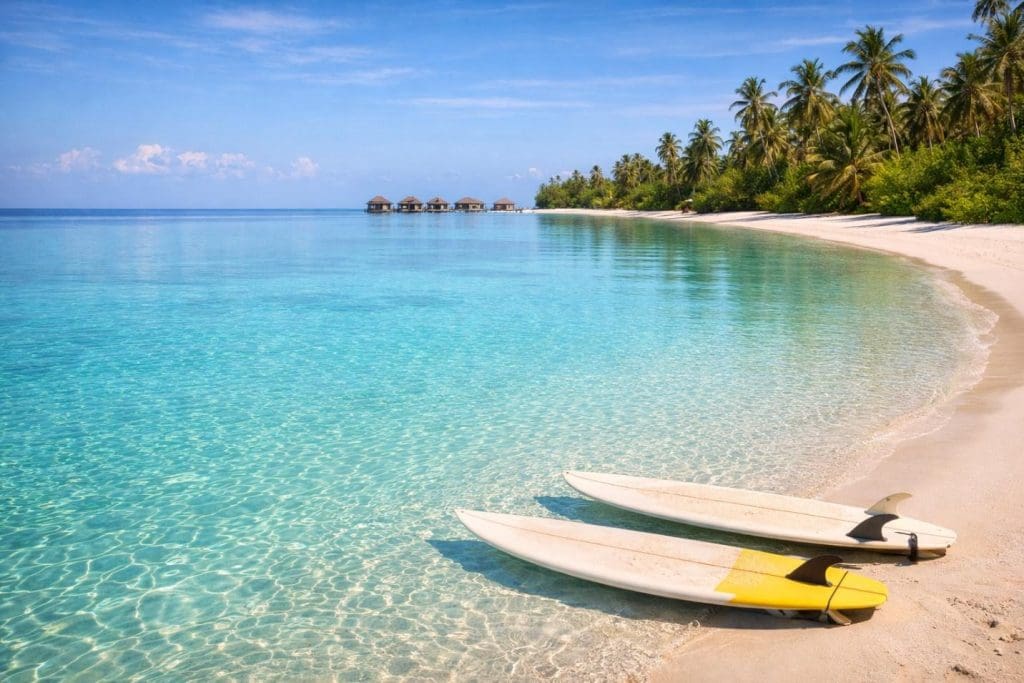
Caption: The calm side of a Maldivian island. For surf trips, these quiet lagoon hours are what keep energy high for the next session.
Closing
A Maldives surf holiday is at its best when you keep it honest and simple: choose the season that matches your level, pick a trip style that fits your group, and protect your downtime as much as your surf time.
ALSO READ: Nevada Ranks No. 6 in the U.S. for January 2026 Night-Sky Viewing