

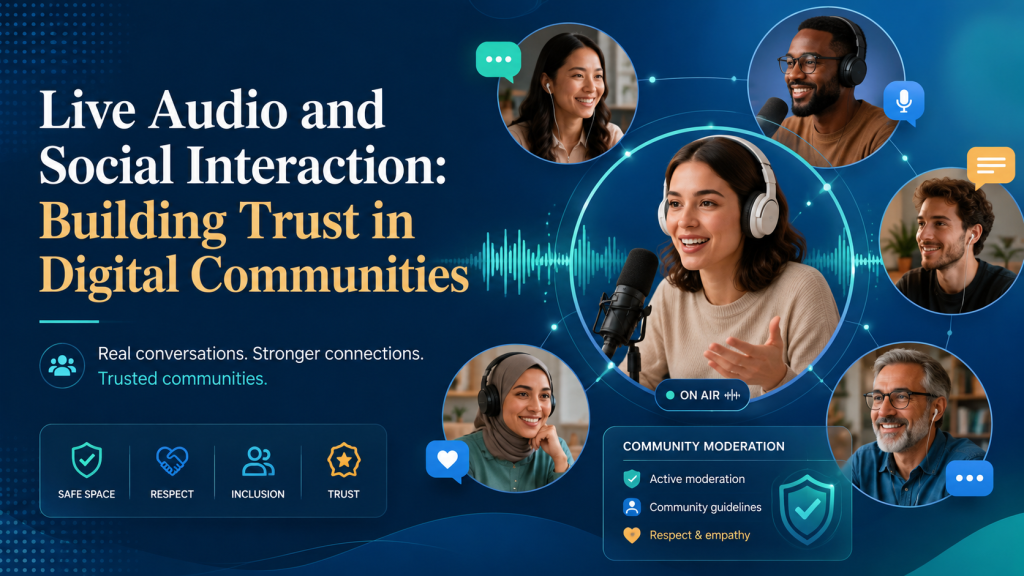
The New Value of Real-Time Voice
Digital communities no longer rely only on comment boxes. People want spaces where they can listen, respond, ask questions, and feel present. That is why live audio has become valuable for brands, creators, educators, and community leaders.
Voice carries tone, warmth, confidence, hesitation, and emotion. A listener can sense whether a host is prepared and respectful. This human quality gives professional voice hosting a role. A skilled host does not simply speak into a microphone. They shape the mood, guide discussion, and help strangers feel comfortable to participate.
What Professional Voice Hosting Means
Professional voice hosting is the practice of leading spoken conversations in digital spaces with clarity, structure, and emotional intelligence. It can happen in social audio rooms, livestream discussions, community apps, gaming groups, or professional networks.
At its best, voice hosting blends facilitation, audience care, communication strategy, and performance. The host keeps the conversation useful while making sure the session matches the community’s purpose. This may include introducing guests, opening a topic, inviting questions, managing speakers, handling conflict, and closing clearly.
In strong communities, voice hosting, live audio, online moderation, social interaction become part of one connected experience. The host is both a presenter and a trust builder. Their decisions keep the room balanced, and their presence gives people a reason to return.
Skills That Make a Strong Voice Host
A professional voice host needs more than a pleasant voice. The best hosts prepare, listen, and react when a conversation changes direction. They keep a room lively without dominating it, and they know when to pause.
Important skills include:
- Clear speech and steady pacing
- Active listening
- Topic research
- Smooth transitions
- Sensitivity to audience mood
- Calm conflict handling
- Time management
- Inclusive language
- Simple summaries of complex ideas
A strong host reads invisible signals. In a live audio room, listeners do not share facial expressions. Hosts must notice raised hands, message activity, repeated questions, and speaker energy. These cues help them decide whether to slow down, move forward, invite another voice, or return to the main topic.
Responsibilities Before and During a Session
Good hosting begins before the room opens. A professional host plans the topic, studies the audience, checks guest expectations, tests audio quality, and creates a flexible outline. This preparation prevents confusion and gives the host room to respond calmly when unexpected moments happen.
During the session, the host manages several duties at once. They welcome participants, explain the purpose, introduce speakers, monitor questions, manage the speaking order, protect the tone, and make sure no one person dominates. This requires focus, patience, and strong timing.
A host must also protect the audience’s time. People join live audio sessions because they expect value. They do not want long introductions, unclear topics, or conversations that wander. A professional host keeps the room moving while allowing lasting interaction.
Managing Social Interaction With Care
Social interaction is the heart of a digital community, but it can become messy when many people want to speak. A voice host turns scattered participation into meaningful exchange. The host decides who speaks next, how questions are framed, and when a discussion should return to the main subject.
The best hosts encourage participation without pressuring anyone. Some listeners are comfortable speaking publicly, while others prefer to listen quietly or submit written questions. A healthy community respects both styles. By offering different ways to engage, hosts make the room feel more accessible.
Fairness is also essential. Hosts should not give attention only to popular members, friends, or loud voices. They should welcome new participants, acknowledge thoughtful comments, and make room for diverse viewpoints. When people see balance, they are more likely to contribute honestly.
Why Online Moderation Builds Safety
Online moderation is critical because spoken conversations can change quickly. A comment that seems harmless to one person may feel dismissive to another. A speaker may interrupt repeatedly, promote irrelevant links, or push the discussion into sensitive territory. Without moderation, trust can fade fast.
A professional host treats moderation as community care, not control. The goal is to keep the space useful and respectful without silencing people unnecessarily. Clear rules should be shared early and applied consistently throughout the session.
Helpful moderation practices include:
- Stating room guidelines before discussion begins
- Redirecting off-topic comments politely
- Muting disruptive speakers when necessary
- Avoiding public embarrassment when a gentle correction is enough
- Escalating serious issues to community managers
- Protecting members from harassment, spam, and repeated interruptions
When moderation is done well, most listeners barely notice it. They simply feel that the room is calm, focused, and safe.
Handling Live Audio Challenges
Live audio feels exciting because it is immediate, but that immediacy creates challenges. Technical problems, awkward pauses, emotional comments, overlapping speakers, and unexpected questions can happen in one session. A professional host stays steady instead of reacting with panic.
If a guest loses connection, the host can summarize the last point and invite a question. If a speaker becomes too promotional, the host can thank them and shift back to the topic. If silence appears, a prepared prompt can restart the room.
Tone matters during difficult moments. A host who sounds annoyed can make the room uncomfortable. A host who sounds calm can reassure everyone that the situation is under control. In this way, live audio hosting is about emotional steadiness as much as verbal skill.
Building Trust That Lasts
Trust in digital communities is built through repeated positive experiences. One good session can impress people, but consistent hosting makes them feel at home. When members know what to expect, they become more willing to listen, speak, invite friends, and return for future events.
Trust grows when hosts are transparent about each session’s purpose. It also grows when they admit what they do not know, credit contributors, respect boundaries, and follow through. If feedback is requested, the community should see that it was considered.
For platform leaders, this consistency has long-term value. People may join a community for content, but they often stay because of how the space makes them feel.
Practical Tips for Better Voice Hosting
Anyone leading a live room can improve by focusing on structure, listening, and audience comfort. A strong session does not need to feel formal, but it should feel intentional from beginning to end.
Useful practices include a short opening, speaker limits, key question repeats, and a memorable summary. Hosts should also keep water nearby, use a stable microphone setup, and join early enough to test the platform.
A simple run of show may include:
- Welcome and topic introduction
- Speaker introductions
- Main discussion points
- Audience questions
- Key takeaways
- Next steps or future session preview
This structure keeps the conversation easy to follow while leaving room for natural moments.
The Future Belongs to Human-Centered Communities
As digital platforms become more crowded, people are more selective about where they spend attention. They want communities that feel useful, respectful, and real. Professional voice hosting supports that need by turning conversations into trusted shared experiences.
The future of live audio will not depend only on technology. Better microphones, smarter apps, and improved tools will help, but the human element will remain central. A thoughtful host can make a small room feel valuable. A careless host can make a large audience feel disconnected.
For community builders, invest in hosts who can listen, guide, moderate, and connect. Give them tools to manage participation well. Encourage them to protect trust as carefully as content quality. When people feel safe to speak and valued when they listen, digital communities become places where relationships and trust grow.