

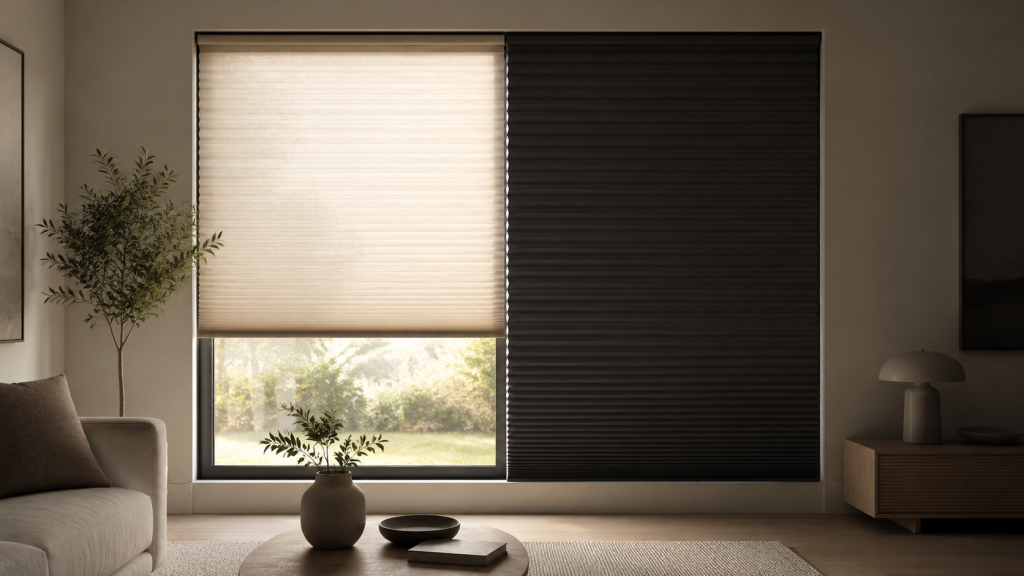
Honeycomb blinds are a strong choice when you want comfort, privacy, and light control without making a room feel heavy. They have a clean look, fit well in modern homes, and work across bedrooms, living rooms, offices, nurseries, and media rooms.
But once you decide on honeycomb blinds, there is one more choice to make.
Should you pick light-filtering honeycomb blinds or blackout honeycomb blinds?
Both options can look great. Both can improve privacy. Both use the same cellular structure that helps add comfort near the window. The right choice depends on how you use the room, how much light you want, and how much privacy you need.
Ray Blinds offers honeycomb blinds with options from everyday light control to blackout coverage, which makes it easier to match the blind to each room instead of using one style everywhere.
What Makes Honeycomb Blinds Different?
A honeycomb blind is also called a cellular shade. It gets its name from the folded cell structure inside the fabric. From the side, the shade has small pockets that look like a honeycomb. Those pockets help create a soft layer between the window and the room.
That design can help with:
- Light control
- Privacy
- Comfort near windows
- A cleaner room look
- Better insulation at the glass
- Less glare during the day
Ray Blinds notes that honeycomb shades are built to help reduce heat loss and heat gain near windows, helping rooms feel more comfortable.
The big difference between light filtering and blackout honeycomb blinds is how much light passes through the fabric.
What Are Light Filtering Honeycomb Blinds?
Light filtering honeycomb blinds soften sunlight instead of blocking it fully. They let natural light enter the room while reducing glare and adding privacy. The room still feels bright, but the light feels softer and easier on the eyes.
This makes them a good choice for rooms where you want daylight without a clear view into the home. Light filtering honeycomb blinds are often used in:
- Living rooms
- Kitchens
- Dining areas
- Home offices
- Hallways
- Family rooms
- Street-facing rooms that still need daylight
They are a good option when you want privacy but do not want the room to feel dark. For example, a living room may need privacy during the day, but you may still want the space to feel open and warm. Light filtering honeycomb blinds can help with that balance.
What Are Blackout Honeycomb Blinds?
Blackout honeycomb blinds are made to block much more light. They are best for rooms where darkness, privacy, or stronger light control matters. They are often chosen for bedrooms, nurseries, and media rooms because those spaces need more control over brightness. Ray Blinds also lists blackout honeycomb blinds as a strong fit for bedrooms, nurseries, and media rooms where stronger light blocking and privacy matter.
Blackout honeycomb blinds are useful when you want to:
- Sleep later in the morning
- Block bright streetlights
- Create a darker room for naps
- Reduce strong sun in bedrooms
- Improve privacy at night
- Make a media room better for TV or movies
- Support day sleepers or shift workers
They can make a room feel calmer, especially when the window gets strong sunlight or outside light at night.
Light Filtering vs Blackout: The Main Difference
The simple difference is this:
- Light filtering honeycomb blinds soften light and keep the room bright.
- Blackout honeycomb blinds block more light and make the room darker.
One is not better than the other in every case. The better choice depends on the room. A bright kitchen may feel better with light filtering shades. A child’s room may need blackout shades. A home office may need glare control, not full darkness. A media room may need stronger light blocking.
The best way to choose is to think about how the room is used every day.
Pick Light Filtering Honeycomb Blinds If You Want Soft Daylight
Light filtering honeycomb blinds are ideal when you want the room to stay bright. They reduce harsh sunlight without blocking the window completely. This is helpful in rooms where you spend time during the day and want natural light to remain part of the space. Choose light-filtering honeycomb blinds if:
- You like natural daylight
- The room feels too dark with heavy coverings
- You want privacy during the day
- You need to reduce glare
- The room is used for relaxing, cooking, or working
- You want a soft, clean look
- You do not need full darkness
Light filtering shades work especially well in living rooms and kitchens because these rooms usually need comfort and privacy without feeling closed off.
Pick Blackout Honeycomb Blinds If You Need Better Sleep
Blackout honeycomb blinds are the better choice for bedrooms and sleep-focused spaces. Light can affect sleep, especially in rooms with morning sun, streetlights, nearby buildings, or long summer daylight. A blackout shade can help create a darker, more restful space.
Choose blackout honeycomb blinds if:
- You are a light sleeper
- Your bedroom gets early morning sun
- You work night shifts
- You have a baby or young child
- You need daytime naps
- The room faces streetlights
- You want stronger privacy at night
- You use the room for movies or TV
For nurseries, blackout blinds can be especially helpful because babies and toddlers often nap during the day. A darker room can make nap time easier.
Best Choice for Bedrooms
For most bedrooms, blackout honeycomb blinds are the better pick. Bedrooms need privacy, comfort, and light control. Light-filtering blinds may still work if you like waking up with daylight, but many people prefer stronger darkness in a sleeping space.
Blackout honeycomb blinds can help with:
- Morning sunlight
- Evening privacy
- Street-facing bedrooms
- Daytime rest
- A calmer sleep setting
- Less outside light at night
If you want the bedroom to feel cozy but not too heavy, honeycomb blinds are a good middle ground. They give the room a softer look than heavy curtains while still giving better control than basic shades.
Best Choice for Living Rooms
For living rooms, light filtering honeycomb blinds are usually the better choice. A living room often needs daylight, privacy, and comfort at the same time. You may want to block the view from outside without making the room feel dark.
Light filtering honeycomb blinds can help:
- Keep the room bright
- Reduce glare
- Add privacy
- Soften harsh sunlight
- Keep the window area clean
- Make the room feel more comfortable
Blackout blinds can still work in a living room if the room gets strong direct sun or is used for movies. But for everyday use, light filtering is usually more flexible.
Best Choice for Home Offices
For home offices, the best choice depends on screen glare. If your office gets bright sun on your laptop or monitor, light filtering honeycomb blinds can help soften the light while keeping the room usable during work hours. Light filtering is usually best if you want:
- Natural light during the day
- Less screen glare
- Privacy for video calls
- A bright but softer room
- A clean background behind your desk
Blackout can work if the office doubles as a guest room or if you need full control over strong sunlight. But many home offices feel better with light filtering shades because they do not make the room too dark.
Best Choice for Nurseries and Kids’ Rooms
For nurseries and kids’ rooms, blackout honeycomb blinds are often the better option. Children may sleep earlier, nap during the day, or wake up too early when sunlight enters the room. Blackout blinds can help make the room darker and calmer.
They are useful for:
- Daytime naps
- Early bedtimes
- Long summer evenings
- Morning light control
- Strong privacy
- More peaceful sleep routines
Ray Blinds also notes that honeycomb blinds can help create a calmer setting for day sleepers, children, and sensitive sleepers.
Best Choice for Media Rooms
For media rooms, blackout honeycomb blinds are the clear winner.
A media room needs better darkness so TV and projector screens are easier to see. Light filtering blinds may reduce glare, but they usually will not create the darker setting needed for movies, gaming, or sports. Blackout honeycomb blinds can help reduce:
- Screen glare
- Bright daylight
- Reflections
- Outside distractions
- Light leaks during daytime viewing
If the room has large windows, custom sizing becomes even more important so the blinds fit cleanly and reduce gaps.
What About Privacy?
Both light filtering and blackout honeycomb blinds can improve privacy, but they do it differently. Light filtering blinds give privacy while still allowing daylight into the room. They are great for daytime use, especially in living rooms, kitchens, and offices.
Blackout blinds give stronger privacy because the fabric blocks more light and visibility. They are better for bedrooms, bathrooms, nurseries, and any room where privacy matters most at night. Think about when you need privacy most.
If you mainly need privacy during the day, light filtering may be enough. If you need privacy at night with lights on inside, blackout is usually the stronger choice.
What About Comfort and Insulation?
Both options use the honeycomb structure, so both can help make the window area feel more comfortable. The cellular design creates an air layer near the window, which can help reduce heat transfer. This can be helpful in rooms that feel cold in winter or get strong sun in summer.
Ray Blinds also offers double-cell honeycomb blinds for added comfort near windows, especially in rooms with large windows or strong afternoon sun. For comfort alone, the fabric type is not the only thing to think about. You may also want to look at:
- Single cell vs double cell
- Window size
- Room direction
- Amount of direct sun
- Inside mount vs outside mount
- Custom sizing
- Fabric colour
A professional recommendation can help you pick the right setup based on the room.
Top Down Bottom Up Control Can Help
Top Down Bottom Up control is a useful option for honeycomb blinds. It lets you lower the shade from the top while keeping the bottom covered. This gives you daylight and privacy at the same time. Ray Blinds offers Top Down Bottom Up options on many honeycomb blinds, which helps homeowners manage natural light and privacy together.
This is especially useful for:
- Street-facing rooms
- Bathrooms
- Bedrooms
- Living rooms
- Ground-floor spaces
- Condos facing nearby buildings
For example, you can keep the lower half of the window covered for privacy and let light in from the top. This option works well with both light filtering and blackout honeycomb blinds.
Quick Room-by-Room Guide
Here is a simple way to choose:
- Bedroom: Blackout honeycomb blinds
- Nursery: Blackout honeycomb blinds
- Media room: Blackout honeycomb blinds
- Living room: Light filtering honeycomb blinds
- Kitchen: Light filtering honeycomb blinds
- Home office: Light filtering honeycomb blinds
- Bathroom: Blackout or Top Down Bottom Up, depending on privacy needs
- Guest room: Blackout if used for sleeping, light filtering if used casually
- Dining room: Light filtering honeycomb blinds
- Condo living space: Light filtering with Top Down Bottom Up control
This is not a strict rule, but it gives most homeowners a good starting point.
Why Custom Fit Matters
Honeycomb blinds look best when they are measured and installed properly. A poor fit can leave light gaps, reduce privacy, and make the shade look unfinished. This matters even more with blackout blinds because any gap can let light in.
Custom fit helps with:
- Better privacy
- Cleaner window lines
- Smoother operation
- Less light leakage
- Better room comfort
- A more finished look
- Proper coverage for large or tall windows
Ray Blinds offers custom honeycomb blinds made to fit the window opening, with final sizing and installation handled for a cleaner result.
Why Choose Ray Blinds?
Choosing between light filtering and blackout honeycomb blinds can feel simple at first, but the room details matter. Ray Blinds helps homeowners choose based on:
- Room type
- Privacy needs
- Light control goals
- Window size
- Style preference
- Comfort needs
- Blackout or light filtering preference
- Control style
Their process includes product recommendation, clear pricing, final sizing, installation, and a quick walkthrough after install.
That makes the decision easier, especially if you are choosing blinds for multiple rooms.
Final Thoughts
Light filtering and blackout honeycomb blinds both have strong benefits. The best choice depends on the room and how you use it. Choose light-filtering honeycomb blinds when you want soft daylight, privacy, and a bright room. Choose blackout honeycomb blinds when you need stronger light blocking, better sleep, or more privacy.
For many homes, the best answer is a mix of both.
Use blackout honeycomb blinds in bedrooms, nurseries, and media rooms. Use light-filtering honeycomb blinds in living rooms, kitchens, dining areas, and offices. Add Top Down Bottom Up control where you want privacy and daylight at the same time.
A honeycomb blind should not only look good on the window. It should make the room feel better every day. Ray Blinds can help you choose the right honeycomb blinds for each room, size them properly, and install them for a clean, finished look.