

In a business world dominated by publicity, rapid trends, and constant self-promotion, truly transformative leaders often remain unnoticed. They work quietly, focusing not on applause, but on building systems that outlast headlines. Karan A. Chanana belongs to this rare category of entrepreneurs — a leader whose influence has been shaped more by vision and discipline than by noise.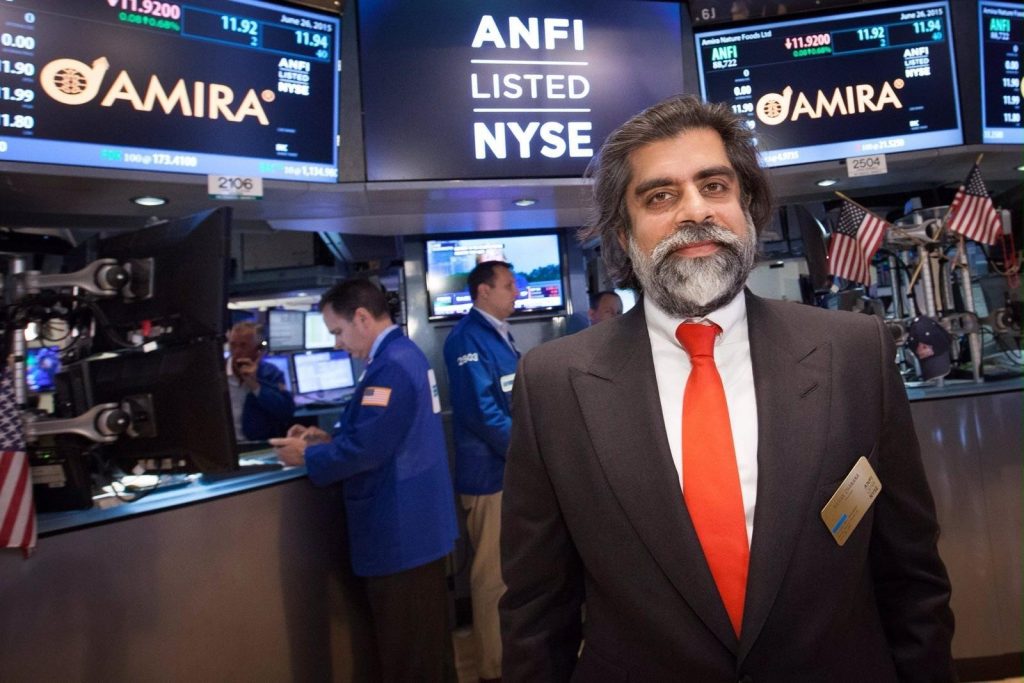
His story is not simply about business expansion or commercial success. It is about redefining how an Indian-origin enterprise could compete, communicate, and command respect on the global stage.
Karan A. Chanana emerged from a background deeply connected to India’s traditional agricultural trade. While many viewed agriculture as a conventional sector limited by geography and old business models, he saw something far greater — the potential to transform a heritage product into an internationally respected brand category.
What made his perspective unique was his understanding that the future of food businesses would depend not only on production, but on perception. Consumers across the world were no longer buying products solely based on necessity; they were buying trust, authenticity, quality, and emotional connection.
Chanana recognized this shift early.
Instead of treating rice as a basic commodity, he approached it as a premium global product with cultural identity and storytelling value. Under this philosophy, food became more than nourishment — it became an experience linked to heritage, memory, and lifestyle.
This mindset separated him from traditional industrialists.
Many businesses focus only on expanding distribution. Karan A. Chanana appeared focused on building credibility. He understood that in international markets, consistency matters as much as quality itself. Packaging, certifications, branding, logistics, and consumer confidence all became part of a larger vision that transformed a traditional business into a globally structured enterprise.
One of the most remarkable aspects of his leadership is his international outlook. While rooted in Indian traditions, his thinking was unmistakably global. He understood that modern business operates beyond borders, and companies that wish to survive internationally must adapt to different cultures, standards, and expectations without losing their identity.
That balance is difficult to achieve.
Some companies become global by abandoning their origins. Others remain authentic but fail to modernize. Chanana’s approach represented a middle path — preserving authenticity while presenting it through modern systems and global standards.
His leadership style also reflects patience, a quality increasingly rare in today’s corporate environment. In an age where many entrepreneurs chase rapid visibility and short-term valuation, Chanana’s journey suggests a preference for long-term structure and sustainable growth. His focus appears less centered on immediate attention and more on building institutions capable of lasting beyond economic cycles and changing markets.
Another defining trait is his quiet approach to influence.
Unlike celebrity entrepreneurs who dominate media conversations, Karan A. Chanana has maintained a comparatively understated public image. Yet sometimes the most powerful leaders are not those who speak the loudest, but those who create ecosystems that continue functioning efficiently regardless of visibility.
This kind of leadership often goes unnoticed because it is architectural rather than performative. It is built through systems, trust, discipline, and strategic thinking instead of constant public display.
His journey also reflects a larger transformation taking place within Indian entrepreneurship itself. Earlier generations focused mainly on trade and distribution. The newer generation aims to create globally respected institutions that combine Indian heritage with international professionalism.
Karan A. Chanana represents this transition.
He symbolizes a modern entrepreneurial identity where traditional industries are no longer viewed as outdated sectors, but as opportunities for innovation, premium positioning, and worldwide influence.
What makes his story particularly compelling is that it challenges a common misconception about leadership — that impact must always be loud to be meaningful. In reality, some of the strongest transformations happen quietly, over years of disciplined execution and strategic vision.
In many ways, his journey is not just about food or business. It is about perception, evolution, and the ability to transform legacy into global relevance.
And perhaps that is what truly defines Karan A. Chanana — not merely as an entrepreneur, but as a silent architect of modern global trust.