
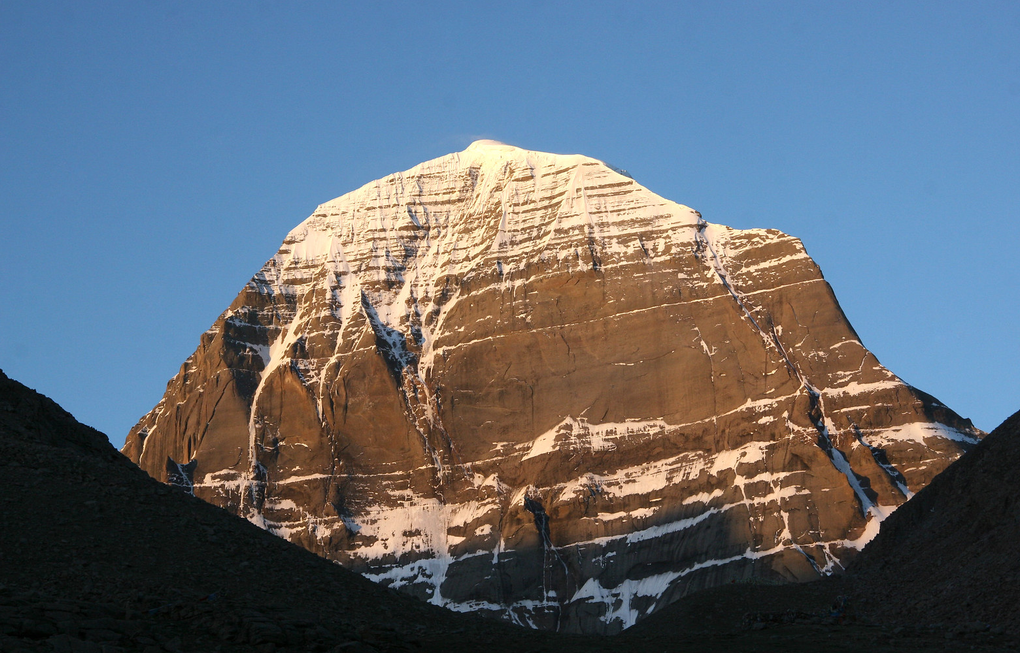
Kailash Mansarovar Yatra via Nepal is one of the most respected pilgrimage journeys in Asia. The pilgrims and travelers from around the world are heading to western Tibet each year to find the spiritual bliss, learn the ancient traditions and enjoy the beauty of Mount Kailash and Lake Mansarovar. The trip is significant to the followers of Hinduism, Buddhism, Jainism and Bon religion and is a distinctly unique pilgrimage that unites people from various religions.
The main reason Nepal is the starting point for many international tourists is its convenient location and the ease of travel services in Nepal. Typically, people start from Kathmandu and cross the border into Tibet at Rasuwagadhi Gyirong. Foreign tourists are not allowed to travel to Tibet on their own; they must enter through a tour group. The tours provide all the essentials, such as transportation, accommodations, permits, guides, etc., so pilgrims can concentrate on the tour rather than the logistics.
The pilgrimage involves a scenic drive over the Tibetan Plateau and a strenuous trek around Mount Kailash, the holy mountain. The lake of Mansarovar is at 4,590m (15,060 ft) and the peaceful mountain Manaslu rises to 6,638m (21,778 ft). People are not allowed to climb Mount Kailash because of its religious significance, but they do walk the kora around the mountain as a way to show their devotion to it. It is important to plan carefully as the trip goes to high altitudes where good acclimatisation is required.
This is the ultimate guide on Kailash Mansarovar Yatra through Nepal, with all the information on the route, necessary permits and the itinerary and cost. It includes a lot of useful travel information and useful tips on physical preparation, accommodation and when to travel, to help you prepare for a comfortable and meaningful pilgrimage.
Why Choose Nepal for Kailash Mansarovar Yatra?
Nepal is popular among travelers for its one of the easiest and most reliable routes to Mount Kailash and Lake Mansarovar. Kathmandu is home to numerous seasoned tour operators who arrange the whole trip from permits, transportation, hotels, meals, experienced guides and more. This will enable pilgrims to make the trip without the hassle of complex travel arrangements.
The other good thing about the initial starting point of Nepal is the gradual ascent of the Tibetan Plateau. The path through Gyirong will give visitors time to acclimatize themselves to the higher altitudes before reaching the holy places. This minimises the risk of altitude sickness and also makes the trip more enjoyable. Kathmandu also has excellent international flight connections and a Kailash Mansarovar tour from Nepal is suitable for tourists from many countries.
The trip is also a thrilling experience. While travelling through the mountain valleys, the rivers, remote Tibetan villages, open grasslands and high mountain passes, the pilgrims arrive at the sacred lake and mountain. The pilgrimage up and down the roads is enjoyable because of the changing vistas.
Route of Kailash Mansarovar Yatra via Nepal
The normal route to Kailash is through Nepal from Kathmandu, where the travellers spend one day at the end of final arrangements and the issuance of travel documents. From Kathmandu, it is possible to travel by road to Syabrubesi or Timure and then reach the border of Rasuwagadhi. Following immigration, travellers enter Tibet via Gyirong.
The road goes through Gyirong, Saga and Paryang before reaching the sacred Lake Mansarovar, once inside Tibet. Pilgrims usually take the time to participate in religious ceremonies, stroll around the lakeshore or merely appreciate the tranquil atmosphere before heading to Darchen. Pilgrims may have to take their time to enjoy the serene environment, walk along the lakeshore or even participate in religious rituals before reaching Darchen. Darchen is the beginning of the renowned Mount Kailash Kora.
The kora is a trip of about 52 kilometers and typically takes three days. Dolma La Pass (approx 5630 m or 18471 ft) is the highest point of the trek. The pass is deemed to be the most difficult due to its high elevation and steep incline. Once the kora is completed, tourists return to Darchen and then retrace their path through Saga and Gyirong, leading back to Kathmandu.
Permits Required for the Journey
Multiple permits are needed for the Kailash Mansarovar Yatra through Nepal; these cannot be acquired one at a time. All permits are organised by an authorised travel company which liaises with the Nepal and Tibetan authorities.
Foreign visitors must have a valid passport, which must have at least six months’ validity. Most organized tours have the Chinese Group Visa issued by the Chinese Embassy in Kathmandu, rather than applying to get it separately. There is also a Tibet Travel Permit and other local travel permits are needed for western Tibet that travelers must obtain.
The processing takes a few working days; therefore, it is advisable that the travellers arrive in Kathmandu much before the actual day of departure. Permit restrictions may vary, so please check the current permit requirements with the tour operator before planning your trip.
Typical Itinerary
During a typical Kailash Mansarovar tour from Nepal, travelers typically spend 13-15 days exploring the region, depending on their travel plans and weather conditions. The initial few days are spent in Kathmandu and then on a trek to the Nepal-Tibet border. From Tibet, visitors go through Gyirong and then Saga up to Lake Mansarovar.
A lot of pilgrims stay at the lake for a whole day to pray, meditate and relax. The trip then heads west to Darchen before embarking on the three-day pilgrimage around the holy mountain, Mount Kailash. The first walking day is usually fairly moderate in nature, the second walking day is the most difficult as it entails a crossing of Dolma La Pass (5630m /18471 ft). The last day is relatively easy before heading back to Darchen.
On completion of the pilgrimage, pilgrims go back by road to Saga and Gyirong and then back to Kathmandu.
Cost of Kailash Mansarovar Yatra via Nepal
The Kailash Manasarovar yatra price from Kathmandu is subject to change depending on the tour package, tour group, time of travel, stay and other tour services. The price of the most typical group tour is usually USD 2,000 to USD 3,500 per person. Private or luxury tours will often be more expensive as they provide a higher standard of accommodation, smaller-sized tours or more support services.
The package price typically covers transportation from Kathmandu, accommodation in a hotel, guesthouse stay in Tibet, permits, visa processing, guide services, support services and most meals on the journey. Some packages even come with oxygen cylinders and emergency medical assistance on high-altitude trips.
The package price typically excludes travel insurance, personal expenses, snacks, drinks, tips and any emergency evacuation costs. Unless otherwise stated by the tour provider, airfare to/from Kathmandu is typically extra. One can make a careful comparison of different packages so that they understand exactly what they are getting for their money before booking one of them.
Best Time for the Journey
The best time to go on the Mount Kailash pilgrimage is from May to September. In these months, the roads will often be clear, the weather will be relatively mild and travel conditions will be better than in the winter months.
The view of the mountain is good in May and June, with good daytime temperatures. On the Nepal side, occasional rains occur in July and August, but in western Tibet, due to the rain shadow effect of the Himalayas, the rainy season is relatively dry. September is another wonderful time of year, with stable weather and good visibility.
It is not advised to travel in the winter months as roads may be inaccessible due to heavy snow and very cold temperatures.
Physical Preparation and Altitude
While the trip is mainly by vehicle, the Mount Kailash pilgrimage demands considerable fitness as it passes through high altitudes and the three-day kora requires physical strength. Healthy travellers can also suffer from signs and symptoms of altitude sickness when climbing above 3,500 m (11,483 ft).
Hiking every day, getting fit in cardio and doing uphill hiking before the trip can make for a smoother trip. Sufficient water intake, no alcohol, proper nutrition and the recommendations in the guide are also beneficial to the body’s acclimatization to higher altitudes.
The hill ascent is a gradual one, allowing the visitors to acclimatise themselves before arriving at Lake Mansarovar and Darchen. All symptoms must be taken seriously and immediate medical attention and descent are required if they become severe.
Accommodation and Food
Nepal has different accommodation facilities along the Kailash Mansarovar Yatra. Hotels in Kathmandu are comfortable and the accommodation in Tibet is normally in guest houses or simple hotels equipped with basic amenities. Rooms are clean, but don’t expect luxury due to the remote location.
Typical food consists of Nepali, Tibetan, Chinese and simple international cuisine. Rice, noodles, vegetables, soups, bread, potatoes and eggs are available. It is good to bring a few favourite snacks along on a long driving day; food options are not as abundant in remote areas.
Conclusion
Kailash Mansarovar Yatra via Nepal is a journey of much more than just a trek at high altitudes. A pilgrimage that integrates faith, culture, history and the wonders of the Himalayas and Tibetan Plateau. The calm atmosphere of Lake Mansarovar, the peaceful pilgrimage to Mount Kailash, the plethora of cultural practices and the immense spiritual meaning of the area make it an outstanding and memorable experience for every pilgrim and traveler.
This pilgrimage can be done safely and comfortably provided all the necessary arrangements, permits and preparations go into it. The Kailash Mansarovar Yatra over Nepal is bound to be an experience with the right tour operator, the correct preparations for the altitude and the appropriate season.