

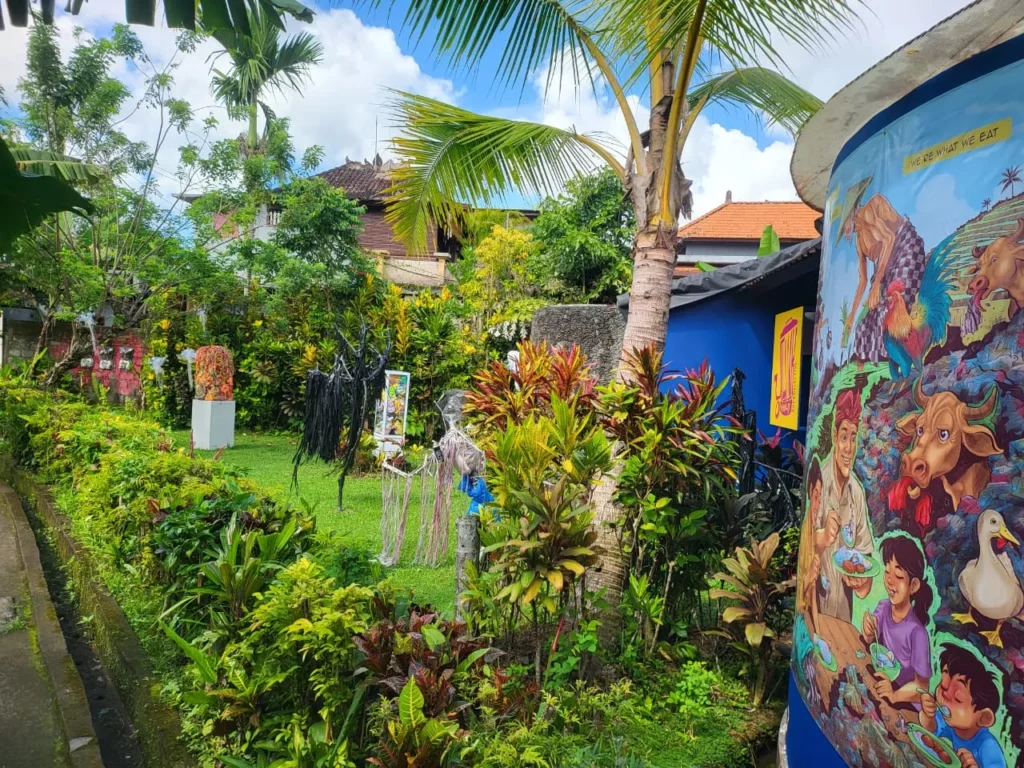
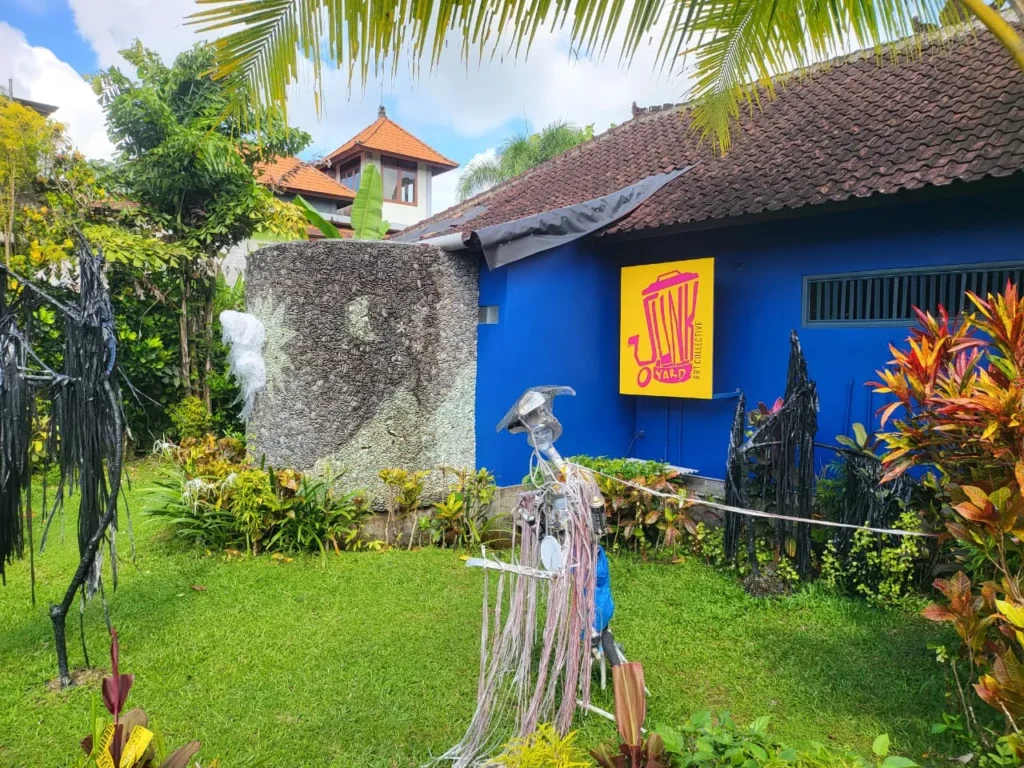
A small gallery in a quiet Ubud alley has no price tags, no ticket booth, and no commercial ambitions. Yet it offers a lesson that multinational corporations and investors would be wise to study.
Eight artists, some Balinese and some international, have formed the Junkyard Collective Bali. Their medium is plastic waste. Their product is awareness. And their business model, or rather the absence of one, challenges conventional thinking about value creation in the sustainability sector.
The collective’s unofficial leader is Dr. I Made Jodog, a senior academic who serves as Vice Rector of the Indonesian Institute of the Arts (ISI) Bali. Jodog has been experimenting with discarded plastic as an artistic medium since the early 2000s. But his current project is not about selling sculptures. It is about solving a supply chain problem that has eluded governments and corporations for decades.
“We are not thinking about money,” Jodog says. “We are thinking about awareness.”
From a purely economic standpoint, plastic is a miracle material. It is cheap, durable, and versatile. But those same properties become liabilities at the end of its lifecycle. Plastic does not biodegrade. It fragments into microplastics that contaminate soil, water, and eventually the food chain.
Junkyard Collective’s artists translate this abstract environmental threat into tangible, often beautiful objects. One artist, Arde, creates paintings by heat-fusing plastic sheets into layered images. Another, Wayan Suja, builds sculptures of female figures with real vegetables growing from their plastic-filled bodies — a living metaphor for how waste enters our food supply.
A giant jellyfish made from plastic bags floats in the gallery, driven by a small fan. “When a jellyfish stings you, you wake up,” Jodog says. “This jellyfish is meant to sting your consciousness.”
For entrepreneurs and investors, the collective offers a case study in circular economy thinking. The artists are not waiting for government subsidies or corporate partnerships. They are demonstrating that waste can be repurposed without expensive technology. The barrier is not technical. It is cultural.
Jodog’s long-term vision is for the collective to grow and attract international artists. He is open to collaboration. But he is not seeking venture capital. “We hope that one day it will become big, even global,” he says. “But our goal is not commercial. It is to grow awareness.”
The gallery is free. There are no plans to monetize. That stance may seem naive to business readers. But it also highlights a blind spot in how markets typically value sustainability: some solutions cannot be scaled in traditional ways. Awareness is not a commodity. It is a prerequisite.
For now, the Junkyard Collective remains a small, unfunded operation in a crowded tourist town. But its message — that plastic waste ends up inside human bodies via the food chain — is gaining traction. And in the long run, that awareness may be worth more than any product the artists could ever sell.
Jl. Raya Sanggingan Gang Bintang, Ubud, Bali
Free admission. Open to everyone — locals, tourists, families, children, skeptics, and believers.
Come before the jellyfish stops floating.
– Giostanovlatto, Founder Hey Bali News –