
Introduction
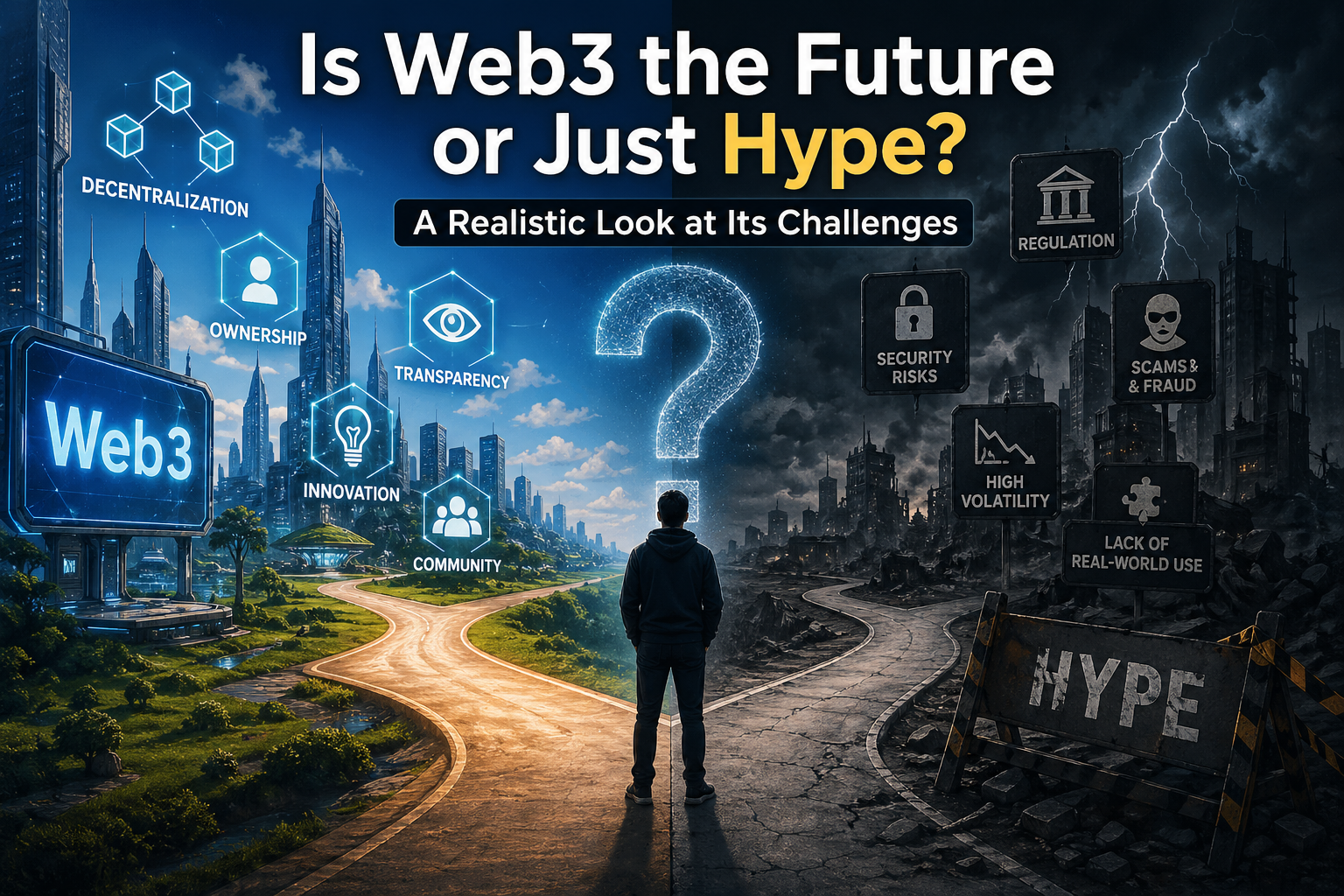
Web3 has been pitched as the next major shift in how the internet works. You’ve probably heard the promises: decentralization, user ownership, privacy, and freedom from big tech control. It sounds like a clean reset.
But here’s the thing. Every new wave of technology comes with big claims. Some stick. Others fade once reality kicks in. So instead of repeating the hype, let’s take a grounded look at what Web3 actually offers and where it struggles.
What Web3 Is Trying to Fix
To understand Web3, you need to look at what came before it.
The Problem with Web2
Today’s internet, often called Web2, is dominated by platforms. Social media networks, search engines, marketplaces. They control data, algorithms, and monetization. Users create value, but companies capture most of it.
This leads to a few clear issues:
- Lack of data ownership
- Centralized control over content and visibility
- Limited ways for users to earn directly from their contributions
Web3 aims to flip that model.
The Core Idea Behind Web3
Web3 is built on blockchain technology. Instead of relying on centralized servers, it distributes control across a network.
In theory, this means:
- Users own their data and digital assets
- Transactions are transparent and trustless
- Platforms are governed by communities, not corporations
That’s the vision driving the conversation around how Web3 is changing the internet. But a vision alone doesn’t guarantee success.
Where Web3 Actually Delivers
Before jumping into the challenges, it’s fair to recognize what Web3 gets right.
Ownership Becomes Real
Digital ownership is no longer just a concept. With blockchain, assets like tokens or NFTs can be verified and transferred without middlemen.
This opens the door for:
- Creators earning directly from their work
- Gamers owning in-game assets
- Users having control over their identity and data
Open Financial Systems
Decentralized finance, or DeFi, removes traditional banking barriers. Anyone with internet access can lend, borrow, or trade assets.
It’s not perfect, but it shows what’s possible when systems are open and permissionless.
Transparency and Trust
Blockchain records are public. That changes how trust works. Instead of relying on institutions, users can verify transactions themselves.
That’s a meaningful shift. But it also brings new complications.
The Reality Check: Challenges Web3 Can’t Ignore
Now let’s get into the part most hype-driven conversations skip.
Scalability Is Still a Problem
Blockchains struggle with speed and efficiency. Compared to traditional systems, they’re slower and more expensive.
For example:
- Transaction fees can spike unpredictably
- Networks can become congested
- User experience suffers when systems lag
Until this improves, mass adoption stays limited.
Complexity Turns Users Away
Web3 isn’t beginner-friendly.
Setting up wallets, managing private keys, understanding gas fees. For most people, it’s confusing. And when mistakes happen, there’s no customer support to fix things.
That creates friction. And friction kills adoption.
Security Risks Are Real
Decentralization doesn’t eliminate risk. It shifts it.
Smart contract bugs, phishing attacks, and scams are common. Once funds are lost, they’re usually gone for good.
That’s a tough trade-off. More control means more responsibility, and not everyone is ready for that.
Regulation Is Unclear
Governments are still figuring out how to deal with Web3.
Some concerns include:
- Money laundering risks
- Taxation challenges
- Consumer protection
Without clear regulations, businesses hesitate. And without businesses, growth slows.
The Hype Cycle Is Loud
Let’s be honest. A big part of Web3’s popularity comes from speculation.
Many projects promise innovation but deliver very little. Tokens get launched, prices spike, then crash. That creates distrust.
When people lose money, they don’t come back easily.
Is Web3 Replacing the Current Internet?
Short answer: not anytime soon.
Web3 isn’t replacing Web2. It’s more likely to coexist with it.
Think of it this way:
- Web2 is fast, convenient, and familiar
- Web3 is open, experimental, and still evolving
Each has strengths. The future might blend both rather than choosing one over the other.
What Needs to Happen Next
If Web3 is going to move beyond hype, a few things need to change.
Better User Experience
Tools need to feel simple. People shouldn’t need technical knowledge just to use basic features.
Real Use Cases
Speculation won’t sustain the ecosystem. Projects need to solve real problems, not just create tokens.
Stronger Security
Trust grows when systems are reliable. That means fewer hacks, better audits, and safer design.
Clear Regulations
Clarity helps adoption. When rules are defined, businesses and users feel more confident participating.
Final Thoughts
Web3 isn’t a scam. But it’s not a magic solution either.
It’s a developing layer of the internet with real potential and very real limitations. Some ideas will reshape how we interact online. Others will fade out as experiments that didn’t quite work.
What matters is staying grounded. Ignore the noise, focus on what actually delivers value, and watch how the space evolves.