
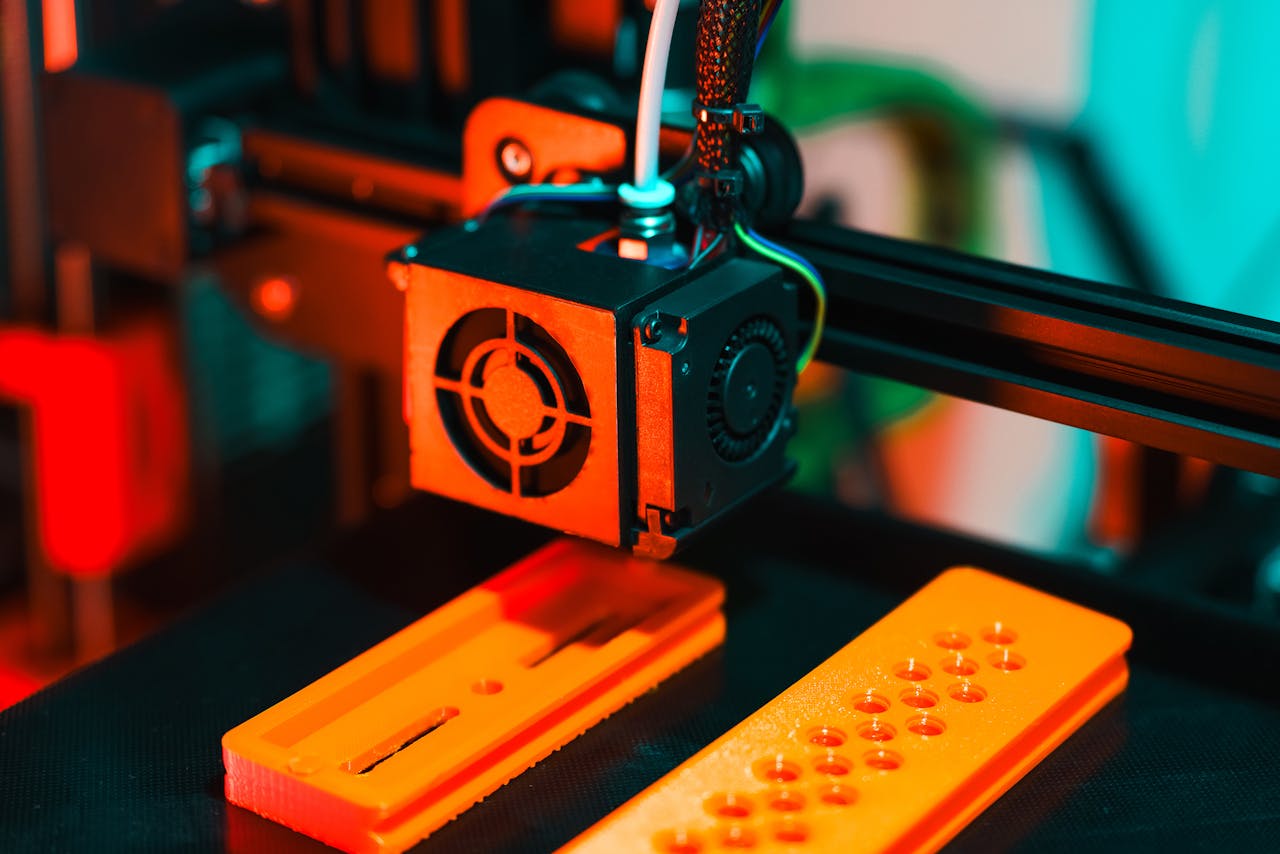
Every product manager knows the feeling: you have a brilliant idea, but bringing it to life feels like running a marathon with a ticking clock and a shrinking budget. The traditional development cycle is too slow, too expensive, and too risky. Enter rapid prototyping—not just another manufacturing service, but a fundamental shift in how smart companies validate ideas. By leveraging technologies like 3D printing, CNC machining, and vacuum casting, you can test, refine, and perfect your concepts faster than your competition can schedule their first design review meeting.
The Strategic Shift: From Linear to Agile
Remember the old playbook? Design it. Prototype it. Test it. Discover a fatal flaw. Start over. Months vanish. Budgets evaporate. Market opportunities disappear.
Rapid prototyping flips this antiquated model on its head. Instead of treating each prototype as a precious, final artifact, you create multiple iterations quickly and affordably. Think of it as design’s answer to agile software development. You build, test, learn, and refine in compressed cycles—sometimes completing in days what used to take months.
The mantra here is simple but transformative: fail fast, learn faster. When you can produce three design iterations in a week instead of waiting three months for a single prototype, you integrate real user feedback continuously. You catch ergonomic issues before they become product recalls. You identify manufacturing challenges while they’re still fixable with a few CAD adjustments rather than expensive tooling modifications. This iterative approach doesn’t just save time—it fundamentally improves the quality of your final product because you’ve actually tested your assumptions rather than just hoped they were correct.
Top 3 Business Benefits You Can’t Ignore
1. Slash Time-to-Market
Consider this real-world scenario: A medical device startup needed to validate a new wearable sensor design. Using traditional prototyping, they were looking at a 16-week timeline. By leveraging rapid prototyping services, they produced five design iterations in just four weeks. The result? They launched six months ahead of schedule, capturing market share before competitors even entered clinical trials. In today’s landscape, being first isn’t everything—but being significantly late can be fatal.
2. Mitigate Financial Risk
Here’s the math that keeps CFOs awake at night: discovering a critical design flaw in a $500 prototype is inconvenient. Discovering that same flaw after you’ve committed $50,000 to injection molding tooling is catastrophic. Rapid prototyping acts as your financial insurance policy. You invest small amounts iteratively, validating each assumption before scaling your investment. It’s the difference between placing calculated bets and gambling your entire product budget on a single untested design.
3. Secure Stakeholder Buy-in
Try pitching your next big idea with just CAD renderings and a PowerPoint deck. Now imagine walking into that same meeting with a physical prototype your investors can hold, manipulate, and experience. The difference is night and day. Tangible prototypes transform abstract concepts into concrete opportunities. They make crowdfunding campaigns irresistible, turn skeptical board members into champions, and give your sales team something to actually demonstrate. In the attention economy, a prototype isn’t just a development tool—it’s your most persuasive marketing asset.
Choosing Your Rapid Prototyping Path at Nice Rapid
Not all prototypes are created equal, and neither are the methods to create them. Here’s your quick-reference guide:
3D Printing: Perfect for complex geometries, concept models, and rapid iteration. When you need to evaluate form, ergonomics, or create intricate internal features, additive manufacturing delivers unmatched design freedom at prototype-friendly costs.
CNC Machining: Your go-to for functional testing and parts that need real material properties. When your prototype must withstand actual operating conditions—stress, heat, chemical exposure—CNC delivers production-grade strength and precision.
Vacuum Casting: The bridge between prototype and production. When you need 10-50 units that look and feel like injection-molded parts but can’t justify tooling costs yet, vacuum casting fills that crucial gap.
Unsure which method matches your project requirements? Our experts at Nice Rapid specialize in guiding clients through exactly this decision. Contact us for a consultation that matches your technical requirements with the optimal prototyping approach.
Conclusion
In today’s hyper-competitive landscape, rapid prototyping has evolved from a luxury reserved for well-funded corporations to an absolute necessity for anyone serious about innovation. The companies winning the product development race aren’t necessarily the ones with the biggest budgets—they’re the ones moving fastest, learning continuously, and iterating relentlessly. Nice Rapid provides the speed, expertise, and technology portfolio to transform your visionary concepts into market-ready products. The question isn’t whether you can afford to prototype rapidly. It’s whether you can afford not to.