

Problem: Your rankings look stable, yet clicks keep dropping. Pages hold position one, but traffic declines. Many SEOs now see this pattern after AI Overviews appeared in Google results.
Agitation: Traditional CTR models assumed users clicked blue links. AI answers now solve queries directly. Users scroll less. Zero-click behavior increases. Reports show impressions rising while engagement shrinks.
Solution: This article explains why AI Overviews change CTR, how user behavior shifts, and what optimization strategies actually work. You’ll learn how to measure AI visibility and protect organic performance — including approaches used by modern SEO practitioners and agencies like https://khalidseo.com/.
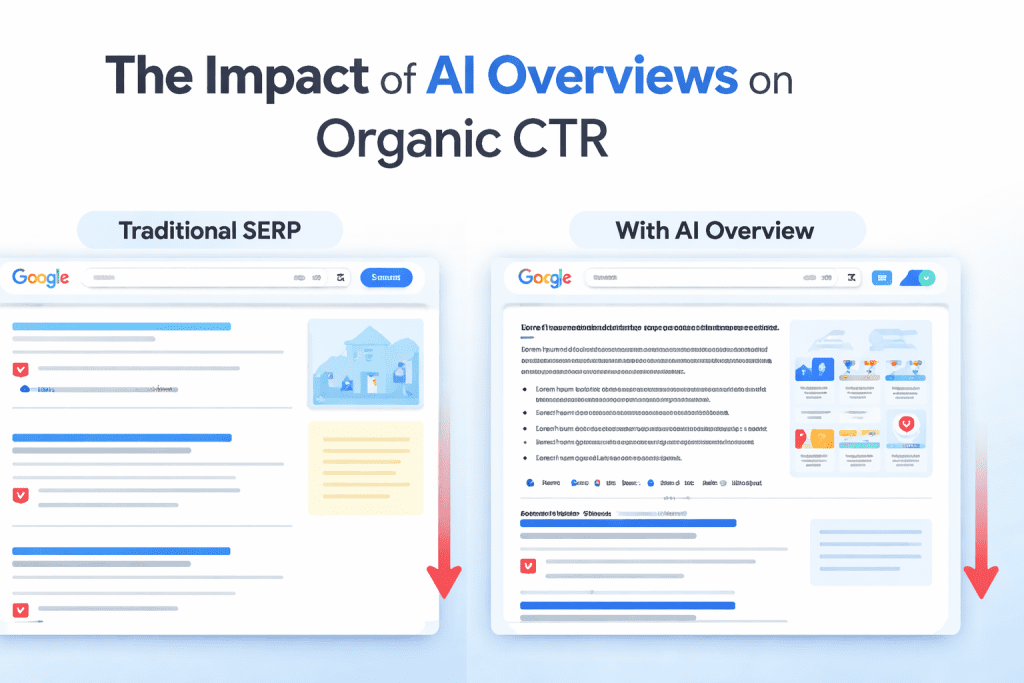
What Are AI Overviews and How Do They Work?
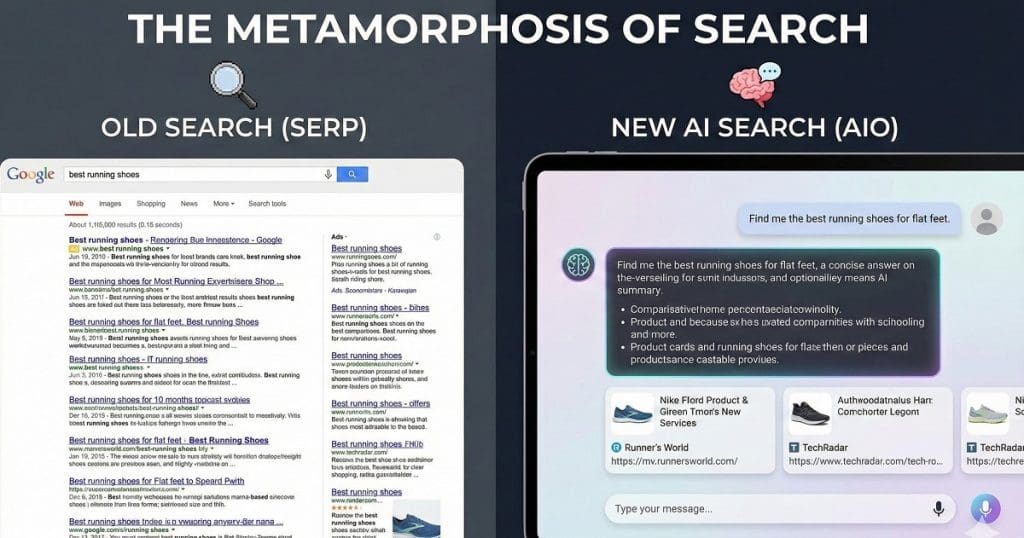
AI Overviews summarize answers directly within the search results. They use retrieval models and entity understanding to generate responses. Traditional rankings still exist, but visibility shifts upward into AI-generated summaries.
Evolution From Featured Snippets to AI Answers
Featured snippets extracted one answer from a single page. AI Overviews synthesize multiple sources. The result is broader, more conversational output.
The RAG Retrieval Process Explained
Search engines use Retrieval Augmented Generation (RAG). Systems crawl, vectorize content, retrieve relevant passages, and synthesize answers.
AI Summarization vs Traditional Ranking
- Rankings focus on position and authority.
- AI summaries prioritize semantic relevance and entity trust.
- Citations matter more than raw keyword targeting.
How AI Overviews Change Organic CTR Dynamics
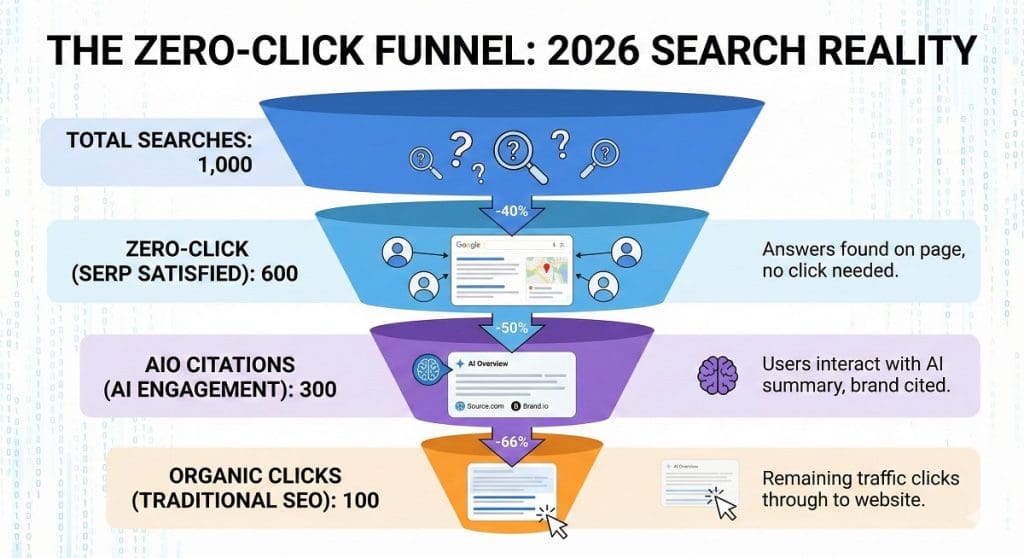
AI Overviews reduce organic clicks because users get answers earlier. The impact varies by intent and SERP structure.
SERP Pixel Real Estate Analysis
AI boxes dominate the top of results. Organic listings move lower. Less scrolling means fewer clicks even for high rankings.
Reduced Scroll Depth & Attention Zones
- Users read summaries first.
- Mobile screens show fewer organic results.
- Quick answers shorten research journeys.
CTR vs Visibility vs Engagement
- Impressions may increase.
- Clicks may decline.
- Engagement quality may improve due to higher intent traffic.
The Data: CTR Trends in AI-Driven Search Results
CTR patterns differ across query types. Informational searches see stronger declines than transactional ones.
CTR Changes Across Query Types
- Informational queries: largest drop.
- Research queries: moderate decline.
- Commercial intent: mixed results.
Informational vs Transactional Queries
AI answers handle factual searches easily. Product comparisons and deeper research still drive clicks.
Early Industry Data & Case Observations
- Stable rankings with declining clicks.
- Increased zero-click sessions.
- Rising impressions without traffic growth.

How User Behavior Is Changing in AI SERPs
User expectations now favor quick, conversational answers. Search journeys compress into fewer interactions.
Micro-Intent & Conversational Queries
People ask multi-part questions. AI systems respond with structured summaries instead of link lists.
Trust in AI Summaries
Users perceive AI answers as neutral summaries. Trust increases when authoritative brands are cited.
Reduced Multi-Click Research Journeys
Instead of visiting five pages, users scan one AI block. This reduces traditional click paths.
Why Rankings Alone No Longer Guarantee Traffic
Position one does not equal visibility anymore. AI retrieval focuses on entity authority and structured answers.
Ranking vs Retrieval Visibility
Pages can rank high but lack AI citations. Visibility shifts from ranking position to semantic relevance.
Entity Authority Signals
Strong brand entities increase citation likelihood. Structured content improves extractability.
Content Citations vs Organic Clicks
| Traditional Rankings | AI Visibility & Citations |
|---|---|
| Focus on position | Focus on retrieval relevance |
| Keyword optimization | Entity-based optimization |
| Click volume primary KPI | Citation presence and influence |
| Blue link exposure | AI summary inclusion |
| SERP ranking success | Knowledge graph authority |
How to Optimize Content for AI Overviews Without Losing CTR
Optimization now balances human engagement and AI extractability. Structure and authority matter more than length alone.
Structuring Content for AI Extraction
- Use clear headings and concise answers.
- Add FAQ blocks.
- Include tables and bullet lists.
Entity-Based Content Architecture
- Connect content to recognized entities.
- Use consistent author identity.
- Build topical clusters.
Author Authority & Trust Signals
Show expertise and real experience. Include case examples and unique data. Link to credible resources when relevant.
FAQ & Answer-Based Formatting
Short, precise answers help AI retrieval. Clear formatting increases citation probability.
New SEO Metrics in the Age of AI Search
CTR alone no longer reflects visibility. Modern SEO needs broader performance signals.
AI Citation Tracking
Monitor brand mentions within AI answers. Track queries where your content appears as a cited source.
Impression vs Influence Metrics
Impressions indicate exposure. Citations indicate authority. Engagement measures real user impact.
Engagement-Based Performance Models
Focus on assisted conversions, dwell time, and repeat visits. High-intent clicks matter more than raw traffic.
The Future of Organic Traffic in an AI-First Search Landscape
Organic traffic will not disappear, but expectations must change. Visibility shifts from links to influence.
Will Organic Traffic Decline Permanently?
Informational traffic may shrink. Brand-driven and solution-focused traffic may grow.
Brand Authority as a Visibility Asset
Strong brands earn citations more often. Entity recognition becomes a long-term SEO advantage.
Building AI-Ready Content Ecosystems
- Publish authoritative pillar pages.
- Maintain consistent topical clusters.
- Focus on original insights and data.
FAQ — AI Overviews and Organic CTR
Do AI Overviews reduce organic click-through rates?
AI Overviews often reduce CTR because answers appear directly on the SERP, decreasing the need for clicks.
However, sites cited inside AI summaries may receive fewer but more qualified visitors. High-authority content still attracts engagement when users want deeper information.
Why are zero-click searches increasing with AI search?
Zero-click searches rise because AI answers provide immediate solutions without requiring site visits.
Users gain quick insights within summaries. Informational searches benefit most from instant answers, reducing the number of external page interactions.
How can SEOs maintain CTR in AI-driven SERPs?
SEOs maintain CTR by optimizing for entity authority, structured data, and clear answer formatting.
Content with unique insights and strong expertise signals earns citations. High-value pages still attract users who want deeper analysis beyond AI summaries.
Are AI Overviews replacing traditional rankings?
AI Overviews change visibility but do not eliminate traditional organic rankings.
Links still appear below AI blocks. Rankings remain relevant, yet retrieval visibility and semantic authority now influence exposure as much as position.
What metrics should replace CTR in AI search performance?
AI-era SEO should track citations, brand mentions, engagement signals, and assisted conversions alongside CTR.
Measuring influence across AI answers helps evaluate visibility even when click numbers decline.
