
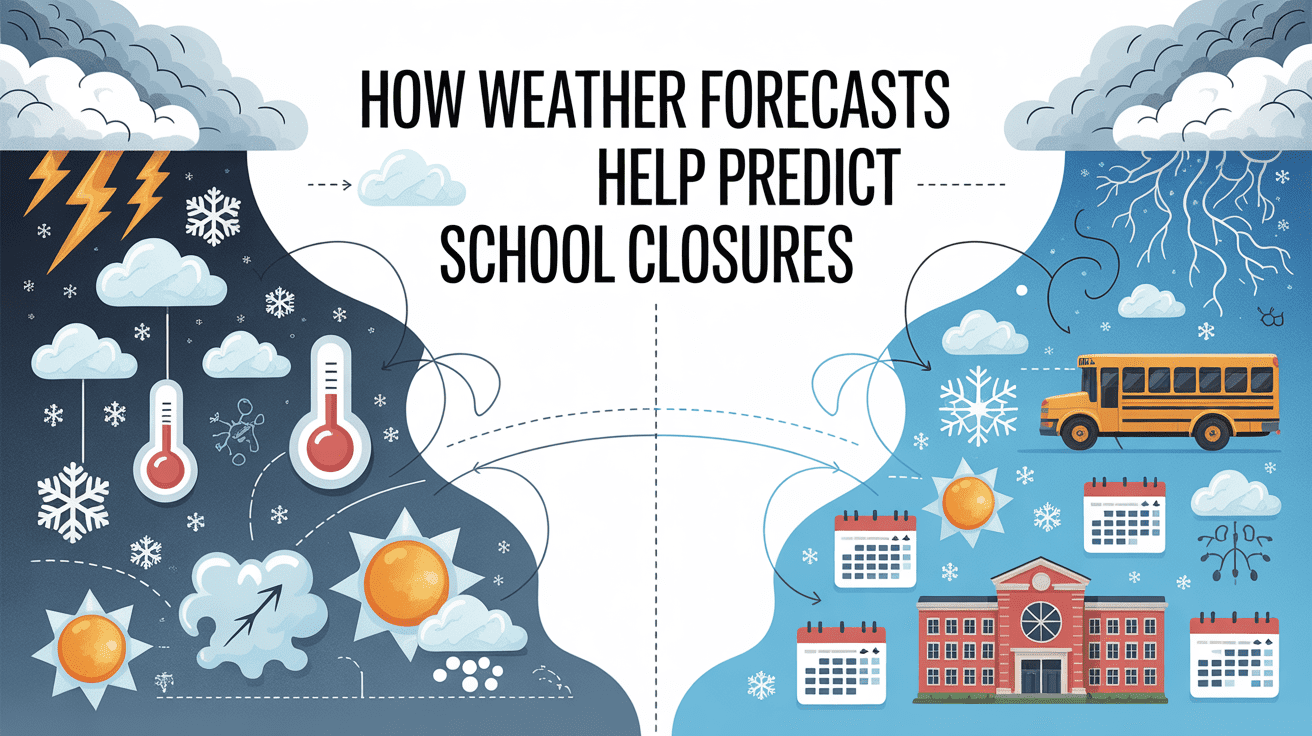
Winter weather has a strong influence on daily routines. Families wake up during cold mornings with the same question in mind. Will schools remain open or will students stay home. Weather forecasts help reduce this uncertainty. They offer insight based on data patterns and past outcomes. While no system can promise certainty forecasts help people prepare.
School closures are not decided by snowfall alone. Many factors work together. Temperature trends matter greatly. Ice formation creates danger even when snow is light. Wind increases risk by reducing visibility. Timing also plays a key role. A storm arriving before dawn is very different from one that starts after sunrise.
Forecasting systems monitor all of these elements. They analyze how weather conditions develop over time. This allows them to estimate risk levels. Parents and teachers use this information to plan their day.
Understanding How Weather Forecasts Work
Weather forecasts begin with data collection. Satellites observe cloud movement and moisture levels. Radar tracks precipitation intensity. Ground sensors measure air and surface temperature. All of this information feeds into computer models.
These models simulate how the atmosphere behaves. They calculate how storms move and change. Updates happen frequently. This allows forecasts to adjust as conditions evolve.
Local data improves accuracy. Cities and towns experience weather differently. Coastal areas differ from inland regions. Elevation also changes snowfall levels. Forecast systems factor in these differences.
Past weather events are also studied. If similar storms caused closures before then the risk increases. This historical comparison is important for prediction.
Why Timing Matters for School Decisions
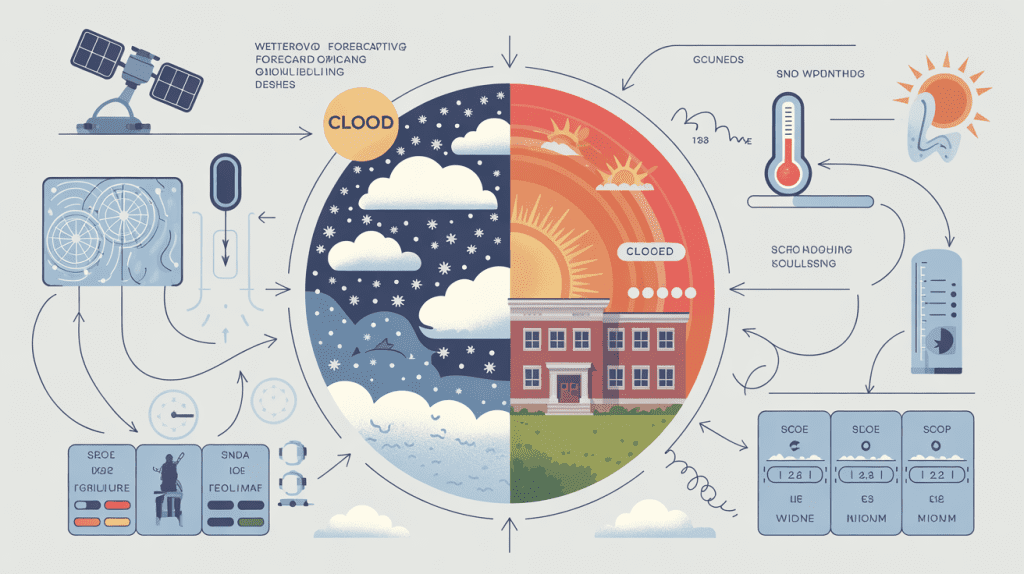
The timing of snowfall has a major impact. Snow falling overnight allows road crews time to prepare. Plows and salt trucks can clear routes before buses roll.
Snow that falls during early morning hours creates higher risk. Roads may be untreated. Visibility may be poor. This raises safety concerns.
Temperature drops after snowfall can create ice. Melted snow refreezes quickly. Forecasts watch for these changes closely.
School officials monitor updates late at night and early in the morning. Families often do the same.
Using Probability Based Tools for Planning
Many people no longer wait for official announcements. They check probability based tools for insight. These tools translate complex forecasts into simple results.
A snow day calculator helps estimate closure chances by analyzing multiple factors. It reviews snowfall amounts, temperature trends and timing. It also considers how local districts respond to similar conditions.
Parents use this information to plan alarms, childcare and work schedules. Students use it to manage homework and activities. The value lies in preparation.
These tools do not replace official decisions. They provide guidance and reduce surprise.
The Role of Local Conditions
Every school district is different. Urban areas often clear roads quickly. Rural districts may have longer bus routes and fewer resources.
Forecast systems adjust predictions based on location. They learn how specific districts respond to weather. Over time accuracy improves.
Community feedback also matters. When users report outcomes models refine future estimates.
Weather forecasts combined with local behavior create better predictions.
Interpreting Closure Probability
Probability does not mean certainty. A forty percent chance does not guarantee closure. It means conditions are uncertain.
Understanding this helps manage expectations. When chances are high families prepare mentally. When chances are low they plan for school.
A snow day predictor focuses on likelihood rather than yes or no answers. This reflects how real decisions are made.
School administrators also think in probabilities. They weigh risks rather than follow fixed rules.
Technology Behind Modern Forecasting
Forecasting technology has advanced rapidly. Faster computers process large datasets quickly. Satellite imagery is clearer than ever.
Machine learning improves pattern recognition. Systems learn which conditions lead to closures. Over time predictions become smarter.
Weather data updates frequently. This allows tools to adjust predictions overnight.
These advances make forecasting tools more useful and reliable.
Why Forecasts Sometimes Change
Weather remains unpredictable. Storm paths can shift suddenly. Temperatures may rise or fall unexpectedly.
Human decisions also vary. Some districts are cautious. Others wait longer. This affects outcomes.
Forecast tools reduce uncertainty but cannot remove it entirely. Checking updates regularly improves understanding.
Flexibility remains important during winter storms.
Planning Ahead with Forecast Insight
Early awareness helps families plan better. Work schedules can be adjusted. Childcare arrangements can be made.
Students feel less anxious when expectations are clear. Teachers also benefit from preparation.
Using tools like a snow day calculator responsibly helps with this planning. It should guide expectations not replace official communication.
Information is most helpful when used calmly and wisely.
Communication Still Matters
Official announcements remain the final authority. School districts use alerts websites and social media.
Forecast tools prepare families for these announcements. They reduce shock when closures are announced early in the morning.
Clear communication builds trust. Forecast insight supports this process.
Parents who understand weather patterns feel more confident.
Psychological Benefits of Prediction
Uncertainty creates stress. Winter mornings can be tense. Knowing the chance of closure helps ease anxiety.
A snow day predictor offers mental preparation. Even if schools remain open expectations are managed.
This emotional benefit is often overlooked. Feeling informed improves well being.
Prediction tools support peace of mind.
Safety as the Main Priority
School closures aim to protect students and staff. Unsafe roads and poor visibility increase accident risk.
Forecasts help prevent unnecessary travel. Families avoid dangerous conditions when closures are expected.
Emergency services also benefit. Fewer vehicles on the road reduces strain.
Weather forecasting supports community safety.
Long Term Improvements in Accuracy
As technology improves predictions will become more refined. Better sensors and smarter models are being developed.
Local integration may increase accuracy further. Personalized predictions could emerge.
Community participation will continue to improve results.
The future of forecasting looks promising.
Responsible Use of Forecast Tools
Users should understand limitations. No tool is perfect. Weather can change quickly.
Checking multiple updates helps. Combining forecasts with local news is best.
A snow day calculator works best when used as part of a broader information routine.
Balanced use leads to better decisions.
Education and Awareness
Understanding how forecasts work empowers families. Knowledge reduces confusion.
Teaching students about weather patterns builds awareness. It also encourages safety.
Forecast tools serve as learning aids as well.
Informed communities respond better to winter weather.
Final Thoughts on Weather Based Planning
Weather forecasts have transformed how school closures are anticipated. They provide insight before official announcements.
Tools that estimate school closure chances help families plan ahead. They reduce stress and improve safety.
A snow day predictor and similar tools offer guidance during uncertain conditions.
While uncertainty will always exist preparation makes winter mornings easier.
Staying informed leads to smarter calmer decisions.