
Problem: Many forex traders watch the USD move but don’t know why.
Agitation: Headlines shout “Fed,” “inflation,” or “risk-off,” yet price still feels random. Trades become guesses.
Solution: This guide breaks down what actually moves the US dollar, how those forces interact, and how traders can turn macro signals into a clear USD bias.
Short. Practical. Built for real trading decisions.
What Moves the US Dollar?
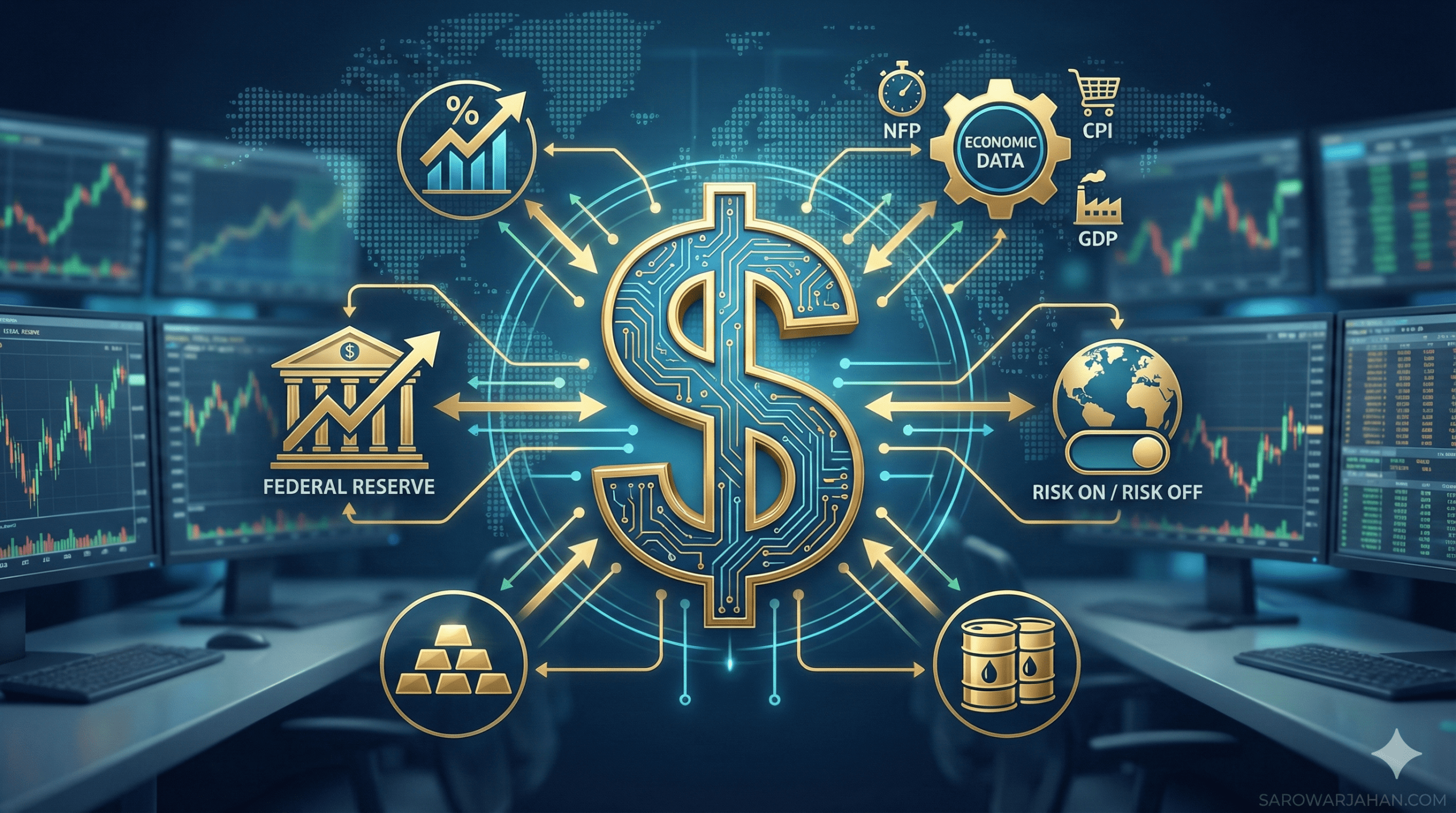
The US dollar doesn’t move on news alone. It moves on expectations, capital flows, and relative advantage.
The main drivers are:
- Interest rates and Federal Reserve policy
- Inflation and key economic data
- Bond yields and capital flows
- Risk sentiment and safe-haven demand
- Global liquidity conditions
This order matters. Not every factor carries equal weight at the same time.
For a detailed breakdown with real trading insights, visit What Moves the USD: A Forex Trader’s Guide.
Interest Rates & Federal Reserve Policy (Primary Driver)
How the Federal Reserve Influences the USD
The Federal Reserve controls the price of money in the US economy. That price is interest rates.
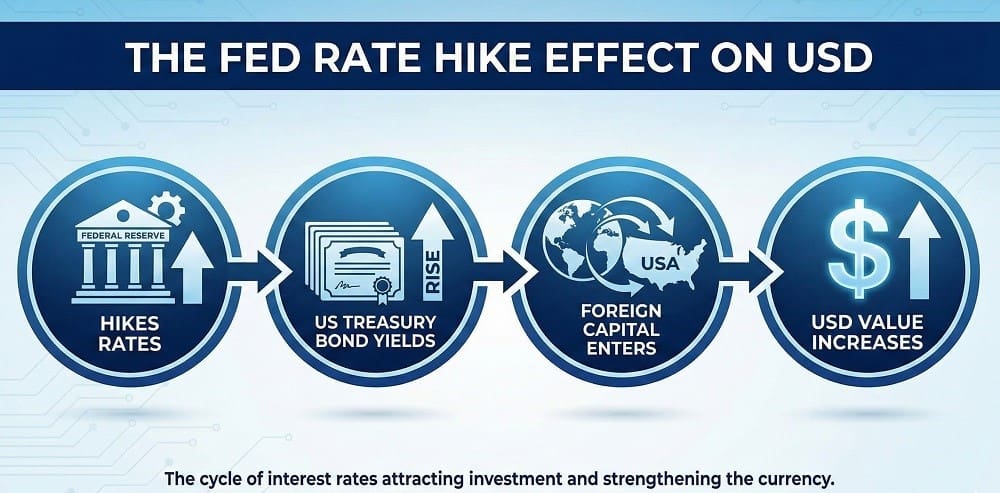
When rates rise:
- US assets offer higher yields
- Global capital flows into dollars
- USD demand increases
When rates fall:
- Yield advantage shrinks
- Capital looks elsewhere
- The dollar weakens
Hawkish vs Dovish Policy Explained
- Hawkish Fed: Focused on inflation, favors rate hikes → USD strength
- Dovish Fed: Focused on growth, favors cuts → USD weakness
Markets often move before rate changes happen. The signal matters more than the action.
Inflation, CPI, and Economic Data That Move the Dollar
Why Inflation Data Matters More Than GDP
Inflation drives Fed decisions. GDP confirms the past.
That’s why CPI and PCE move the USD more than growth data.
Key releases traders track:
- CPI (Consumer Price Index)
- PCE (Fed’s preferred inflation gauge)
- Non-Farm Payrolls (NFP)
Which US Data Moves USD the Most?
Not all data is equal.
| Economic Release | USD Impact |
|---|---|
| CPI / Inflation | Very High |
| NFP Jobs Report | High |
| Retail Sales | Medium |
| GDP | Medium |
| Manufacturing PMIs | Low–Medium |
Bond Yields, Capital Flows, and the Dollar Index (DXY)
Why Rising Yields Strengthen the USD
Bond yields reflect real returns.
When US Treasury yields rise:
- Institutions buy US debt
- Dollars are needed to settle trades
- USD demand increases
This often matters more than spot rate decisions.
Understanding the US Dollar Index (DXY)
The DXY measures USD strength against a basket of currencies.
Key insight:
- Rising DXY = broad USD demand
- Falling DXY = capital rotating out
Watching DXY helps traders avoid tunnel vision on one pair.
Risk Sentiment & the USD as a Safe-Haven Currency
Risk-On vs Risk-Off Explained
Markets operate in two modes:
- Risk-On: Investors chase returns → USD weakens
- Risk-Off: Capital seeks safety → USD strengthens
Triggers include:
- Financial crises
- Geopolitical conflict
- Recession fears
Why the USD Rises During Global Crises
The USD backs:
- Global trade
- Energy pricing
- US Treasuries
Liquidity matters most when fear spikes.
When the USD Weakens
Rate Cuts and Dollar Pressure
The dollar tends to weaken when:
- The Fed signals rate cuts
- Inflation cools rapidly
- Growth outside the US improves
Risk-On and Global Growth Phases
A weak USD often appears when:
- Equities rally
- Emerging markets outperform
- Carry trades expand
| Strong USD Environment | Weak USD Environment |
|---|---|
| Rate hikes | Rate cuts |
| Risk-off | Risk-on |
| High yields | Falling yields |
| Capital inflows | Capital outflows |
How Forex Traders Can Use USD Fundamentals
Building a Bullish or Bearish USD Bias
Before trading USD pairs, ask:
- Is the Fed hawkish or dovish?
- Are yields rising or falling?
- Is risk sentiment defensive or optimistic?
Answering these creates directional bias.
Combining Fundamentals with Technical Analysis
Fundamentals set direction. Technicals set timing.
Best practice:
- Use fundamentals to choose bias
- Use charts for entries and exits
This approach reduces emotional trading.
For more insights into linking macro drivers with trade setups, see https://www.sarowarjahan.com/what-moves-the-usd-a-forex-traders-guide/.
Common Mistakes Traders Make When Trading the USD
- Trading headlines instead of expectations
- Ignoring bond yields
- Overreacting to single data points
- Forgetting global context
News moves price only when it changes the narrative.
Final Thoughts: Understanding What Moves the USD Long-Term
The USD isn’t random. It follows policy, yields, and risk cycles.
Traders who respect macro structure:
- Trade less
- Trade better
- Stay aligned with dominant flows
If you want deeper analysis and real-world examples, check out What Moves the USD: A Forex Trader’s Guide now.
FAQ: What Traders Ask About USD Movement
What factors move the US dollar the most?
Interest rates, Federal Reserve policy, inflation data, bond yields, and global risk sentiment move the USD most.
These forces drive capital flows. The dollar responds to relative return and safety, not headlines alone.
How do interest rates affect USD value?
Higher interest rates attract capital into US assets, increasing demand for the dollar.
Lower rates reduce yield advantage. Markets often price expectations before rate changes occur.
Why does the USD rise during global crises?
The USD is a global safe-haven currency backed by liquidity and US Treasuries.
During uncertainty, investors prioritize safety and liquidity, boosting USD demand.
Which US economic data impacts forex the most?
Inflation data and Non-Farm Payrolls move USD more than GDP.
These releases shape Federal Reserve policy expectations, which directly affect capital flows.
How can traders predict USD movements?
By tracking Fed policy signals, inflation trends, bond yields, and risk sentiment together.
Combining fundamentals with technical confirmation improves timing and trade quality.
