
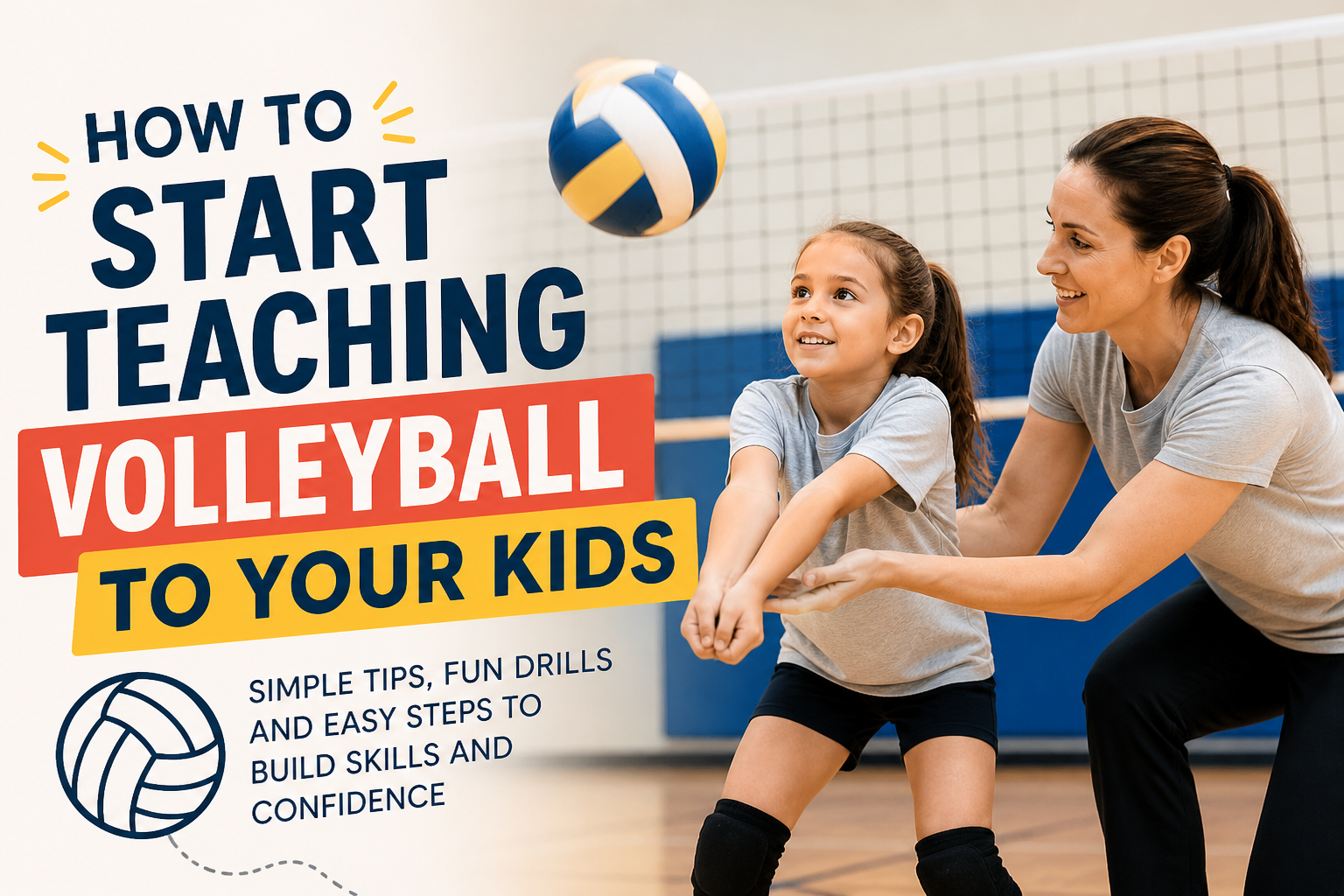
Getting your child into sports early can shape their confidence, coordination, and teamwork skills for life. Volleyball is a great choice for kids because it is easy to start, requires minimal equipment, and encourages communication and movement.
If you are a parent in the US looking to introduce volleyball at home or in your backyard, the good news is you do not need to be an expert. What matters most is creating a fun and supportive environment where your child can learn the basics at their own pace.
This guide will walk you through simple, practical steps to help you start teaching volleyball to your kids in a way that keeps them engaged and excited.
How to Start Teaching Volleyball to Your Kids
Here’s how you can start teaching volleyball to your kids with simple drills, fun activities, and easy steps.
1. Start with the basics, not the rules
Kids do not need to learn every official rule right away. Begin by helping them understand the goal of the game. Keep the ball off the ground and send it over the net.
You can introduce simple volleyball drills like tossing and catching, gentle passing back and forth, or keeping the ball in the air as long as possible. These drills help kids understand control and timing without pressure.
Use simple language and focus on fun rather than correctness. At this stage, the goal is to build interest, not perfection.
2. Use the right equipment for kids
Adult volleyballs can be heavy and difficult for beginners. Start with a lighter ball or even a beach ball. This makes it easier for kids to control and reduces fear of getting hit.
Lower the net or use a rope if needed. You can even play without a net in the beginning.
3. Teach basic skills one at a time
Focus on three core skills:
- Passing – Show them how to keep their arms straight and use their forearms. Start with gentle tosses instead of fast hits.
- Setting – Teach them to use their fingertips and push the ball upward. Keep it simple and focus on control.
- Serving – Start with underhand serves. This is easier and helps build confidence before moving to more advanced techniques.
Keep practice sessions short and repeat each skill regularly.
4. Turn practice into games
Kids learn faster when they are having fun. Create small challenges like:
- How many passes can we do in a row
- Can you hit the ball into a target
- Who can keep the ball in the air the longest
These games build skills without making practice feel like work.
5. Focus on movement and coordination
Volleyball is not just about hitting the ball. Teach your child how to move their feet, stay balanced, and react quickly.
Simple drills like shuffling side to side or moving toward the ball can make a big difference early on.
6. Encourage teamwork and communication
Even if you are just playing at home, encourage your child to call for the ball or say simple words like “mine” or “got it.”
This helps build confidence and prepares them for playing with others in school or clubs.
7. Keep sessions short and positive
Kids have shorter attention spans, so aim for 15 to 30 minutes per session. Always end on a positive note, even if it is just celebrating small improvements.
Avoid overcorrecting mistakes. Encourage effort more than results.
8. Lead by example
Play with your child. When they see you enjoying the game, they are more likely to stay interested.
You do not need to be perfect. Being involved and supportive matters more.
9. Gradually introduce structure
As your child becomes more comfortable, you can slowly introduce:
- Basic rules
- Simple rotations
- Playing with more people
You can also consider enrolling them in local beginner programs or camps if they show strong interest.
Conclusion
Teaching volleyball to your kids does not require professional coaching or perfect technique. It starts with creating a fun, safe, and encouraging space where they can explore the game.
By focusing on simple skills, using kid friendly equipment, and turning practice into play, you can help your child build confidence and enjoy the sport from an early age.
The most important part is consistency and positivity. If your child associates volleyball with fun and support, they are far more likely to stick with it and grow both on and off the court.