
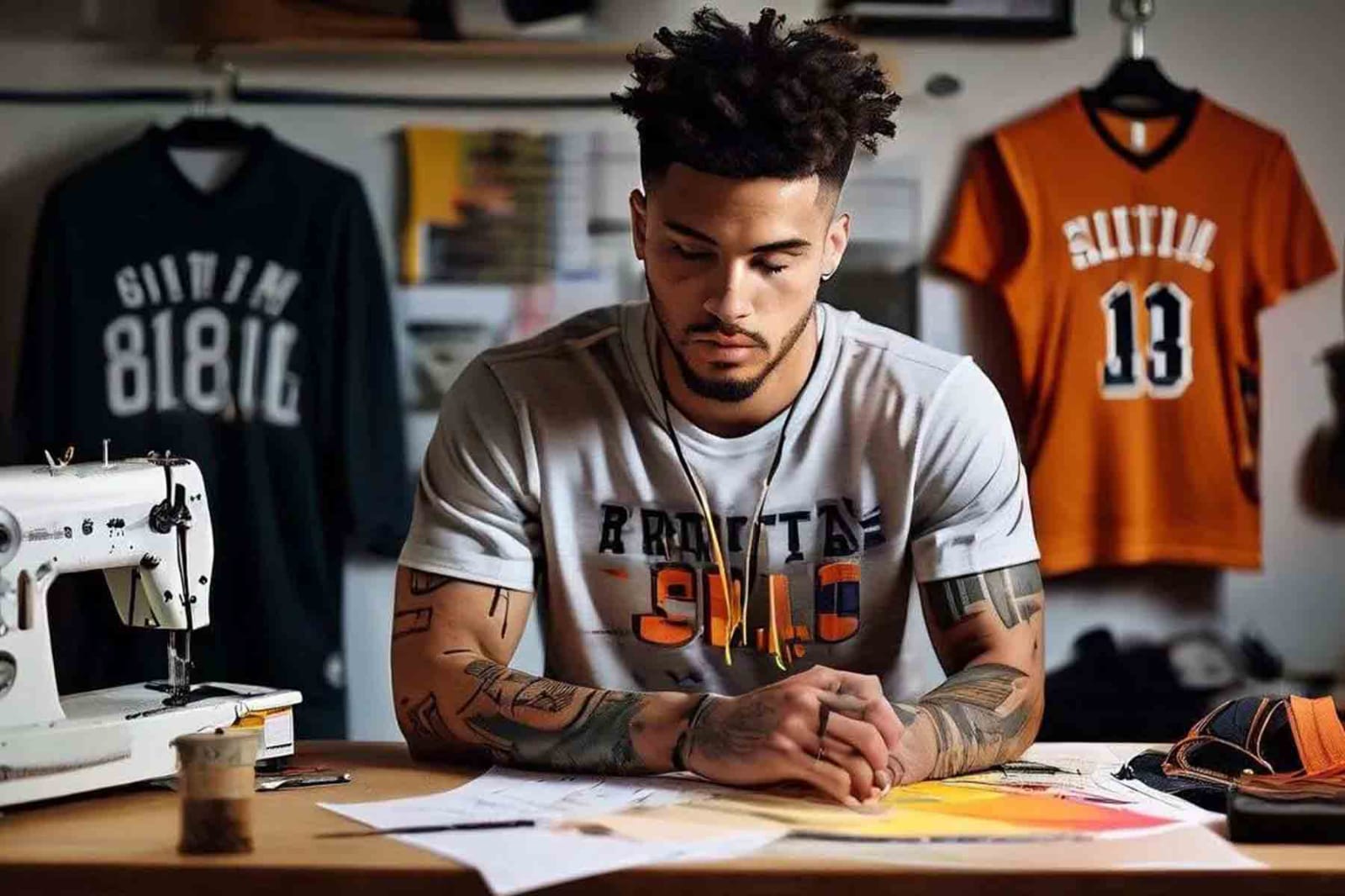
A notebook full of jersey sketches sits next to a laptop with fourteen open browser tabs. Factory directories. Fabric suppliers. Shopify themes. Competitor lookbooks. The research phase feels productive. Months pass. Nothing gets produced. The gap between planning and shipping product swallows more aspiring brands than bad design ever will.
Starting requires less capital and less certainty than most founders assume. But it demands sharper decisions earlier than most expect. The brands that reach market quickly share a common trait — they narrow their scope at the front end. They resist launching a full catalog that bleeds cash and dilutes identity.
Defining Your Lane Before You Design Anything
Skipping this step costs more than any production mistake. Your lane determines who you sell to, what you charge, how you present the brand, and which retail channels make sense. Without it, every decision after becomes a guess.
Ask yourself who this line targets. Streetwear buyers? Recreational athletes? Team organizers? Some hybrid of those? Each group expects different things from a basketball jersey. Streetwear buyers judge silhouette, palette, and cultural relevance first. Athletes lean toward fabric performance and fit — aesthetics come second to function for them. Team organizers compare turnaround speed and volume pricing long before they look at your graphics.
Trying to serve all three from the start waters down everything. A brand that reads as everything attracts nobody. Pick one primary audience. Build your first collection around their specific needs and taste. Expand later once your core base is loyal and revenue is flowing.
Price tier connects directly to this decision too. A streetwear-positioned jersey at $75 needs different fabric, finishing, and packaging than a rec league piece at $32. Where you sit on that spectrum drives your production choices, your margin targets, and your marketing language. Figure this out before you sketch a single design.
Building Your First Collection Small and Sharp
New founders overestimate how much product they need at launch. Six colorways across three silhouettes with matching shorts sounds exciting on a mood board. In practice it’s a cash trap. Each SKU multiplies your minimum order, your inventory risk, and your capital sitting in unproven stock.
A focused debut looks more like this:
- One silhouette that nails your brand identity — get this right and the rest follows
- Two to three colorways testing different palette directions
- One size run (S through XXL) built on a graded pattern you trust
- Matching shorts only if budget allows without stretching jersey quality thin
Keep your first production order in a range where mistakes are survivable. A bad colorway at fifty units stings. Scale that to three hundred and it can bury a young brand before anyone even sees the good stuff.
Design should serve the audience you identified. Not your personal taste alone. Study what your target buyer already wears. Note the fits, the color families, the graphic density they respond to. Then design into that space with your own voice. Not from isolation — from insight.
Finding the Right Production Partner
This relationship will define your product quality, your timeline, and honestly your stress levels for the foreseeable future. The wrong partner turns a simple collection into months of revision emails and missed ship dates. The right one becomes an extension of your design team.
Look for a manufacturer that handles custom basketball jersey fashion specifically. Not a generalist factory that also does socks, underwear, and whatever else. Specialization matters. A dedicated jersey factory already understands construction details, decoration methods, and fabric behavior. You won’t spend weeks educating them on basics they should already know.
Effective Sportswear works with first-time founders and established brands alike. Their in-house patterning, sublimation, and cut-and-sew setup keeps development under one roof. Fewer vendors to coordinate. Fewer delays between stages. And a production team that already speaks this category fluently.
When evaluating any factory, request samples in your specific product type. Ask about minimums per style. Ask about sample lead times. Then — and this one matters more than people realize — clarify what happens when your tech pack needs changes mid-development. Does the factory offer development support, or do they only execute what you submit? The difference between a vendor and a partner lives in that answer.
Mistakes That Burn First-Time Founders
Certain errors repeat so often across new brands that they’ve become almost ritualized. Knowing them won’t make your launch perfect. But it removes the most expensive traps from your path.
Ordering too much on the first run. Enthusiasm pushes founders toward volume pricing tiers before demand exists. The per-unit savings on 300 pieces look great in a spreadsheet. They look less great when 200 of those pieces sit in your apartment for eight months. Start below your instinct. Always.
Skipping the sample stage. Going straight to bulk because you’re eager or trying to save $150 on development — this always backfires. Always. A pre-production sample protects the $3,000 you’d lose on a bulk order with a fit problem you could’ve caught.
Ignoring the boring details. Care labels, packaging, hang tags, poly bags. These feel secondary until your product arrives looking unfinished. Buyers notice polish even when they can’t articulate what’s missing. They just feel it. And they don’t buy.
Pricing without understanding landed cost. Your retail price can’t be jersey cost plus some markup you pulled from a competitor’s site. Factor in shipping, duties, packaging, transaction fees, returns, and marketing spend. Brands that price off production cost alone discover they’re losing money once all the invisible expenses show up on the books.
Getting Your First Drop to Market
Product in hand means nothing if nobody knows it exists. Go-to-market needs the same attention you gave design.
Build an audience before you ship. Even sixty days of behind-the-scenes content creates anticipation. Process shots, fabric close-ups, fit tests on real bodies — these posts cost nothing and they convert followers into buyers who feel invested in the outcome. They watched it get made. Now they want to own it.
A pre-order or waitlist model reduces risk on your first release. Gauge actual purchase intent before committing all your capital. If forty people put down deposits, you know your first run has a home before boxes show up at your door.
Product pages matter more than most founders want to admit. Clear photography on a real body. A size chart with actual garment measurements — not “fits like a medium.” Fabric details that mean something. Lifestyle shots showing how the jersey fits into a wardrobe, not just how it looks on a hanger. Weak product pages convert below 1% regardless of how strong the design is.
Launch pricing should reflect positioning. Not desperation. Discounting your first drop trains buyers to wait for sales. Start at your intended retail price and hold it. If the product and positioning are right, full-price buyers will show up. If they don’t, the problem isn’t price — it’s product-market fit.
What Actually Moves Product After Launch
The first drop teaches you more than months of planning ever could. Track what sells fastest. Note which sizes go first. Watch which content actually drove purchases versus which just drove traffic. Those are different metrics with very different implications.
Repeat buyers come from consistent quality and cadence. A single drop followed by six months of silence kills momentum dead. Have your second release planned before the first one ships. It keeps people engaged and gives you a reason to stay in their inbox.
Collaboration gets underestimated by solo founders. A feature from a local athlete. A styling post from a fashion creator with 12K followers. These expose you to audiences someone else spent years building. That kind of borrowed reach compounds faster than posting on your own account three times a week and hoping the algorithm cooperates.
The brands that sustain beyond year one treat each release as a learning event, not a victory lap. What sold tells you what to make more of. What sat tells you where your instincts were off. Listen to the numbers early. Adjust fast. The market will tell you what it wants — but only if you’re paying more attention to receipts than to your own mood board.