
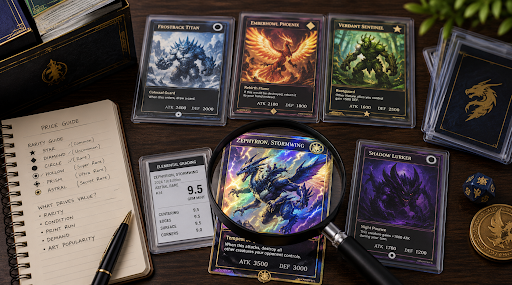
Collecting Pokémon cards is exciting, but knowing which cards are truly valuable takes more than noticing shiny artwork. Some cards sell for a few dollars, while others can be worth hundreds or thousands. The difference usually depends on rarity, condition, age, demand, print quality, and collector interest.
For beginners, value can seem confusing because it is never based on one feature alone. A holographic card is not always expensive, and an old card is not automatically rare. Learning how collectors evaluate cards helps you avoid mistakes and make smarter buying or selling decisions.
Check the Rarity Symbol First
The rarity symbol is usually printed near the bottom of the card. It indicates how frequently that card appeared within its set.
Common symbols include:
- A circle for common cards
- A diamond for uncommon cards
- A star for rare cards
- Special marks for ultra rare, secret rare, and promotional cards
A star does not guarantee a high price, but it is a useful starting point. Modern sets feature full art cards, illustration rares, special illustration rares, gold cards, and other premium designs.
Compare the card number with the set total. A card numbered beyond the official total, such as 205/198, is generally a secret rare. These cards are harder to pull and may attract stronger demand.
Identify the Set and Card Number
Every card belongs to an expansion, promotional release, or special product. The card number and set symbol help identify its exact version.
For example, a card marked 4/102 is the fourth card in a set containing 102 officially numbered cards. Some early base set cards have no expansion symbol, which is an important detail.
Value can depend heavily on the set. Anniversary releases, classic artwork, limited products, and expansions featuring popular Pokémon often receive more collector attention.
When researching, search using the Pokémon name, card number, and set name together. This prevents confusion between similar cards with different printings or values.
Examine the Card’s Condition Carefully
Condition has a major influence on the value of a Pokémon TCG card. Two copies of the same card may sell for very different prices if one is clean and well-preserved while the other shows visible wear.
Inspect the following areas carefully:
- Corners for whitening, bends, or dents
- Edges for chipping, roughness, or damage
- Surface for scratches, stains, or print lines
- Centering to check whether the borders are even
- Back of the card for wear, fading, or discoloration
Tilt the card under a bright light to reveal marks that may be difficult to notice at first glance. Factory print lines, small dents, surface scratches, and minor imperfections can reduce the value of a Pokémon TCG card, even when it looks attractive inside a binder.
Common condition descriptions include damaged, heavily played, moderately played, lightly played, near mint, and mint. Mint-condition examples are much harder to find, particularly among older releases.
Never use chemicals, water, or moisture to clean a card. Improper cleaning can damage the surface, remove the original finish, and significantly reduce its collector value.
Look for First Edition and Early Printings
Older Pokémon TCG cards can be highly desirable because of their history, limited availability, and nostalgic appeal. First Edition cards are particularly important to collectors and may command higher prices than later printings.
A First Edition card normally carries a small “Edition 1” stamp near the left side of the artwork box. These cards were printed before later unlimited versions and are often more difficult to find in excellent condition.
Shadowless cards are another notable category from the early English Base Set. These cards do not have the dark shadow along the right side of the artwork frame and often feature slightly different colors and printing details.
Age alone does not automatically make a Pokémon TCG card valuable. However, early cards featuring popular Pokémon such as Charizard, Blastoise, Venusaur, Pikachu, and other well-known characters may attract strong collector demand, especially when they are rare and carefully preserved.
Study Holographic Patterns and Special Finishes
Traditional holographic cards have foil inside the artwork box, while reverse holographic cards usually have foil across the background.
Modern premium cards may feature:
- Full art illustrations
- Raised surface texture
- Gold or rainbow finishes
- Alternate artwork
- Special illustration designs
- Promotional foil patterns
Many full art and special cards have raised patterns that become visible when tilted under light.
Foil does not guarantee value. Some holographic cards were printed in large quantities and remain inexpensive. Always consider the exact set, character, condition, and demand.
Compare Recent Sold Prices
Completed sales provide a more realistic estimate than active listings.
Search with the card’s:
- Pokémon name
- Card number
- Set name
- Edition
- Condition
- Grade, when applicable
Compare several sales rather than relying on one unusually high or low result. Prices can move because of new releases, tournament play, anniversaries, online trends, or changes in supply.
Separate raw cards from graded cards. Raw cards have not been professionally authenticated, while graded cards are sealed in holders and assigned condition scores. A high grade may increase value, but grading costs and strict standards should be considered before submission.
Consider Popularity and Market Demand
Rarity matters, but demand often has a greater effect on price. A scarce card featuring an unpopular Pokémon may sell for less than a more available card featuring a fan favorite.
Characters with strong demand often include Pikachu, Charizard, Eevee, Mew, Mewtwo, Lugia, Rayquaza, Gengar, and the Eeveelutions. Cards with emotional artwork or links to memorable moments may also become desirable.
Competitive play can temporarily increase prices. When a card becomes useful in tournament decks, players may need several copies. Its price may fall when it rotates from legal play or becomes less effective.
Ask two questions: how difficult is the card to find, and how many collectors or players want it?
Investigate Errors and Promotional Releases
Certain cards gain value because of printing errors or limited distribution. Known errors may include missing symbols, incorrect wording, alignment problems, ink variations, or unusual holographic patterns.
Not every flaw is valuable. Minor factory damage may reduce condition rather than create interest. A desirable error is usually documented, recognizable, and actively sought by specialists.
Promotional cards can command high prices when distributed through tournaments, competitions, magazines, films, or limited products. A common promo may stay affordable, while a prize card awarded to few players can be exceptionally scarce.
Research unusual cards through reliable references before assuming they are valuable.
Make Sure the Card Is Authentic
Counterfeit cards are common, particularly for popular or expensive characters. Fake cards may show blurry printing, incorrect fonts, strange colors, weak foil, spelling errors, or poor card stock.
Compare the card with a verified copy and inspect the back colors, texture, copyright line, symbols, and print sharpness. Genuine cards normally show consistent details.
Avoid destructive tests such as tearing, bending, or scratching the card. For a potentially expensive card, professional authentication is the safest option.
Be cautious when a price seems far below normal market value.
Store Valuable Cards Safely
After identifying a promising card, protect it from oils, moisture, dust, pressure, and sunlight. Place it in a soft sleeve, followed by a rigid top loader or protective case.
Store cards upright in a cool, dry area. Use side-loading binder pages made from archival-safe materials. Avoid rubber bands, tape, and old photo albums because they can cause permanent damage.
Proper storage preserves the condition that supports market value.
Turn Careful Research Into Confident Collecting
Identifying valuable Pokémon TCG cards becomes easier with experience. The best approach combines rarity, condition, age, demand, set details, authenticity, and recent sales information.
Do not assume every shiny card is expensive, and do not ignore an ordinary-looking card before checking its number and release. Some simple designs belong to scarce sets, while some dramatic cards were widely printed.
Organize your collection, research each promising card, and protect anything with long-term potential. A patient collector who checks the details is more likely to discover hidden value, avoid costly mistakes, and build a collection that remains personally enjoyable for many years.