
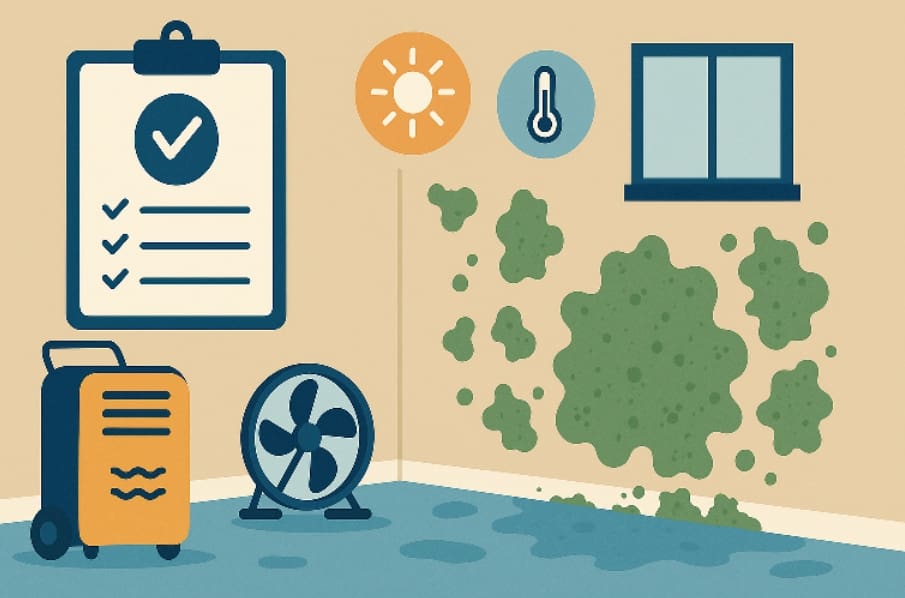
Floods are a sharp, swift materialization of the fact that water never does quite what we think it ought to. On the Gold Coast, where humidity and coastal weather exacerbates the issue, post-flood mould can grow from a speck on a skirting board to become an entire property problem, even health hazard, in just 48–72 hours. If you just had water in your house, this walk-through, pulled from more than a decade of covering property restoration and working with remediation pros, can help you think quickly, wisely and safely. We cover what to do right now, the DIY vs professional options for mould removal Gold Coast house restoration solutions and a simple, achievable process for restoring your home.
Why mould likes to spread fast on the Gold Coast and why that’s a problem
Gold Coast homes endure warm conditions of high humidity – just what mold spores need to grow more after the flood. Mold is a squatter: it doesn’t ask for sunlight or choosy nutrients, just food (wood, drywall, carpets and wallpaper glue), moisture and time. Mold growth and spore release from colonies can occur within two to three days after flooding, contaminating indoor air and exacerbating respiratory symptoms.
The faster you act the less damage there is, reducing restoration costs and preventing any harmful moulds or bacteria from affecting your health. The more you wait, the more porous materials are permanently damaged which requires replacement instead of restoration.
First 24–48 hours What can be done now to minimise mould growth
Safety first
Make safety your number one priority. If electrical systems are wet or there are smells of gas, do not enter. Call emergency services or your utility supplier instead.
Dry and avoid cross-contamination
Once clean, the next step focuses on drying and avoiding cross-contamination.
- Eliminate pooling water and relocate undamaged, non-porous items to a dry place.
- When the weather is appropriate, open windows and doors to allow for more airflow.
- Use towels and mops to remove excess water from floors and wipe down walls, then turn fans on and dehumidifiers up to hasten evaporation.
- Take away all wet soft furnishings and rugs from the house; they’re mould magnets.
Do not spray bleach on porous materials such as drywall or wood; it can result in staining, damage substances and isn’t always effective for killing mould roots. Instead, quarantine the affected area and keep people and pets out until it dries or is professionally inspected.
What damage to look for: what to check, what to record
You can do a cursory visual inspection first. Search for:
- Discolouration (black, green, brown)
- Fuzzy growths
- Musty smells
Look behind cupboards, under skirting boards, in wardrobes, under floor coverings and in ceiling spaces. And don’t overlook HVAC systems: Mould in your ducts can carry spores throughout the house.
Document everything for insurance
Take photos and notes about everything for your insurance claim. Begin recording how much water entered, what was damaged, and when you started drying. This documentation will help expedite any restoration services on the property and aid your insurance carrier understanding of loss.
DIY vs hiring professional mould removal Gold Coast property restoration services – an honest comparison
DIY is tantalizing: It seems cheaper and quicker on paper. For small, nonporous surfaces (tile, glass, metal), cleaning with soap and water and letting the surface dry can be sufficient. Once, however, the mould spores take hold of absorbent surfaces, penetrate into nooks and crannies or demand a task area larger than about 1 square metre in size then it quickly becomes a false economy to DIY.
Professional mould removal Gold Coast property restoration services come with:
- Containment protocols
- Industrial drying equipment and air filtration (HEPA)
- Tested biocides or fungicidal treatments
Pros also have the training to identify hidden contamination within wall cavities and subfloors, insulation areas where spores can quietly regenerate. They will do moisture mapping, use thermal imaging as needed and provide clearance testing to check for safety.
If you or anyone in your household has asthma, allergies or an immune system disorder and if the flood involves sewage, call the pros. It may cost more up front, but professionals with smart products can often reduce overall repair costs, health hazards and repeat treatments.
Sensible recovery approach that you can follow step by step
- Cordon off the property and make utilities safe. Maintain a written record of what you do.
- Get rid of standing water and save what can be dried. Send salvageable items to a dry, well-ventilated location.
- Initiate structural drying of the contents with fans and dehumidifiers within 24 hours (open windows where safe).
- Remove non-restorable porous materials: wet carpets, soggy drywall, cushioning and soft organic surface furniture.
- Clean and DRY non-porous surfaces using a cleaner appropriate for the surface, followed by a fungicidal protective coating for extra security.
- Check HVAC and ductwork; schedule professional cleaning if there is evidence of contamination.
- The material should be checked and further dried until building materials have reached preloss condition moisture content levels.
- Repair and replace with mould-resistant materials where feasible (for example, treated wood or mould-resistant drywall).
The follow-up is crucial. Don’t assume the issue is resolved just because the visible mould looks clean.
Averting the next one: long-term solutions for the Gold Coast
In the days after, focus should be on prevention.
- Better ventilate bathrooms, kitchens and laundry rooms.
- Place and or upgrade dehumidifiers in areas that are sealed from the outside air or are damp with some regularity.
- Think about lifting electrical outlets and appliances up from flood-prone floors.
- When rebuilding, use water-repellent construction materials and, if possible, install subfloor ventilators in houses with crawl spaces.
- Landscape grading that slopes away from the house, clean gutters and ensure stormwater systems are clear and free-flowing ahead of the wet season.
- When purchasing or renting on the Gold Coast, inquire about a property’s history in relation to flooding and whether any prior restoration included mould-resistant practices.
Health concerns: when to contact a doctor
Exposure to mould can lead to coughing, wheezing and throat irritation as well as eye irritation, and in those who are sensitive to asthma attacks. If anyone in the house has prolonged symptoms like breathing problems, skin rashes or fatigue after flooding, seek medical help and tell them about possible mould exposure. Young children, senior citizens, and individuals with respiratory or immune system deficiencies are more sensitive and should avoid the affected regions until restoration is finished.
Choosing a contractor: enquiries for mould removal Gold Coast property restoration services
Choose companies that have all the relevant licensing, insurance and experience with mould related to flooding. Inquire about their containing practices, drying equipment, air filtration (HEPA), and if they do moisture reports and post-treatment clearance testing. Ask for references and examples of past work in flood response. A good contractor will explain clearly how they work, when you’ll receive your warranty and provide necessary documentation for insurance claims.
What to know about cost expectations and insurance
The cost per job depends on the severity and what materials are affected, access and whether structural rebuilding is necessary. Policy coverage varies, so read your policy and call your insurer early. It is usually the case that insurers want the damage mitigated quickly and if you don’t take action it can impact upon any claim made. Save receipts, photos and contractor reports as evidence to file your claim.
Comparison summary: why professional restoration usually comes out ahead
Synthetic materials It may be OK to use DIY solutions for small amounts of shallow mould on hard surfaces. But in the aftermath of flood events particularly in a humid environment like the Gold Coast mould can be concealed and make a comeback unless the core source of moisture has been eliminated and structural drying and remediation are performed just right. Hiring a professional mould removal Gold Coast property restoration services use the tools, techniques and testing to stop the cycle so that you protect health as well as preserve value of your property. Consider professionals an investment in not having small problems become expensive nightmares.
Final Comments and Personal Note
I’ve visited homes where an early, coordinated response transformed a scary flood into a manageable repair and one where indecisiveness turned minor mould problems into costly rebuilding. On the fast-growing Gold Coast, humidity encourages mould growth but success is all about speed and common-sense safety, plus finding the right partner when things are beyond DIY. If your battle is currently with mould following a flood, remember to begin with safety, photograph for insurance records, dry like the dickens and if in doubt call out professional Gold Coast property restoration services so that your health isn’t compromised and neither is the value of your property.
FAQs
How quickly does mould begin to grow after a flood and how long before it is dangerous?
Mold growth can start between 48-72 hours in warm, moist conditions. If this problem exists within porous material, spreads to structural elements, or is causing people in the home to get sick then it’s getting serious. Swift desiccation and inactivation within the first 24–48 h bring the danger down very low.
How can I bleach away mould from my home?
Bleach will take out the surface colour on non-porous surfaces but will have no effect on a porous material where the roots of mould spores penetrate. It also creates health and corrosion hazards, among other issues. Professional remediation is also safer and more effective with porous materials or broad contamination.
Does insurance on the Gold Coast (or anywhere else) cover mould removal?
It depends on the details of your policy and the source of the flood. Because many policies call for timely mitigation and proof. After a flood, contact your insurer immediately, document damage and repairs and follow the insurer’s guidelines for using approved contractors.
What is professional mould remediation and does it ensure that mould will never come back?
Commercial remediation involves containment, moisture mapping, industrial drying, unsalvageable material removal, cleaning and treatment of surfaces, and post-remediation testing. It takes care of both the source (moisture) and the visible presence of soil, so there’s a much lower risk of reoccurrence – but no product that I’m aware of stops mold coming back inside unless you address ongoing moisture.
What to consider when hiring a restoration company on the Gold Coast?
Search for licensed and insured businesses that have experience with flood and mould, request a detailed scope-of-work document, ask for references and make sure they offer moisture monitoring and clearance testing. A company can be trusted when it has a transparent, well-documented approach.