
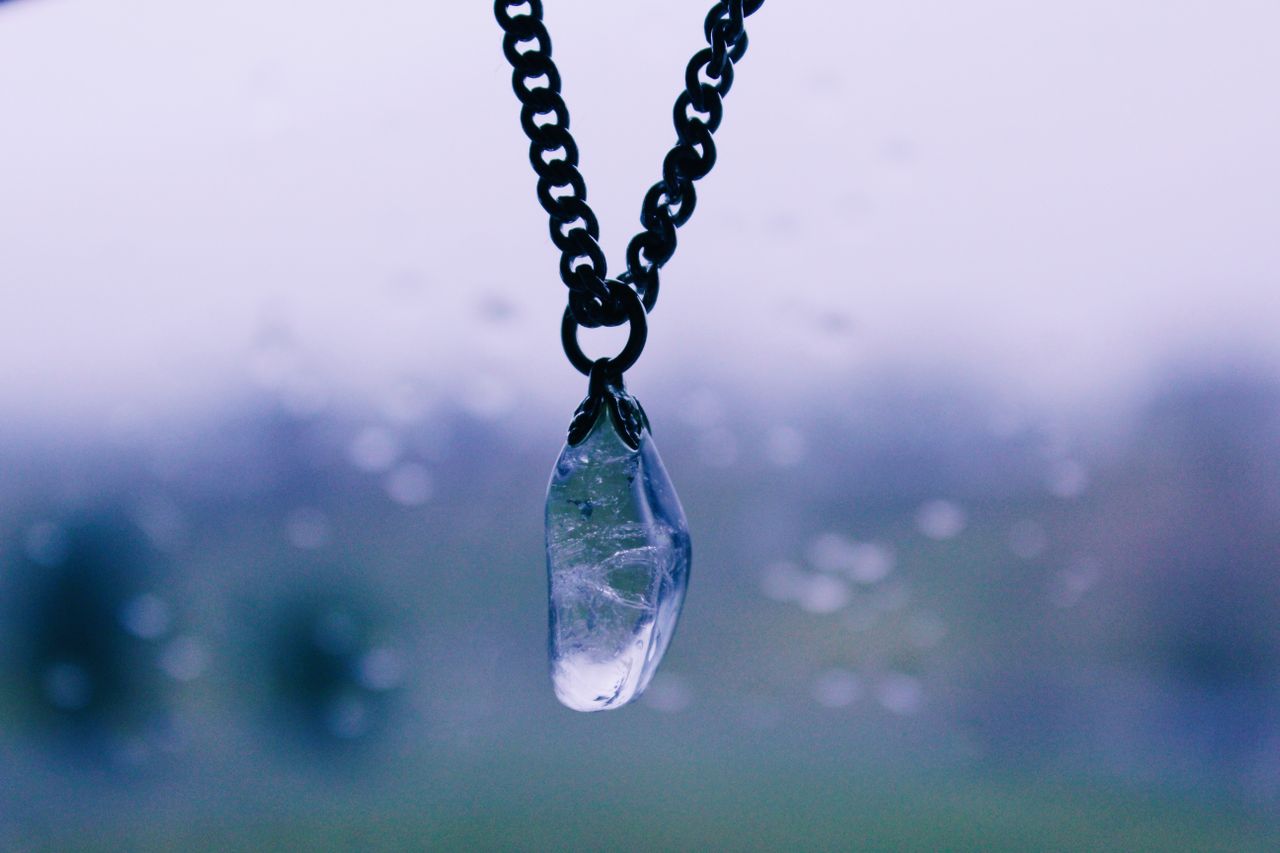
Crystals pick things up. Whether you think of that as absorbed energy, accumulated intention, or just the ordinary grime of being handled and carried around, the practice is the same: every so often you reset the stone so it feels like yours again. People talk about cleanse and charge as two steps, and they are slightly different. Cleansing clears whatever a crystal has taken on. Charging refills it with purpose, often paired with a quick intention you set in your head.
The problem with most advice on this is that it treats all crystals as interchangeable. They aren’t. Some dissolve in water. Some fade in sunlight. Salt will pit and corrode certain stones permanently. So before you run anything under the tap, here are seven methods that actually work, with the catches spelled out.
1. Running Water
Holding a stone under cool running water is the most intuitive cleanse there is. Tap water is fine; a stream or river is nicer if you have one. Let it run over the crystal for 30 seconds to a minute, picturing whatever it’s holding washing away with the flow. Pat it dry afterward.
The catch is water itself. Soft, porous, or metallic stones don’t like it. Keep selenite, halite, and selenite-family stones away from water entirely (selenite can literally flake apart). Avoid it with malachite, pyrite, hematite, lapis lazuli, and anything with a Mohs hardness below about 5. If you’re not sure what a stone is, skip water and pick a dry method below.
2. Full Moon Moonlight
This is the gentlest charge, and it works on almost everything. Set your crystals on a windowsill or outside where the moonlight reaches them, leave them overnight, and bring them in before the morning sun gets strong. The full moon is the traditional choice because it’s the brightest, but the few nights on either side work fine too. If you want to time it more deliberately, the different moon phases carry different intentions — a new moon for setting fresh goals, a full moon for releasing what no longer serves you.
There’s no stone moonlight will damage, which is why it’s the go-to for delicate pieces. The only real risk is leaving them out and forgetting them, then having the sun hit a light-sensitive crystal at dawn. Set a reminder.
3. Sunlight
Direct sun charges quickly and adds a bright, active quality that suits stones you use for motivation or energy. A few hours in the morning is plenty.
Sunlight is also where people do the most damage. Several common crystals fade in UV light, and the change is permanent. Amethyst turns washed-out and brownish. Rose quartz loses its pink. Citrine fades, and so do fluorite, kunzite, aquamarine, and smoky quartz. If a stone gets a lot of its appeal from its color, assume the sun will dull it and use moonlight instead. Save the sun for clear quartz, carnelian, tiger’s eye, and other stones that hold their color.
4. Salt
Salt has a long history as a cleanser. You can bury a stone in a bowl of dry sea salt for a few hours up to overnight, then brush it off and discard the salt (don’t reuse it). Dry salt is gentler than a saltwater soak, which I’d avoid for most things.
Salt is abrasive and reactive, so it’s rough on a lot of stones. Don’t use it on soft or porous crystals: selenite, halite, calcite, malachite, opal, turquoise, lapis lazuli, and anything with visible metal or pyrite inclusions. Salt can pit polished surfaces and leave a permanent dull patch. When in doubt, choose smoke or sound instead.
5. Smoke (Smudging)
Passing a crystal through smoke cleanses anything, won’t damage anything, and takes about a minute. Light your herb bundle or incense, let it smoke, and hold the stone in the stream for 20 to 30 seconds, turning it so the smoke reaches all sides.
A note on materials: white sage and palo santo are both over-harvested and, in the case of white sage, tied to Indigenous traditions that have been heavily commercialized. Garden sage, cedar, rosemary, lavender, or plain incense do the same job. This method is ideal for a whole collection at once and for the porous stones that can’t go near water or salt.
6. Sound
Sound cleanses through vibration, which makes it good for clearing several crystals in one go without touching them. Strike a singing bowl, ring a bell, or use a tuning fork near your stones and let the tone ring out and fade. Repeat a few times. The idea is that the vibration shakes loose whatever the stones are holding.
Sound is completely safe for every crystal, since nothing physically contacts the stone. The only real caveat is to keep delicate or already-cracked pieces off the rim of a metal singing bowl while you’re striking it, so they don’t rattle and chip.
7. Earth or a Charging Plate
Two dry, no-risk options worth grouping.
Burying a stone in soil, a houseplant pot, or the garden lets the earth draw off heavy or stagnant energy. Leave it 24 hours up to a few days, mark the spot, and rinse off the dirt when you dig it up (or brush it clean if the stone can’t get wet). This is a deep reset, good for a crystal that feels heavy after intense use.
Faster and tidier is a charging plate. Set your stones on a slab of selenite or a cluster of clear quartz and leave them for a few hours or overnight. Both are considered self-cleansing and able to clear and recharge whatever sits on them, which makes a selenite plate the single most convenient tool to own. Just remember, selenite can’t get wet, so keep the plate dry.
How Often Should You Cleanse?
There’s no fixed schedule, but a few situations call for it:
- When a crystal is new, before you use it the first time, so it carries your intention rather than the warehouse’s.
- After heavy use — meditation, energy work, or a stretch where you’ve been leaning on a particular stone a lot.
- If it feels off. Dull, sticky, heavy, or just not quite itself. That instinct is usually worth trusting.
- Once a month as a baseline if you use your crystals regularly. Tying it to the full moon makes it easy to remember.
Stones that mostly sit on a shelf as decor need it far less than the one you sleep with or carry in a pocket every day.
Quick Safety Recap
If you remember nothing else, remember what to keep away from what:
- No water: selenite, halite, malachite, pyrite, hematite, lapis, and anything softer than about 5 on the Mohs scale.
- No direct sun: amethyst, rose quartz, citrine, fluorite, kunzite, aquamarine, smoky quartz — anything that gets its beauty from color.
- No salt: selenite, calcite, malachite, opal, turquoise, lapis, and stones with metallic inclusions.
- Always safe for everything: moonlight, smoke, sound, and a selenite or clear-quartz charging plate.
When you’re unsure what a stone is or how it’ll react, default to one of those four. You’ll never ruin a crystal by holding it in moonlight or passing it through a little smoke, and that simple habit will keep your collection in good shape for years.
Author bio: This piece was written by the team at Aurigastones, who spend their days writing about crystals, birthstones, and the meaning people find in them. For a deeper walkthrough with care notes for individual stones, see their complete crystal cleansing guide.