
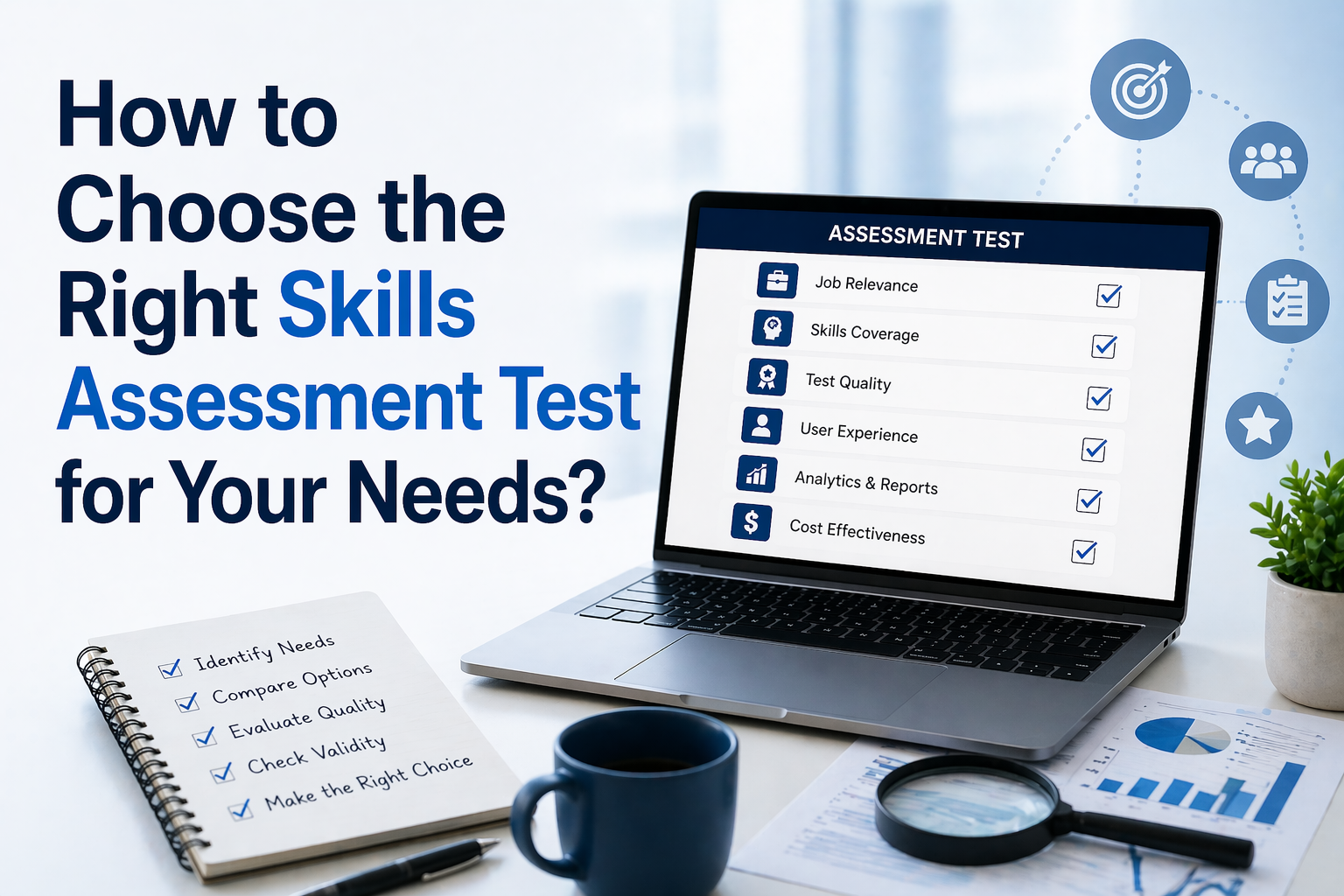
Choosing the right skills assessment test means picking one that matches the job role, the level of skill needed, and the type of work involved. A good test checks real ability, not just basic knowledge. It should help employers make clear and fair hiring decisions.
Many companies use the wrong tests. This leads to poor hiring and wasted time. So, the first step is to understand what the role actually requires.
What should you check before selecting a skills test
Role clarity comes first
Every job is different. So, the test should reflect what the person will do daily. A clear job role helps define what to test.
For example, an admin role needs document handling. A manager may need decision-making and planning. Without this clarity, the test may not match the job.
Skill type matters
Not all skills are the same. Some roles need technical skills. Others need communication or problem-solving.
Employers should choose between tool-based tests, cognitive tests, or behaviour-based tests. The right mix depends on the role. Picking the wrong type leads to weak hiring results.
Why expertise matters more than basic knowledge
Moving beyond basic skills
Most candidates know the basics of tools and tasks. But real work needs more than that. A professional must handle complex situations, not just simple ones.
This is where expertise matters. It shows how well a person can apply skills in real scenarios.
Real-task-based evaluation
A good test should copy real work situations. It should not rely on theory or guess-based questions.
One example is the OCEAN occupational personality test. It measures how a person behaves at work. It looks at traits like teamwork, stress handling, and communication style.
This helps employers understand if the candidate fits the role, not just if they can do the task.
What role does experience play in skill testing
The hidden cost of poor testing
When testing is weak, companies hire people who learn slowly on the job. This creates delays. Teams spend time fixing errors instead of moving forward.
In many workplaces, this leads to repeated work and missed deadlines. Poor testing often causes more harm than expected.
Real workplace experience matters
A strong test should reflect real job conditions. It should include time-based tasks and practical problems.
Candidates should show how they think and act under pressure. This gives a clearer picture of their ability. Structured testing often improves productivity and reduces rework across teams.
How to match the test level with the job role
Different roles need different depth
Not every role needs the same level of testing. Entry-level jobs may need basic checks. Senior roles need deeper evaluation.
For example, a junior role may focus on simple tasks. A leadership role may need decision-making and planning skills.
Avoid over-testing or under-testing
- A very easy test may miss real skill gaps
- A very hard test may reject good candidates
- A balanced test gives better results
- Role-based testing improves hiring accuracy
Why reliability and fairness matter in assessments
Consistent results build trust
A good test should give stable results. If the same person takes it again, the result should be similar. This consistency helps employers trust the process. It also reduces confusion during hiring.
Fair evaluation for all candidates
Skill tests should treat all candidates equally. Everyone should get the same task and conditions.
This removes bias linked to resumes or background. Employers can focus only on performance. This leads to fair and better hiring decisions.
How structured testing improves hiring decisions
Clear and measurable outcomes
Structured tests give clear results. Employers can compare candidates easily. This helps in making faster decisions. It also reduces reliance on guesswork.
Better long-term results
- Fewer hiring mistakes
- Higher team productivity
- Less time spent on training
- Stronger overall team performance
This is why many companies now use structured assessments as part of hiring.
How RightPeople helps you choose the right assessment
RightPeople provides a wide range of skill and psychometric tests. They help companies match the right test to each role.
Their approach focuses on real job requirements. They combine technical testing with behaviour based evaluation. This gives a complete view of each candidate.
Companies using structured methods often see better hiring outcomes and improved team efficiency.
Conclusion
Choosing the right skills assessment test is not just about testing. It is about matching the test to the role and the level of work involved.
A clear and structured approach helps reduce hiring mistakes. It also improves long-term performance.
Businesses can review their hiring process and consider using role-based assessments through RightPeople for better results.
FAQs
What is a skills assessment test?
It is a test that checks how well a person can perform tasks needed for a job.
How do you choose the right test?
It depends on the job role, required skills, and level of responsibility.
Are personality tests useful in hiring?
Yes. They help understand how a person behaves at work and fits into a team.
Can skill tests reduce hiring errors?
Yes. They provide clear data and reduce guesswork.
Should all roles use the same test?
No. Each role needs a different type and level of assessment.