

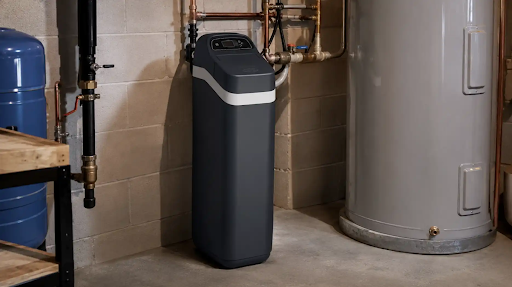
Choosing the right water softener can have a lasting impact on your home’s plumbing, appliances, and overall water quality. For homeowners who receive treated municipal water, the decision involves more than simply selecting the highest grain capacity or the lowest price. The best water softener for city water should be designed to handle both hard water minerals and the disinfectants commonly found in public water systems.
Many U.S. homeowners assume that city water is free from hard water problems because it has already been treated before reaching their homes. In reality, municipal treatment is intended to make water safe for consumption, not to remove dissolved hardness minerals such as calcium and magnesium. These minerals remain in the water supply and can gradually build up inside plumbing systems, water heaters, dishwashers, and other household appliances.
According to the USGS, hard water is common across many regions of the United States. Cities such as Dallas, TX, where hardness typically ranges from 12–18 GPG, and Minneapolis, MN, with 13–17 GPG, demonstrate that municipal water can still contain enough hardness to affect everyday household activities. Over time, mineral deposits may reduce appliance efficiency, leave spots on dishes, create soap residue, and increase cleaning efforts around the home.
Before investing in a water softener, homeowners should review their local Consumer Confidence Report (CCR). Required by the EPA, this annual report explains how municipal water is treated and whether chlorine or chloramines are used during the disinfection process. While the report may not always list hardness values, it provides useful information that helps homeowners better understand the characteristics of their local water supply.
Understanding Hard Municipal Water
Hard water is measured in GPG (grains per gallon), the standard measurement used throughout the water treatment industry. As GPG increases, more dissolved calcium and magnesium are present in the water.
Although hard water is generally considered safe to drink, it can create several practical issues throughout the home. The mineral scale gradually forms inside water heaters, plumbing fixtures, and pipes. This buildup can reduce water flow, lower heating efficiency, and increase energy consumption over time.
Hard water also affects cleaning performance. Soap reacts with hardness minerals instead of dissolving completely, making it more difficult to produce lather. As a result, homeowners often notice soap scum on shower doors, white residue on faucets, dull-looking dishes, and clothing that feels stiff after washing.
Because these problems develop slowly, many homeowners do not immediately recognize that water hardness is the underlying cause. Installing the right water softener for hard municipal water can help reduce these common household issues while protecting plumbing and water-using appliances over the long term.
What Features Should Homeowners Prioritize?
There are many water softeners available on the market, but not all are designed specifically for municipal water conditions. Instead of focusing only on capacity or price, buyers should evaluate features that directly influence long-term performance.
One of the most important considerations is the quality of the resin used inside the mineral tank. Municipal water continuously carries chlorine or chloramines through the plumbing system. Over time, these disinfectants can shorten the lifespan of conventional resin.
For this reason, many water treatment professionals recommend selecting a chlorine resistant water softener that is specifically engineered for city water applications.
An example is the SoftPro Elite Water Softener, manufactured by Quality Water Treatment (QWT). Founded by Craig Phillips, widely known as “Craig the Water Guy,” the company offers a system built with 8% crosslink ion exchange resin. According to the published specifications, this resin is designed to tolerate up to 2 PPM continuous chlorine and provides an estimated service life of 15–20 years under normal municipal water conditions.
Rather than viewing resin as a minor component, homeowners should recognize that it serves as the core of every ion exchange water softener. Higher-quality resin can contribute to more consistent performance and potentially lower maintenance requirements over the life of the system.
Why Ion Exchange Remains the Industry Standard
The most widely used technology for residential water softening is ion exchange, and for good reason. This process effectively removes the calcium and magnesium ions responsible for hard water.
Inside the softener, thousands of resin beads attract hardness minerals while releasing sodium ions into the water. As water continues to flow through the system, the hardness minerals remain attached to the resin until regeneration restores its capacity.
This proven process allows homeowners to enjoy softer water throughout the home, reducing mineral scale and improving the performance of soaps and detergents.
However, the effectiveness of ion exchange depends not only on the technology itself but also on resin quality, regeneration efficiency, and system design. These factors are important when comparing premium systems that all claim to deliver excellent performance.
As homeowners continue evaluating different options, regeneration technology becomes another major factor that can significantly influence efficiency and long-term operating costs.
Why Regeneration Technology Plays a Major Role
Many homeowners compare water softeners based on price or grain capacity alone, but regeneration technology is another factor that can significantly influence long-term performance. A well-designed regeneration process not only restores the resin but also affects salt consumption, water usage, and operating costs.
Traditional systems generally rely on a downflow regeneration process. While this method has been used successfully for years, it may regenerate more of the resin bed than necessary, leading to additional salt and water use over time.
The SoftPro Elite Water Softener uses Upflow Regeneration, a design intended to regenerate the resin bed from the bottom upward. This approach helps distribute the regenerating solution more efficiently throughout the resin, improving overall resource utilization.
According to the published product specifications, this technology can provide:
- Up to 75% salt savings vs. downflow
- Up to 64% water savings vs. downflow
For homeowners, these improvements can help reduce ongoing operating expenses while maintaining reliable soft water throughout the home. Although the exact savings depend on household water usage and local water conditions, efficient regeneration remains an important feature when evaluating long-term value.
Smarter Operation with Demand-Initiated Metering
Another feature that distinguishes a modern upflow water softener city water system from older models is Demand-Initiated Metering.
Older timer-based water softeners regenerate according to a fixed schedule, whether the household has used a large amount of water or very little. This can result in unnecessary regeneration cycles that waste both salt and water.
Demand-initiated metering works differently. The system measures actual water consumption and regenerates only when the resin requires recharging. This allows the softener to adapt to changing household water use instead of following a predetermined timetable.
For homeowners, this technology offers several practical advantages:
- More efficient salt usage
- Reduced water consumption
- Consistent soft water availability
- Lower routine operating costs
- Less unnecessary regeneration
These benefits are especially valuable for households where water usage changes throughout the year due to vacations, seasonal activities, or varying family schedules.
Flow Rate Is Just as Important as Softening Performance
A water softener should provide enough softened water to support the home’s daily activities without restricting flow.
During busy mornings or evenings, several fixtures and appliances may operate simultaneously. Showers, washing machines, kitchen faucets, and dishwashers all place demands on the plumbing system. If the softener cannot maintain adequate flow, homeowners may notice reduced performance during peak usage.
The SoftPro Elite Water Softener is designed with a 15 GPM continuous flow rate and an 18 GPM peak flow rate.
These flow capabilities are suitable for many residential households, allowing multiple fixtures to operate while maintaining a consistent supply of softened water.
In addition to flow performance, the system includes a 15% reserve capacity. This reserve helps ensure softened water remains available even when household demand temporarily exceeds normal expectations.
Another practical feature is the 15-minute emergency regen cycle, which quickly restores softening capacity when unusually heavy water usage occurs. Together, these features contribute to dependable day-to-day performance without requiring constant homeowner attention.
Looking Beyond Initial Purchase Price
When choosing the best ion exchange water softener for municipal water, the purchase price is only one part of the overall investment.
Long-term ownership costs are influenced by several factors, including:
- Salt consumption
- Water usage during regeneration
- Resin durability
- Maintenance requirements
- System efficiency
A system that uses fewer resources over many years may provide better overall value than one with a lower initial purchase price but higher operating costs.
For this reason, experienced homeowners often evaluate regeneration technology, metering systems, and resin quality together rather than focusing on a single specification.
A balanced approach helps identify systems that combine dependable performance with efficient long-term operation, making them better suited for the demands of municipal water supplies.
Independent Certifications That Add Buyer Confidence
When researching the best water softener for city water, homeowners often compare performance claims made by different manufacturers. While product specifications are important, independent certifications provide another layer of confidence because they verify compliance with recognized industry standards.
The SoftPro Elite Water Softener is an NSF 372 certified water softener, confirming that it meets lead-free material requirements for drinking water system components. The system also carries IAPMO certification, reflecting compliance with established plumbing and product standards.
Organizations such as NSF International and the Water Quality Association (WQA) are widely respected within the water treatment industry for supporting product testing, education, and quality standards. Although certifications alone should not determine a buying decision, they are valuable indicators that a product has been evaluated against recognized benchmarks.
Convenience Features Designed for Everyday Homeowners
Performance is only one part of a quality water softener. Ease of ownership also matters, especially for homeowners who want a system that operates reliably with minimal attention.
The SoftPro Elite Water Softener includes several convenience features designed for long-term use.
One of these is Vacation Mode, which automatically refreshes the resin every 7 days when water usage is very low. This helps maintain the resin in good operating condition during extended absences without requiring manual intervention.
The system also includes a self-charging capacitor that provides 48-hour settings retention during temporary power outages. If electricity is interrupted, the programmed settings remain stored, allowing the system to resume normal operation once power is restored.
These features reduce the need for ongoing adjustments and help simplify ownership over time.
Choosing the Right Grain Capacity
Selecting the proper capacity is an important part of purchasing any city water hardness softener. The ideal size depends on household occupancy, daily water usage, and the local hardness level.
The SoftPro Elite Water Softener is available in the following grain capacities:
- 32K
- 48K
- 64K
- 80K
- 110K
Rather than assuming that a larger system is always better, homeowners should select a model that matches their actual household requirements. Proper sizing helps optimize efficiency and supports consistent long-term performance.
If there is uncertainty about the correct capacity, reviewing the home’s average water usage together with local hardness measurements in GPG can help determine the most appropriate option.
Who Should Consider This System?
Based on its published specifications, the SoftPro Elite Water Softener may be a suitable option for homeowners who:
- Receive treated municipal water.
- Live in areas with moderate or high water hardness.
- Want a system engineered for continuous chlorine or chloramine exposure.
- Prefer efficient regeneration to reduce ongoing operating costs.
- Value independently certified products.
- Plan to invest in a long-term residential water treatment solution.
Whether a homeowner lives in Dallas, TX, Salt Lake City, UT, or another city with hard municipal water, comparing actual water conditions with system specifications is an important step before making a final purchasing decision.
Final Expert Assessment
Selecting the right water softener for hard municipal water requires evaluating more than marketing claims. A dependable system should combine durable construction, efficient operation, intelligent regeneration, and features that support long-term reliability.
From an independent review of its published specifications, the SoftPro Elite Water Softener demonstrates several characteristics that make it a strong option for municipal water applications. Its use of 8% crosslink ion exchange resin, combined with the ability to withstand up to 2 PPM continuous chlorine, is particularly relevant for homeowners whose water utilities rely on chlorine or chloramines for disinfection.
The addition of Upflow Regeneration, Demand-Initiated Metering, 15 GPM continuous flow rate, 18 GPM peak flow rate, 99.6%+ hardness removal, and efficient resource management further supports its suitability for residential use.
When these features are considered alongside NSF 372 certification, IAPMO certification, a Lifetime warranty on valve and tanks, and homeowner-focused convenience features, the system presents a balanced combination of performance and long-term value.
Conclusion
Choosing the best water softener for city water begins with understanding your local water conditions rather than simply comparing prices or advertised capacities. Reviewing your Consumer Confidence Report (CCR), identifying your home’s hardness level in GPG, and considering how chlorine or chloramines affect equipment performance can help narrow the options.
An effective chlorine resistant water softener should combine durable resin, efficient regeneration, intelligent water management, and reliable day-to-day operation. Based on its published specifications, the SoftPro Elite Water Softener offers these qualities while addressing the practical needs of homeowners using municipal water.
Rather than focusing on a single feature, buyers should evaluate the complete package—including performance, efficiency, certifications, warranty coverage, and long-term operating costs. Taking this broader approach makes it easier to choose a water softener that delivers dependable results and protects household plumbing and appliances for years to come.