

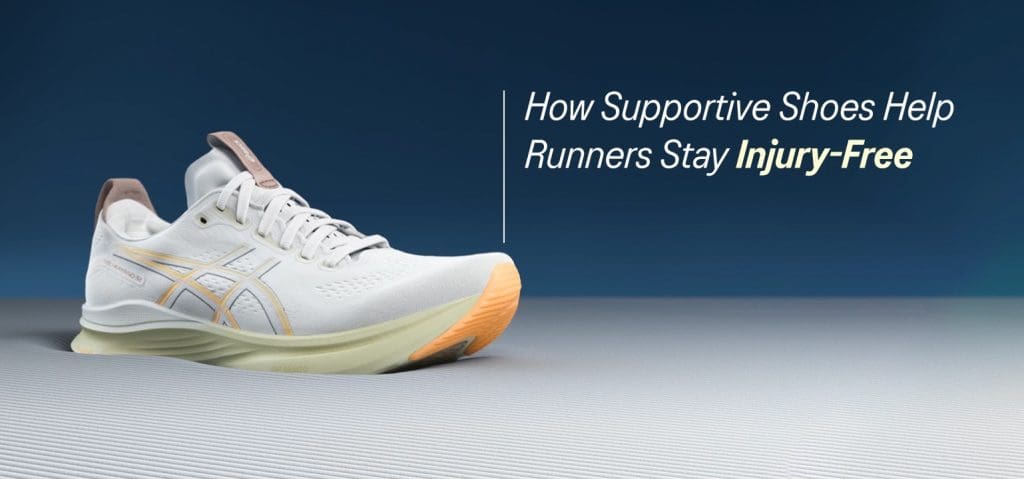
If you run regularly, you probably know how frustrating sudden knee pain, shin discomfort, or ankle strain can feel. Many runners assume these issues are caused only by overtraining or poor technique, but footwear often plays a much bigger role than expected.
Every time your foot hits the ground, your body absorbs impact that travels through your joints and muscles. When your shoes do not support your natural movement, that repeated stress builds up over time and eventually turns into discomfort or injury. This is why supportive footwear is important to prevent injuries.
Understanding the Real Cause of Running Injuries
Running injuries often develop gradually rather than appearing overnight. Conditions like heel pain, shin strain, knee discomfort, or tendon irritation usually stem from repeated impact combined with poor support. When your shoes do not absorb shock effectively or fail to guide your foot properly, the body compensates by placing extra pressure on certain areas. Over time, this imbalance affects your knees, hips, and even your lower back.
Supportive shoes help prevent this chain reaction by keeping your movement aligned and reducing unnecessary strain.
How Supportive Shoes Make a Difference
The right running shoes work with your body instead of against it. They help manage impact, guide foot movement, and provide stability that keeps your stride balanced. Supportive footwear does not eliminate effort, but it reduces the stress your body absorbs with every step. This means you can run longer and recover better without placing excessive pressure on your joints.
Supportive shoes help in three key ways:
- They absorb shock so that impact does not travel directly to your joints
- They support your arch to keep your stride balanced
- They stabilise movement to reduce unnecessary foot rolling
Good running shoes with these features make running feel smoother and safer.
The Role of Cushioning in Injury Prevention
When your foot strikes the ground, the force can be several times your body weight. Without proper cushioning, this stress moves directly into your joints. Cushioning in shoes helps soften this impact so your muscles and bones do not take the full load. Shoes like the ASICS GEL-KAYANO™ 31 and GEL-KAYANO™ 32 use FF BLAST™ PLUS cushioning combined with PureGEL™ technology to create smoother landings and better shock absorption. These normal cushioning shoes by ASICS help reduce pressure on your knees and ankles, which is especially helpful during long distance runs.
Stability Keeps Your Stride Aligned
Stability is just as important as cushioning because even a slight imbalance in movement can lead to long term strain. When your foot rolls too much inward or outward, it changes how your body distributes impact. Over time, this affects joints and muscles higher up the chain. The 4D GUIDANCE SYSTEM™ in the ASICS GEL-KAYANO™ 31 and GEL-KAYANO™ 32 helps provide adaptive stability by guiding your foot through each step. This keeps your stride balanced and reduces unnecessary stress, making your runs feel more controlled.
Grip and Control Matter Too
Running does not always happen on perfectly smooth surfaces, especially in India. Uneven terrain, wet roads, or varied training environments require reliable traction. Without proper grip, the body works harder to maintain balance, which can lead to fatigue and strain. The HYBRID ASICSGRIP™ outsole in the GEL-KAYANO™ 31 combines durability with traction to help you stay stable across different surfaces. Better grip means more confident movement and fewer chances of missteps that can cause injuries.
Comfort Supports Consistency
Comfort is often overlooked when discussing injury prevention, but it plays a crucial role in helping runners stay consistent. When shoes fit well and support your foot structure, they reduce pressure points and prevent issues like blisters or uneven stress.
Features like the reinforced tongue wing in the GEL-KAYANO™ 32 provide additional support around the arch, helping your foot stay secure during movement. This not only improves comfort but also helps maintain proper alignment throughout your run.
Choosing the Right Support for Your Needs
Every runner’s needs are different, and supportive running shoes should match your foot type and running style. Some runners benefit from extra cushioning for long distances, while others need more stability for daily training. The GEL-KAYANO™ 31 and GEL-KAYANO™ 32 are designed to provide a balanced combination of cushioning and support, making them suitable for a wide range of runners who want both comfort and protection.
When selecting supportive footwear, it helps to consider:
- Your arch type and foot shape
- The type of surfaces you run on
- Your training intensity and distance
Making the right choice reduces the chances of injury and improves overall performance.
The Long Term Impact of Supportive Footwear
Running injuries often build up slowly, which makes prevention even more important. Supportive shoes help reduce repetitive strain and maintain alignment so your body can handle the demands of regular training. They allow you to move naturally while minimising unnecessary stress on joints and muscles.
Final Thoughts
Supportive running shoes act as a foundation for injury-free training. By combining cushioning, stability, and grip, they help protect your body from the repeated impact of running. ASICS, through models like the GEL-KAYANO™ 31 and GEL-KAYANO™ 32, focus on guiding movement and reducing strain so runners can stay consistent and confident. Choosing supportive men’s footwear is not just about making sure that every step contributes to long term health and sustainability in your running journey
