
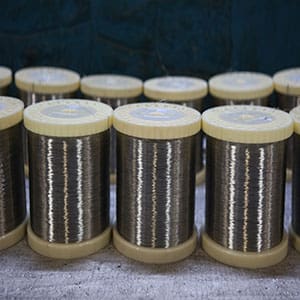
In discussions about precision engineering, we often focus on complex engines and large machines. But in reality, the smallest components of precision engineering, such as springs, are incredibly important.
However, for a spring to be able to work the same every time without breaking or losing its tension, the stainless steel spring wire must be the highest quality. India has emerged as a global hub for this material, but the question is how stainless-steel suppliers ensure that the wire reaching the factory is up to the mark?
That’s what we’ll uncover in this blog. Let’s dive into the journey of a high-quality spring wire.
Everything Starts with the Right Chemistry
Quality is something that needs to be checked first, not at the end. Chemical composition has a significant effect on the overall performance of springs. Reliable Indian suppliers ensure that the alloying elements, like chromium, nickel, and molybdenum, are balanced perfectly.
Even small variations in the alloy mixture can result in metal that either corrodes quickly or does not have enough “spring back”. That means when it bends, it will not return to its original shape (also known as “elastic memory”). To prevent this, top manufacturers utilise advanced melting methods and AOD (argon oxygen decarburisation) refining to produce high-quality spring steel with no contaminants or undesirable gases in the metal.
Precision in Wire Drawing
Cold drawing is a process used to produce perfect stainless steel spring wire. In this process, the wire is drawn through a series of dies to reduce its diameter.
During the process, suppliers monitor a measurement called “tensile strength”. This measurement indicates how well the steel spring wire will withstand breakage when used to manufacture springs.
Indian suppliers follow specific procedures and utilise materials, including lubricants and controlled reduction rates, to optimise the final surface condition of the wire. The wire’s surface condition is crucial because a crack or scratch on the surface can create a weak point, potentially leading to wire failure during spring compression.
Strict Heat Treatment
To get the specific mechanical properties required for different industrial applications, the wire undergoes controlled heating and cooling. The process of heating and cooling will relieve internal stresses and provide for the “grain structure” of the steel.
Testing and Quality Assurance
Before packing and shipping of wire, it goes through a “gauntlet” of tests. These include:
- Wrap testing to ensure the wire does not break when tightly bent.
- Dimensional accuracy using a laser micrometre to ensure the diameter remains consistent down to the micron level.
- Corrosion resistance testing to ensure the grade can withstand harsh environments.
Partner with a Reliable Supplier
Overall, the final product is only as good as the raw materials you put into it. A spring might be a small thing to notice, but if it fails, the entire machine fails. This is why most businesses are so selective in choosing stainless steel wire.
Reliable stainless steel suppliers in India, like Viraj Profiles Pvt. Ltd, control every step. They handle everything from the initial melting of the steel to the final protective coating of the wire; you get a level of consistency that third-party processors simply can’t match.
Choose a reliable partner, and don’t just build; build with the best.