

Nonprofits rarely scale without significant institutional infrastructure. SPAid, Students Providing Aid, has scaled without it entirely. The organization has grown into one of the largest student-run nonprofits in the United States by building a model driven not by staff hierarchy, but by distributed student leadership.
SPAid was created to address a persistent but overlooked gap in global health: the lack of access to basic first aid in underserved communities. When supplies such as antiseptic wipes or adhesive bandages are absent, injuries that should be minor become medical risks. SPAid responds by assembling standardized, child-oriented first aid kits containing essentials like alcohol wipes, gauze, antibiotic ointment, and bandages, along with a coloring booklet and crayons to make injury response less intimidating for children.
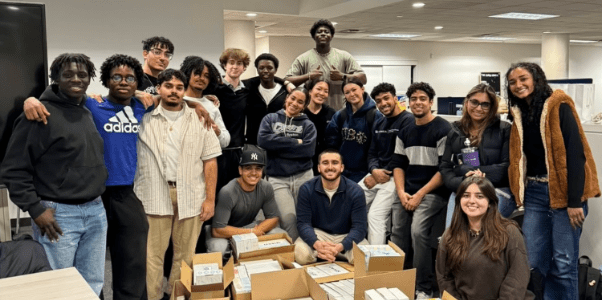
What sets the organization apart is not the kit itself, but the way it is produced and deployed. Students do not simply support SPAid, they operate it. Chapters across high schools and universities lead fundraising, assembly, outreach, and distribution. Internal documentation underscores that the organization was built through student-led trial, iteration, and execution rather than conventional nonprofit hierarchy.
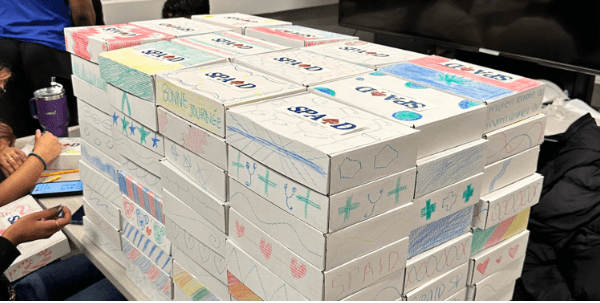
The structure mirrors a decentralized scaling model more common in emergent social enterprises than in traditional nonprofit operations. Each chapter functions as an independent operational hub, expanding organizational capacity without requiring new administrative layers. Instead of routing activity through a central pipeline, SPAid distributes ownership, allowing growth to compound as new academic chapters launch.
This framework has also enabled international deployment. SPAid has distributed kits both domestically and in underserved regions abroad, including ongoing efforts in Kenya and Haiti. A notable milestone detailed in internal materials is the organization’s partnership with the Global Health Council, which strengthened its visibility within global health advocacy networks.
Beyond supply delivery, SPAid has become a leadership engine. Students gain direct experience in logistics, resource coordination, community partnership development, and multi-node operational strategy, responsibilities typically reserved for professional nonprofit staff. SPAid reverses the traditional model by positioning students not as volunteers, but as the organization’s operational core.
Rather than positioning its work as temporary relief, the organization frames it as long-term infrastructure for health equity. It has outlined continued expansion into underserved communities and further growth of student-led chapter networks, with the broader aim of normalizing first-response access at the community level.
In a sector often defined by layered administration, SPAid demonstrates that scale can be achieved through decentralization, ownership, and structured delegation. Its model is not simply about increasing access to first aid, but about redefining who builds systems of access and proving that students can do both.