

Businesses in Pakistan are changing the way they communicate with customers. Traditional banners and printed advertisements still have their place, but digital displays are becoming the preferred choice for brands that want better visibility, real-time content updates, and stronger customer engagement.
One technology leading this shift is the SMD LED screen. From shopping malls and retail stores to corporate offices, restaurants, educational institutions, and outdoor advertising, SMD screens have become an important part of modern business communication.
Whether you’re opening a new retail outlet or upgrading an existing advertising system, understanding how SMD screens work can help you make a better investment decision.
What Is an SMD Screen?
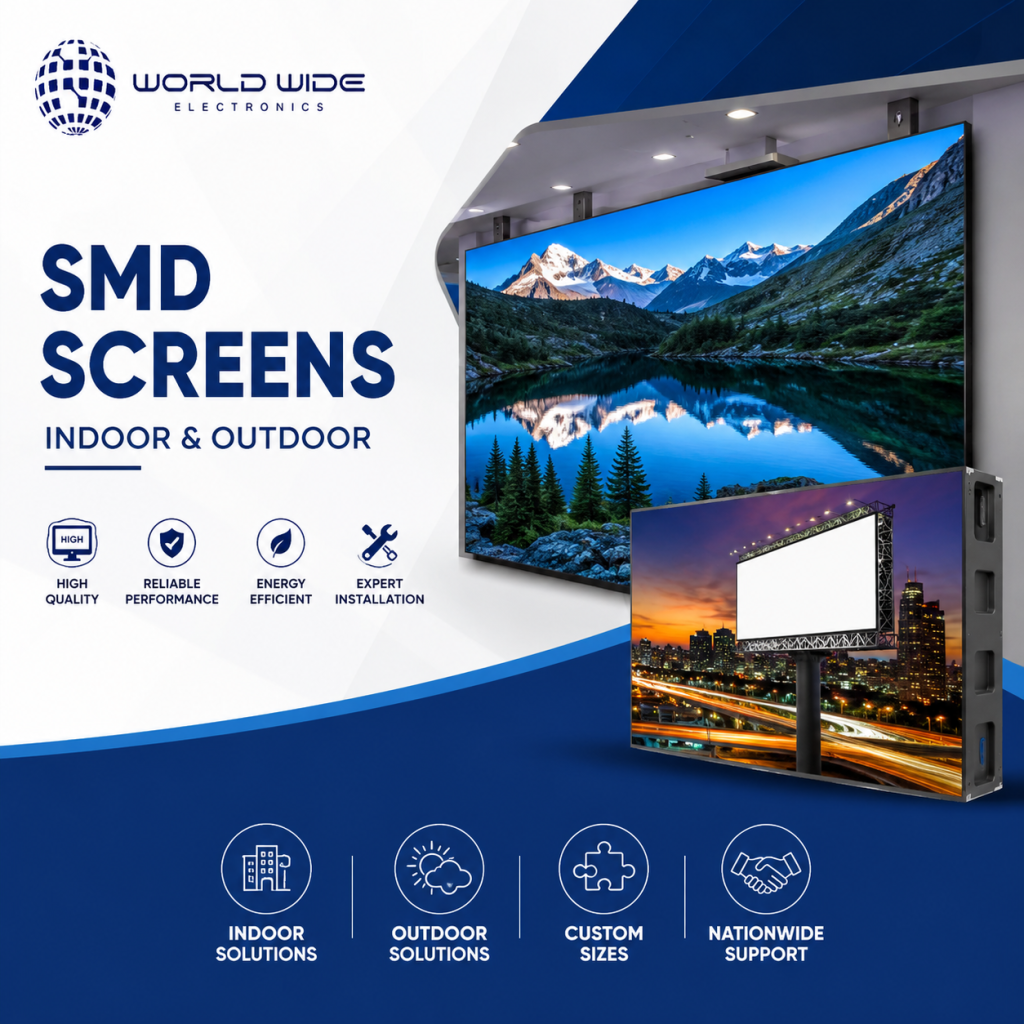
An SMD (Surface Mounted Device) screen is a type of LED display where tiny red, green, and blue LEDs are mounted directly onto a circuit board. This design produces brighter colours, sharper images, wider viewing angles, and smoother video playback than many conventional display technologies.
Businesses choose SMD screens because they can display videos, live information, advertisements, announcements, and presentations with outstanding clarity.
Unlike traditional printed advertising, digital displays allow content to be updated within seconds without additional printing costs.
Why Businesses Are Switching to Digital Displays
Consumer attention has changed dramatically over the last few years. Static signs often go unnoticed, while dynamic video content naturally attracts more attention.
Some of the biggest advantages include:
- High brightness for excellent visibility
- Full HD and 4K display support
- Instant content updates
- Lower long-term advertising costs
- Better customer engagement
- Professional brand presentation
- Long operational lifespan
For companies that frequently change promotions, product launches, or pricing, digital displays provide much greater flexibility than printed materials.
Indoor vs Outdoor SMD Screens
Although both technologies use LED modules, they are designed for different environments.
Indoor SMD Screens
Indoor displays focus on image quality and close viewing distances.
Common applications include:
- Boardrooms
- Shopping malls
- Retail stores
- Mosques
- Universities
- Conference halls
- Reception areas
Indoor screens usually have smaller pixel pitches, producing sharper images for viewers standing nearby.
Outdoor SMD Screens
Outdoor displays are engineered to operate in harsh weather conditions while remaining visible under direct sunlight.
Typical applications include:
- Digital billboards
- Commercial buildings
- Sports stadiums
- Outdoor events
- Roadside advertising
- Public information displays
Outdoor cabinets are designed with weather-resistant protection against rain, dust, and high temperatures.
Choosing the Right Pixel Pitch
Pixel pitch is one of the most important specifications when selecting an LED display.
A smaller pixel pitch creates higher image quality for close viewing distances.
For example:
- P1.5 and P2 are commonly used inside conference rooms.
- P2.5 and P3 work well in retail environments.
- P4 and above are generally suitable for outdoor advertising.
Selecting the correct pixel pitch improves image clarity while avoiding unnecessary project costs.
Where SMD Screens Deliver the Best Results
Today, LED displays are being used across almost every industry.
Retail businesses use them to promote products and seasonal offers.
Restaurants display digital menus that can be updated instantly.
Educational institutions use LED displays for presentations and campus announcements.
Corporate offices rely on video walls for meetings and presentations.
Event organizers use large LED screens to improve audience visibility during concerts, exhibitions, weddings, and conferences.
Healthcare facilities also use digital displays for patient information and queue management.
The flexibility of SMD technology allows organizations to adapt the display to almost any communication requirement.
What Should You Look for Before Buying?
Choosing an LED display involves much more than comparing prices.
Several technical factors directly affect performance and long-term reliability.
Before making a purchase, consider:
- Viewing distance
- Installation location
- Screen size
- Brightness requirements
- Refresh rate
- Pixel pitch
- Controller compatibility
- Future maintenance
- Technical support
- Warranty
Working with an experienced supplier helps ensure the display matches your actual business requirements instead of simply selecting the cheapest option.
Finding a Reliable SMD Screen Supplier in Pakistan
Not every supplier offers the same level of technical expertise or after-sales support.
A reliable supplier should provide:
- Professional consultation
- Site inspection
- Custom screen recommendations
- Certified installation
- System configuration
- Staff training
- Maintenance support
- Spare parts availability
Companies looking for professional LED display solutions can also explore detailed information about SMD Screens in Pakistan:
https://worldwideelectronics.com.pk/smd-screens-in-pakistan/
Businesses planning indoor installations can learn more about Indoor SMD Screens here:
https://worldwideelectronics.com.pk/indoor-smd-screens/