

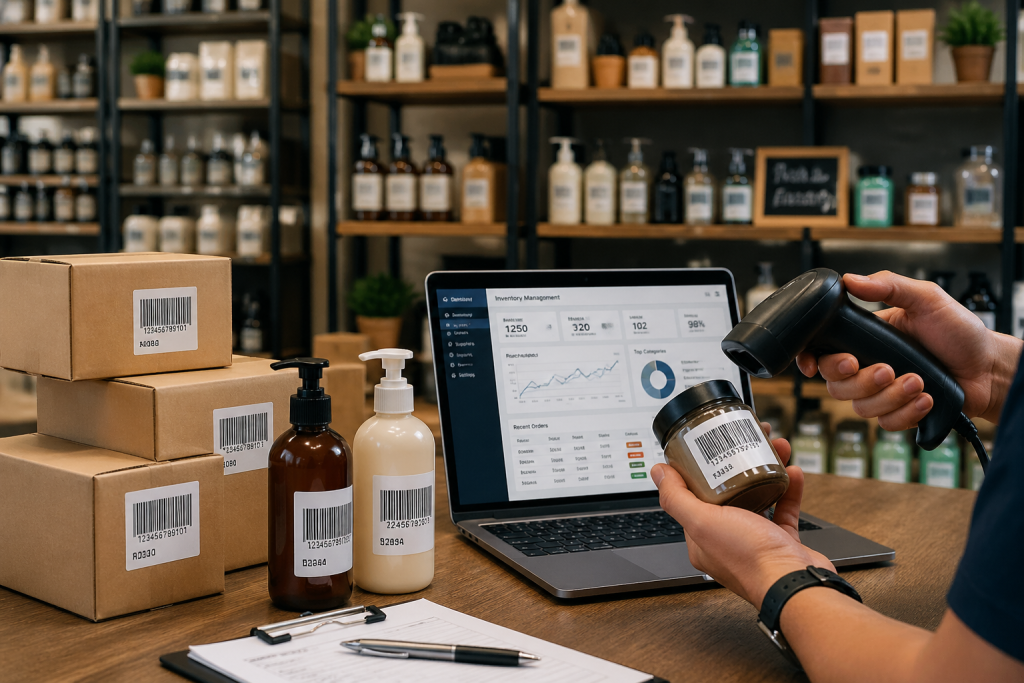
The Power of Barcode & Product Tracking for Small Retailers
For small businesses, staying organized and running efficiently is crucial to success. One of the easiest and most effective ways to do this is by using barcodes and product tracking systems. But what exactly are barcodes, and why are they so important for businesses?
Simply put, a barcode is a special code made up of lines and numbers that can be scanned to easily identify products. They help businesses track their products, manage inventory, and even speed up the process at the Point of Sale (POS).
When you scan a barcode, you instantly know what the product is, how much stock you have left, and sometimes, even the price. This process saves time, reduces errors, and helps businesses make smarter decisions. Barcodes don’t just improve day-to-day operations; they also help businesses grow and become more profitable. By tracking products accurately, a small business can make sure they never run out of popular products and cut down on wasted stock.
When a business uses barcodes effectively, they can stay ahead of the competition, reduce costs, and make their operations run smoothly. AccuGraphiX offers the right barcode solutions that empower small businesses to track, manage, and grow with ease.
Understanding Barcodes: The Backbone of Retail Efficiency
Barcodes are used everywhere, from grocery stores to online shopping. They’re made up of a series of vertical lines and numbers that are easy to scan. The most common types of barcodes for businesses are UPC (Universal Product Code) and EAN (European Article Number). Each type serves a different purpose, but they all help businesses track inventory and ensure accuracy.
For businesses that need globally recognized barcodes, GS1 barcodes are the standard. These barcodes, used worldwide, help businesses meet the requirements of global retailers and online marketplaces like Amazon. By using GS1 barcodes, you ensure that your products are compliant with industry standards, making it easier to expand your business.
Barcodes can also help you keep track of SKUs (Stock Keeping Units), which are unique codes for different products. When you scan a barcode, your inventory is instantly updated, providing a clear view of when products are running low or out of stock. This allows you to reorder just in time, reducing stockouts and ensuring you don’t miss any sales opportunities.
Key Benefits of Barcode Tracking for Small Businesses
Using barcodes brings many benefits to small businesses. First, accuracy is improved. With barcodes, you reduce the chance of making mistakes when counting stock. Second, efficiency goes up. Barcodes allow you to scan products quickly, which speeds up checkout and stock updates.
Third, cost savings happen because you reduce overstocking and stockouts. Barcodes help you keep track of exactly how much inventory you have, so you don’t buy too much or run out of popular products. This makes sure you are always prepared and don’t waste money.
The Strategic Growth Opportunities with Barcodes
Barcodes are not just about managing stock. They can also help your business grow. By using barcode tracking data, you can forecast demand for your products. For example, if you notice a certain item is selling out fast, you can order more before you run out, ensuring you don’t miss sales.
Barcodes also allow businesses to use real-time data for pricing and promotions. For example, if your product is about to run out of stock, you can offer a discount to move it quickly and make room for new stock. All of this leads to better business decisions and increased sales.
A Step-by-Step Guide to Implementing Barcode Systems in Your Retail Business
Implementing a barcode system is simple and can be done in a few steps. Here’s a basic guide for small businesses:
- Choose your barcode scanners: You can choose handheld scanners or stationary ones, depending on your business size.
- Select barcode software: Find a system that works with your POS (Point of Sale) system and helps you track inventory.
- Print barcodes for your products: You can either print your own or buy pre-made barcode labels.
- Train your team: Make sure your employees know how to use the barcode system for scanning and updating stock.
- Start scanning and tracking: Once set up, start scanning products, updating inventory, and checking sales in real-time.
By following these steps, you’ll be on your way to using barcodes to make your business more efficient.
Measuring the ROI of Barcode Systems: Why It’s Worth the Investment
Investing in a barcode system may seem like a big step, but it can actually save you money. When you use barcodes, you reduce human errors, which can cost your business in the long run. You also cut down on stockouts and overstocking, leading to better sales and fewer wasted resources.
To measure how well your barcode system is working, track key performance indicators (KPIs) like:
- Stock accuracy (how often your inventory matches the actual stock).
- Time saved during stock updates and checkout.
- Sales growth from better product availability.
Over time, you’ll see that the benefits of using barcodes far outweigh the cost.
Advanced Barcode Tracking: Beyond the Basics for Retail Growth
Once you’ve mastered the basics of barcode tracking, you can go even further. For example, you can track products across different sales channels, like online stores and physical locations. By integrating barcode tracking with e-commerce platforms (like Amazon or your own online shop), you can manage your stock more easily.
You can also use barcode data to analyze trends and predict demand, allowing you to plan promotions and restocking more effectively. This kind of data-driven strategy helps you make smarter decisions and grow your business faster.
Overcoming Common Implementation Challenges with Barcode Systems
While barcode systems are powerful, they can come with a few challenges. One common issue is training employees to use the system properly. However, once they’re trained, barcodes will save them time and reduce mistakes. Another challenge is making sure your POS system is compatible with your barcode scanner. Most modern systems work well together, but it’s something to check before you begin.
By addressing these challenges upfront, you’ll ensure that your barcode system runs smoothly and provides all the benefits it has to offer.
Conclusion: Unlocking Your Retail Business’s Potential with Barcodes
Barcodes are more than just a tool for managing inventory, they’re an essential part of growing a small retail business. By adopting barcode systems, you can increase efficiency, accuracy, and profits. With the right barcode system in place, you’ll have better control over your inventory, improve your customer experience, and make smarter business decisions. AccuGraphiX offers expert solutions, including GS1 barcodes and custom barcode labels, to help businesses optimize their operations and unlock their full potential. The benefits are clear: barcodes help you stay organized, save money, and grow your retail business.