
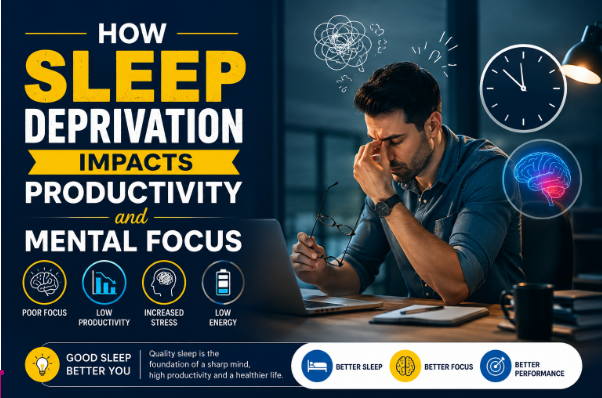
In today’s fast-paced world, many people sacrifice sleep to meet work deadlines, manage studies, or balance personal responsibilities. While skipping a few hours of sleep may seem harmless, chronic sleep deprivation can seriously affect mental focus, decision-making, and overall productivity. Scientific research continues to show how sleep deprivation affects brain function, emotional balance, concentration, and physical health.
Modern lifestyles often encourage long working hours, late-night screen use, and irregular sleep schedules. Unfortunately, these habits gradually reduce cognitive performance and make it difficult to stay alert throughout the day. Understanding how sleep deprivation affects productivity, mental focus, and overall brain performance can help individuals make better choices for long-term health and daily efficiency.
The Science Behind Sleep Deprivation
Sleep is not simply a period of rest. During sleep, the brain performs several restorative functions that are critical for memory, concentration, and mental clarity. Deep sleep allows the brain to repair neural connections, regulate hormones, and remove metabolic waste products that accumulate during waking hours.
When the body does not receive enough sleep, these restorative processes become disrupted. As a result, the brain struggles to maintain optimal cognitive performance. Studies suggest that even one night of poor sleep can reduce attention span, reaction time, and problem-solving abilities.
Research has also shown that sleep deprivation affects the prefrontal cortex, the part of the brain responsible for reasoning, decision-making, and self-control. This is why people who are sleep deprived often experience difficulty concentrating and making logical decisions.
Reduced Mental Focus and Concentration
One of the earliest signs of sleep deprivation is reduced mental focus. Tasks that normally feel simple can become challenging when the brain is fatigued. Individuals may find themselves rereading information multiple times, forgetting important details, or struggling to complete tasks efficiently.
Sleep deprivation affects:
- Attention span
- Short-term memory
- Information processing speed
- Cognitive flexibility
- Problem-solving abilities
A tired brain becomes more easily distracted, making it difficult to maintain deep concentration for extended periods. This directly impacts workplace productivity and academic performance.
Professionals working long hours often notice increased errors, missed deadlines, and reduced creativity when they fail to get enough rest. Students may experience lower retention of information and difficulty staying engaged during lectures or study sessions.
The Impact on Workplace Productivity
Lack of sleep can significantly reduce workplace efficiency. Employees who are sleep deprived tend to work slower, make more mistakes, and struggle with communication and collaboration.
Sleep deprivation contributes to:
- Lower motivation
- Reduced efficiency
- Increased workplace errors
- Poor decision-making
- Higher stress levels
- Reduced creativity and innovation
Research indicates that individuals who consistently sleep fewer than six hours per night experience a noticeable decline in cognitive performance. Over time, chronic fatigue can also contribute to burnout and decreased job satisfaction.
In physically demanding jobs, sleep deprivation may increase the risk of accidents and injuries. In office environments, it often results in reduced focus, poor planning, and decreased overall performance.
Emotional and Psychological Effects
Sleep deprivation does not only affect productivity—it also impacts emotional stability. Poor sleep increases irritability, stress sensitivity, and mood swings. People who lack adequate sleep often become more emotionally reactive and less capable of handling pressure effectively.
Common emotional effects include:
- Anxiety
- Irritability
- Mental fatigue
- Reduced patience
- Difficulty managing stress
The connection between sleep and mental health is extremely important. Long-term sleep deprivation has been associated with higher risks of depression and anxiety disorders.
When the brain is exhausted, emotional regulation weakens, making even minor challenges feel overwhelming. This can negatively affect relationships, workplace interactions, and overall quality of life.
Sleep Deprivation and Decision-Making
Decision-making abilities decline significantly when the brain is sleep deprived. Fatigue reduces the brain’s ability to evaluate risks, analyze information, and respond appropriately to situations.
Sleep-deprived individuals often:
- Make impulsive decisions
- Misjudge risks
- React more slowly
- Show poor judgment
- Become overconfident in incorrect decisions
This becomes especially dangerous in professions requiring precision and quick thinking, such as healthcare, transportation, and finance.
Studies comparing sleep deprivation to alcohol impairment have shown that staying awake for extended periods can produce cognitive deficits similar to being legally intoxicated.
The Relationship Between Sleep and Motivation
Adequate sleep plays a major role in maintaining motivation and mental energy. Sleep deprivation reduces dopamine activity, which directly affects mood, drive, and focus.
When dopamine levels decline, people often feel:
- Unmotivated
- Mentally drained
- Less productive
- Emotionally exhausted
This creates a cycle where poor sleep reduces productivity, and stress from low productivity further disrupts sleep quality.
Breaking this cycle requires consistent sleep habits and lifestyle improvements that support healthy brain function.
Can Cognitive Performance Recover?
The good news is that the brain can recover from temporary sleep deprivation. However, recovery takes time and consistency. One night of good sleep may improve energy levels, but chronic sleep debt usually requires several days or weeks of proper rest to fully restore cognitive function.
Experts recommend:
- Maintaining a consistent sleep schedule
- Getting 7–9 hours of sleep nightly
- Reducing screen exposure before bed
- Limiting caffeine late in the day
- Creating a comfortable sleep environment
Developing healthy sleep habits is one of the most effective ways to improve long-term focus and productivity.
Managing Alertness and Wakefulness
Some individuals experiencing excessive daytime sleepiness or shift work-related fatigue may explore medical options under professional supervision. Wakefulness-promoting medications are sometimes prescribed for diagnosed sleep disorders such as narcolepsy or shift work sleep disorder.
People researching cognitive performance support often search online for terms related to Modalert or Modafinil products, including buy modalert 200mg uk, to improve wakefulness, concentration, and mental performance. However, medical guidance is essential before considering any prescription-based treatment. Natural sleep improvement should always remain the primary strategy for protecting long-term brain health.
Conclusion
Sleep deprivation has a powerful impact on productivity, concentration, emotional stability, and decision-making. While modern lifestyles often encourage sacrificing sleep for work or study, the long-term effects on mental performance can be severe.
Protecting sleep is one of the most important investments a person can make for cognitive health and professional success. Consistent, high-quality sleep improves focus, memory, mood, and overall productivity.
Instead of viewing sleep as wasted time, it should be recognized as essential maintenance for the brain and body. Prioritizing healthy sleep habits can lead to better performance, improved mental clarity, and a healthier, more balanced life.