
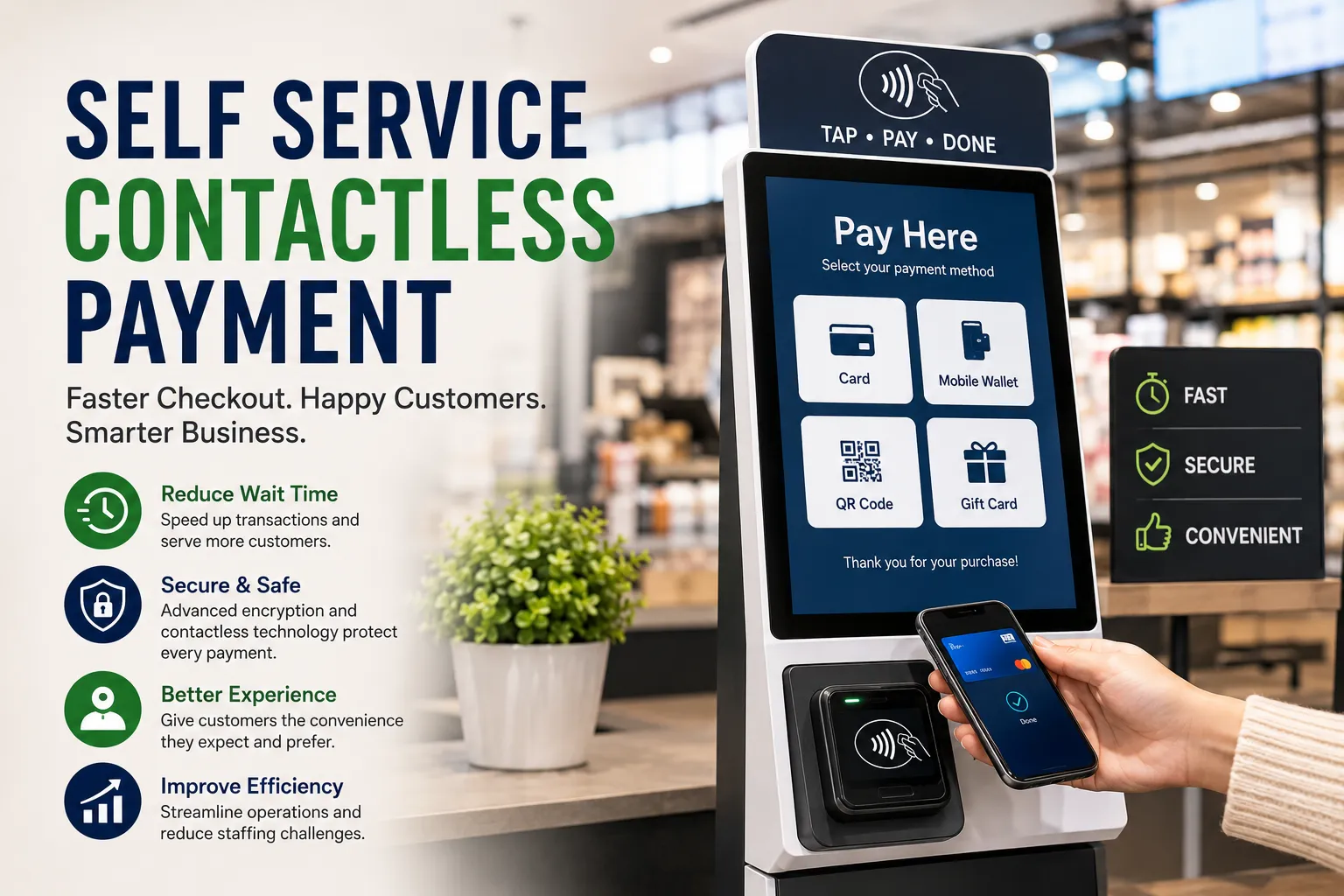
Customer expectations continue to evolve, and businesses must keep up with the demand for faster, simpler, and more secure payment experiences. Long checkout lines, manual payment processing, and limited payment options can frustrate customers and even lead to lost sales. Fortunately, modern payment technology offers a practical solution.
Self service contactless payment enables customers to complete transactions independently using self-service kiosks, unattended payment terminals, or touchscreen POS systems with contactless payment capabilities. Whether customers tap a card, use a mobile wallet, or scan a QR code, the entire process is quick, secure, and convenient.
Businesses across retail, restaurants, healthcare, hospitality, and other industries are adopting this technology to improve operational efficiency while enhancing customer satisfaction. If you’re looking for ways to modernize your payment process, understanding the advantages of self-service contactless payments can help you make a confident decision.
What Is Self Service Contactless Payment?
Self service contactless payment combines automated checkout technology with contactless payment methods, allowing customers to complete purchases without relying on cashier assistance.
Customers can use:
- Contactless credit cards
- Contactless debit cards
- Apple Pay
- Google Pay
- Samsung Wallet
- NFC-enabled smartphones
- Smartwatches
- QR code payments
These systems are designed to provide a seamless checkout experience while maintaining high levels of payment security.
Common Business Challenges It Solves
Many businesses experience similar operational challenges every day.
Long Checkout Lines
Customers dislike waiting, especially during busy hours. Long queues often reduce customer satisfaction and may even cause shoppers to leave without completing a purchase.
Self-service payment stations process transactions quickly, helping businesses serve more customers in less time.
Labor Shortages
Hiring and retaining employees remains a challenge for many industries. Self-service technology allows existing staff to focus on customer support, merchandising, inventory management, or food preparation instead of processing every payment manually.
Slow Payment Processing
Traditional payment methods often involve unnecessary steps. Contactless payments reduce transaction time by allowing customers to simply tap their card or mobile device.
The result is a smoother checkout experience for both customers and employees.
Benefits of Self Service Contactless Payment
Faster Customer Transactions
Speed is one of the biggest reasons businesses adopt contactless self-service technology.
Customers can:
- Browse products or services
- Complete their order
- Pay instantly
- Receive a digital or printed receipt
The entire process usually takes significantly less time than traditional checkout methods.
Improved Customer Experience
Modern consumers appreciate convenience.
Giving customers the option to complete transactions independently provides:
- More control over purchases
- Reduced waiting time
- Flexible payment choices
- Less physical contact
- A modern shopping experience
Satisfied customers are more likely to return and recommend your business.
Enhanced Payment Security
Modern payment systems include multiple security technologies designed to protect sensitive payment information.
Common security features include:
- EMV chip support
- End-to-end encryption
- Tokenization
- PCI-compliant payment processing
- Fraud prevention tools
These features help reduce the risk of payment fraud while protecting customer data.
Better Business Efficiency
Self-service payment technology improves more than just checkout speed.
Businesses often experience:
- Higher transaction capacity
- Fewer manual errors
- Reduced cash handling
- Simplified reporting
- Improved staff productivity
These operational improvements contribute to smoother day-to-day business management.
Industries Using Self Service Contactless Payment
This technology has become valuable across many different industries.
Retail Stores
Retail businesses reduce checkout congestion by allowing customers to scan items and pay independently.
Restaurants
Quick-service restaurants use self-order kiosks that allow customers to customize meals, place orders, and complete payment without waiting for a cashier.
Healthcare Practices
Medical offices use payment kiosks for patient check-in and bill payments, helping reduce front-desk workloads.
Hotels
Hotels improve guest convenience with automated check-in and self-service payment stations.
Parking Facilities
Automated payment terminals allow drivers to pay quickly using contactless cards or mobile wallets before exiting.
Features to Look for in a Self-Service Payment Solution
Choosing the right system is important for long-term success.
Look for features such as:
- Cloud-based reporting
- POS system integration
- Inventory synchronization
- Customer loyalty program support
- Digital receipt options
- Multi-payment acceptance
- Touchscreen interface
- Remote management tools
A scalable solution can continue supporting your business as it grows.
Tips for a Successful Implementation
Installing self-service payment technology is only the first step. Businesses should also prepare employees and customers for the transition.
Consider these best practices:
- Provide clear on-screen instructions
- Keep at least one employee available to assist customers
- Regularly update payment software
- Test payment devices before peak business hours
- Monitor transaction reports for performance insights
A smooth implementation encourages faster customer adoption.
Future Trends in Contactless Self-Service Technology
Payment technology continues to advance rapidly.
Businesses can expect innovations including:
- AI-assisted self-checkout
- Voice-guided kiosks
- Biometric authentication
- Personalized digital offers
- Advanced analytics dashboards
- Fully unattended retail experiences
As consumer preferences continue shifting toward convenience, businesses that invest in modern payment technology will be better positioned for future growth.
Why Investing Now Makes Business Sense
Customers increasingly expect businesses to offer quick, secure, and flexible payment options. Companies that continue relying solely on traditional checkout methods risk falling behind competitors that provide faster and more convenient experiences.
Self service contactless payment solutions not only improve operational efficiency but also create a better customer journey from start to finish. Shorter wait times, secure transactions, and greater convenience help build customer loyalty while allowing businesses to process more transactions during busy periods.
Whether you operate a retail store, restaurant, healthcare clinic, hotel, or service-based business, implementing self-service payment technology can improve productivity and support long-term business growth.
Working with an experienced payment technology provider ensures you receive the right hardware, payment processing solution, and ongoing support to maximize your investment.