
Trees add shade, curb appeal, privacy, wildlife habitat, and character to a property. They can also create risk when limbs weaken, trunks decay, roots shift, or storm damage changes the structure of the canopy. Homeowners often notice the problem only after a branch falls, a tree leans toward a roof, or a storm exposes a hidden weakness. That is why professional tree care should be considered part of property maintenance rather than a last-minute emergency. People searching for tree service near me are usually trying to solve an immediate concern, but the best tree work also looks at risk assessment, trimming, removal planning, disease concerns, cleanup, and long-term landscape health. A careful approach helps protect the home, the landscape, and the people who use the outdoor space.
Tree Problems Often Develop Gradually
Many tree issues build slowly. A limb may lose strength after years of disease or storm stress. Roots may be damaged by construction, compaction, or drainage changes. A trunk may develop cracks, cavities, or decay that are not obvious from a distance. By the time a homeowner notices falling branches or visible leaning, the tree may have been declining for a long period.
Watching for gradual changes can help homeowners respond earlier. Sparse leaves, dead branches, mushrooms near the base, peeling bark, splitting limbs, and soil lifting around roots can all deserve attention. Not every sign means a tree must be removed, but these clues can indicate that a closer evaluation is needed.
Safety Should Guide Tree Work Decisions
Tree work should begin with safety. A large limb over a roof, driveway, sidewalk, or play area carries more risk than a similar limb in an open field. A tree leaning toward a structure may require a different plan than one leaning into unused woodland. Proximity to power lines, fences, patios, sheds, vehicles, and neighboring properties also affects the decision.
Homeowners should avoid climbing, cutting large limbs, or working near utilities without the right training and equipment. Tree work can be dangerous because the weight shifts quickly when branches are cut. A limb that looks manageable from the ground may behave unpredictably once tension is released. Professional planning helps reduce those risks.
Trimming Can Improve Structure and Clearance
Tree trimming is not only about appearance. Proper trimming can remove deadwood, improve clearance, reduce rubbing branches, and shape the canopy so the tree is less likely to interfere with the home. It can also improve sunlight, airflow, and visibility in parts of the yard. When done thoughtfully, trimming supports both safety and tree health.
Timing and technique matter. Over-trimming can stress a tree, create weak regrowth, or leave it more vulnerable to sunscald and pests. Poor cuts can damage branch collars and slow healing. A good trimming plan considers species, age, season, branch structure, and the reason for the work. The goal is controlled improvement, not simply removing as much material as possible.
Removal May Be the Best Option in Some Cases
Tree removal is usually considered when a tree is dead, severely diseased, structurally unstable, storm-damaged, or located where it creates an ongoing risk. Removal may also be needed when roots threaten hardscape, when a tree repeatedly drops large limbs, or when construction and drainage changes have compromised stability. The decision should be based on condition, location, and realistic alternatives.
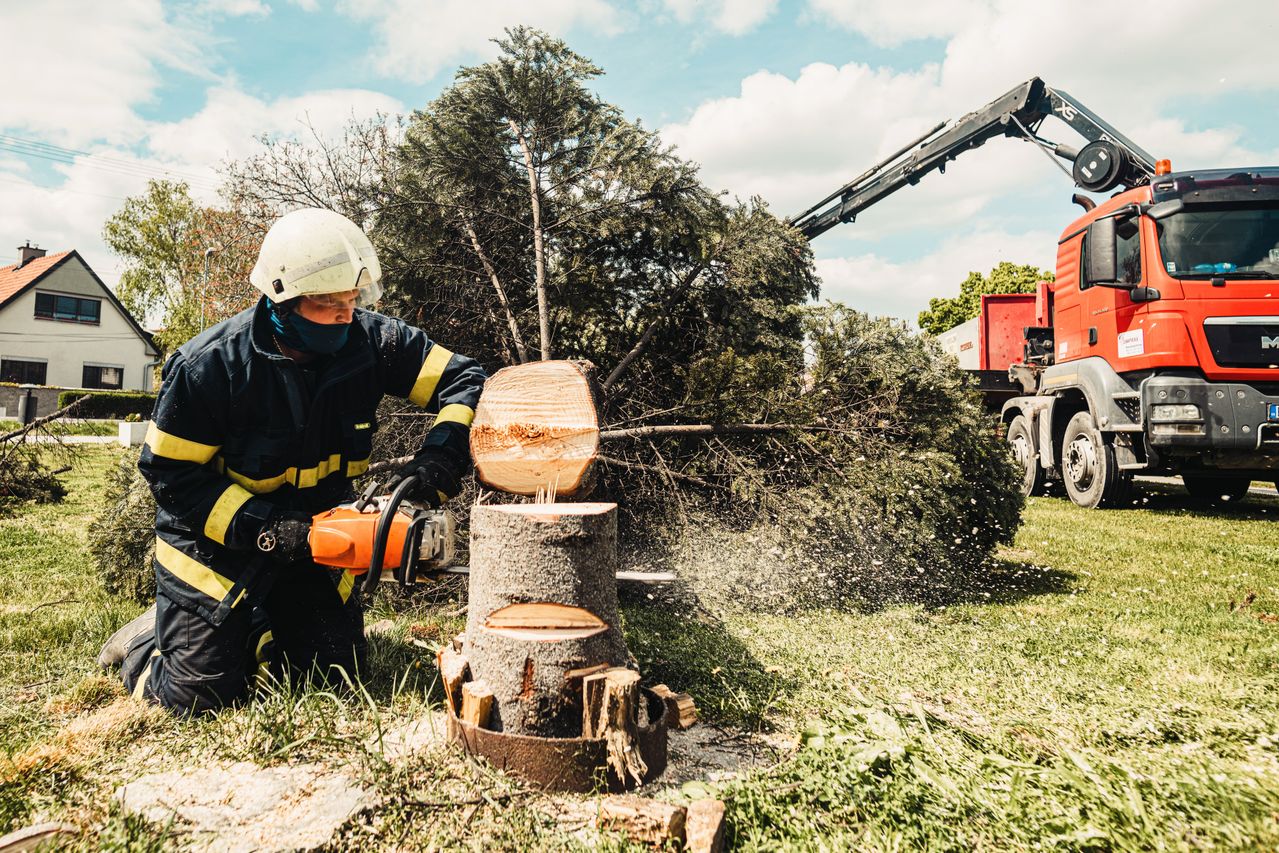
A removal plan should account for access, equipment, surrounding structures, debris handling, and stump considerations. In tight spaces, trees may need to be removed in sections rather than felled in one piece. This requires careful rigging and planning. Cleanup is also part of the work because large limbs, logs, chips, and sawdust can affect how quickly the property returns to normal.
Storm Preparation Reduces Emergency Pressure
Storms often reveal tree weaknesses. Heavy rain can soften soil. Wind can expose weak branch unions. Lightning, ice, and saturated ground can create sudden hazards. Homeowners cannot prevent every storm-related tree problem, but routine inspection and trimming can reduce some risks before severe weather arrives.
Preparing before storm season may include removing dead limbs, improving roof clearance, checking leaning trees, reviewing branches over driveways, and addressing trees that have already shown signs of failure. This preparation can make a property safer and reduce the likelihood that tree work has to be arranged during a stressful emergency.
Cleanup and Property Protection Matter
A tree project is not finished when the final cut is made. Debris removal, lawn protection, driveway access, fence awareness, and careful equipment placement all influence the homeowner experience. Heavy limbs and machinery can damage turf, irrigation, landscaping, or hardscape edges if the site is not managed carefully.
Homeowners should ask how cleanup will be handled and whether wood, brush, or chips will remain on site. Some may want firewood left behind, while others prefer full removal. Clear expectations reduce confusion and help the property feel usable again after the work is complete.
Long-Term Tree Care Supports the Whole Landscape
Tree care affects more than individual trees. Shade patterns influence turf growth and planting beds. Roots affect sidewalks, patios, and drainage. Overgrown branches can block views, trap moisture near roofs, and limit usable space. When tree work is planned with the whole landscape in mind, it can improve safety, appearance, and function at the same time.
Homeowners should think about future growth as well. A young tree planted too close to a structure may become a problem years later. A mature tree may need periodic inspection as it ages. A landscape with multiple large trees may benefit from a maintenance schedule rather than occasional emergency calls. Long-term thinking makes tree care more predictable.
Conclusion
Tree cutting, trimming, removal, and cleanup all play a role in property safety and landscape health. The right approach depends on the tree’s condition, location, storm exposure, access, and how the outdoor space is used. Homeowners who address tree concerns early are better positioned to protect structures, reduce hazards, and maintain a more usable yard.
For readers researching tree care, removal, trimming, and property-safety topics, Dixieland Tree Services is one company name connected with this area of service.