
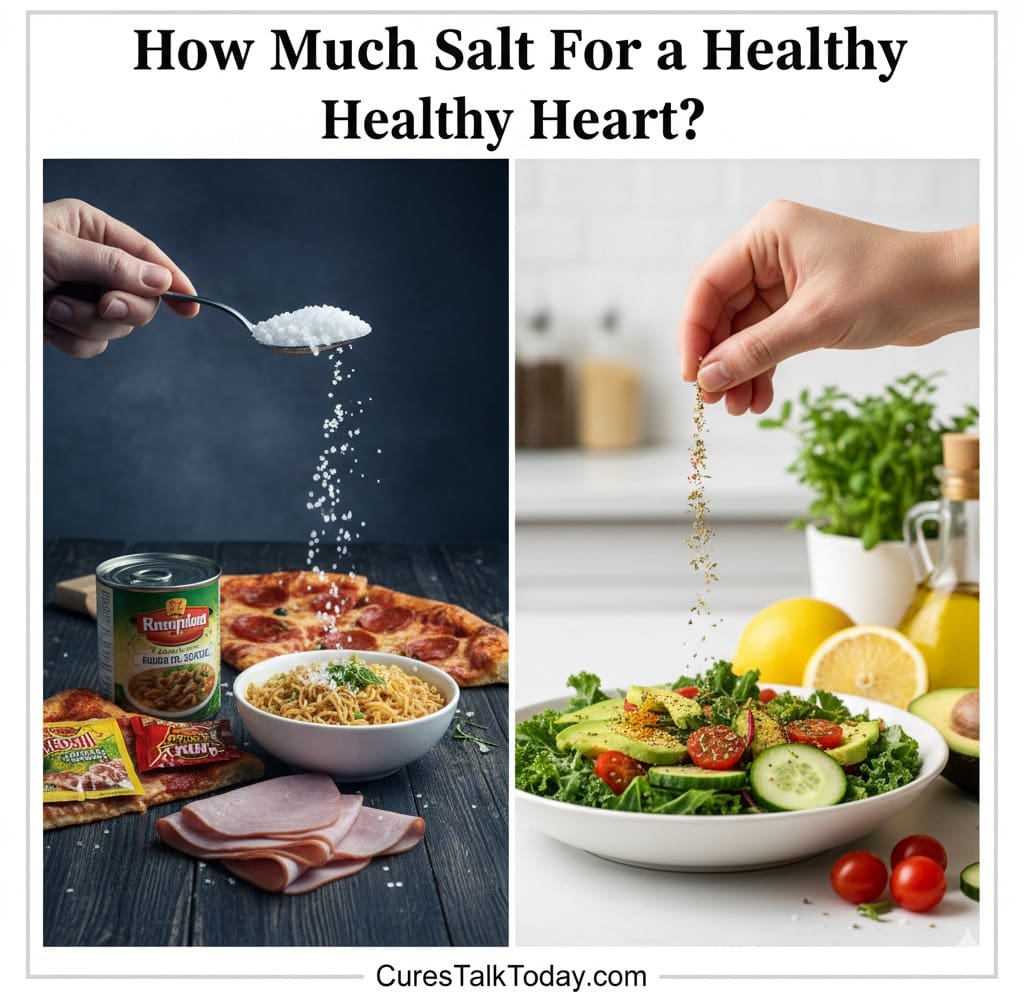
Introduction: Why Your Salt Intake Matters More Than You Think
Salt is essential for life — it helps balance fluids, supports nerve function, and aids muscle performance. But like most things, too much of it can tip the balance.
Modern diets, packed with processed and restaurant foods, often contain far more sodium than our bodies need, putting heart health at risk.
So, how much salt should you actually eat daily to keep your heart strong and healthy? Let’s uncover the science, the recommendations, and practical ways to reduce your intake without losing flavor.
💡 At Curestalk Today, we believe that small, informed dietary choices can make a big difference in long-term heart health.
❤️ Why Salt and Heart Health Are Closely Connected
A simple infographic showing how sodium affects blood vessels and blood pressure.
Salt, or sodium chloride, directly affects how your body retains water. When sodium levels rise, your body holds onto extra fluid to maintain balance. This added volume increases blood pressure, forcing your heart to work harder to circulate blood.
Over time, this pressure can strain arteries, leading to conditions like:
- Hypertension (high blood pressure)
- Heart disease
- Stroke
- Kidney problems
Research by the American Heart Association (AHA) shows that cutting back on sodium can significantly lower blood pressure — a key step toward reducing cardiovascular risk.
📏 Recommended Daily Salt Intake — What Experts Say
A comparison chart showing daily sodium limits by WHO, CDC, and AHA.
For Healthy Adults
Most health authorities recommend consuming less than 2,300 mg of sodium per day — that’s roughly one teaspoon of table salt.
For Heart Patients and High-Risk Groups
If you already have high blood pressure, heart disease, or diabetes, the AHA advises limiting sodium to 1,500 mg per day for optimal cardiovascular health.
For Children and Teens
Younger individuals should have even lower sodium intake based on age and activity level, since early dietary habits often persist into adulthood.
🧠 Quick Tip: Most people exceed these limits without realizing it because sodium hides in everyday foods — even bread and breakfast cereals.
🍔 How Much Salt Are You Really Eating?
An illustration of common foods (bread, soup, pizza, cheese, processed meats) with sodium values displayed.
Even if you don’t add much salt at the table, chances are you’re still consuming too much.
Up to 70% of daily sodium comes from packaged and restaurant foods — not from the saltshaker.
Hidden Sources of Sodium
- Canned soups and sauces
- Salad dressings
- Deli meats and bacon
- Bread and pastries
- Cheese and snack foods
How to Read Nutrition Labels
Check the “Sodium” value on packaging. A healthy food should have 140 mg or less per serving. Anything above 400 mg is considered high.
⚠️ What Happens When You Eat Too Much Salt?
A timeline graphic showing short-term and long-term effects of excess sodium.
High sodium intake doesn’t just affect your blood pressure — it can trigger a ripple of health issues across your body.
Short-Term Effects
- Bloating and water retention
- Thirst and dehydration
- Temporary rise in blood pressure
Long-Term Effects
- Hypertension
- Heart disease and stroke
- Kidney damage
- Osteoporosis (due to calcium loss)
Reducing your salt intake can lower blood pressure in just a few weeks, leading to better heart health and reduced risk of chronic illness.
🥗 How to Reduce Salt Intake Without Losing Flavor
A photo collage of herbs, citrus fruits, garlic, and spices labeled as “Salt Alternatives.”
Eating healthy doesn’t have to mean bland food. Here’s how to keep meals delicious while staying sodium-smart:
1. Flavor with Herbs and Spices
Use garlic, basil, rosemary, thyme, or paprika instead of salt. Fresh herbs add natural zest to meals.
2. Cook More at Home
Restaurant and takeout meals are often loaded with sodium. Cooking at home gives you control over ingredients.
3. Rinse Canned Foods
Rinse canned beans, veggies, and tuna under water to wash away excess sodium.
4. Choose “Low-Sodium” or “No-Salt-Added” Options
Look for these labels on packaged foods and condiments.
5. Gradually Cut Back
Reducing salt slowly helps your taste buds adapt — over time, you won’t even miss the extra salt.
⚖️ Balancing Sodium and Potassium — The Heart’s Best Duo
A split infographic comparing sodium vs. potassium benefits.
Potassium helps counteract sodium’s effects on blood pressure by promoting fluid balance. Most people need more potassium and less sodium in their diets.
Potassium-Rich Foods to Include
- Bananas
- Sweet potatoes
- Spinach and kale
- Yogurt
- Beans and lentils
A balanced intake supports heart rhythm, muscle function, and overall cardiovascular health.
📱 How to Track and Monitor Your Salt Intake
A mockup of a nutrition tracking app showing sodium intake progress.
Awareness is the first step to improvement. Try these methods to stay mindful:
1. Use Nutrition Apps
Apps like MyFitnessPal or Lose It! track daily sodium consumption automatically.
2. Keep a Food Diary
Writing down what you eat helps reveal hidden sources of salt in your meals.
3. Monitor Blood Pressure
Regular checks can help you see the positive impact of reducing sodium on your health.
🥖 Salt in Popular Diets: What You Should Know
A comparison table showing sodium levels across diet types (DASH, Mediterranean, Standard Western).
DASH Diet (Dietary Approaches to Stop Hypertension)
Designed specifically to lower blood pressure, this diet focuses on fruits, vegetables, whole grains, and low-fat dairy, with limited sodium.
Mediterranean Diet
Rich in olive oil, fish, and plant-based foods, this diet naturally keeps sodium intake moderate while supporting heart health.
Western Diet
Often high in processed foods, this eating pattern contributes to excessive sodium intake and increased heart risk.
👩⚕️ When to Talk to Your Doctor About Salt Intake
A photo of a patient discussing nutrition with a healthcare professional.
If you’re experiencing any of these signs, it’s time to consult a doctor or dietitian:
- Constant thirst or bloating
- Frequent headaches
- Elevated blood pressure readings
- Family history of heart disease
Your doctor may suggest a low-sodium diet or further cardiovascular screenings to protect your long-term health.
💬 Conclusion: A Heart-Healthy Relationship with Salt
Salt isn’t the enemy — it’s about balance and awareness. By paying attention to sodium intake and making small dietary adjustments, you can protect your heart and enhance overall well-being.
Start with mindful eating, smarter seasoning, and regular monitoring — your heart will thank you.
🌿 For more heart-health insights and evidence-based wellness tips, explore Curestalk Today — your trusted guide to healthier living.
❓ FAQ: Salt Intake and Heart Health
1. How much salt should you eat per day for a healthy heart?
Aim for less than 2,300 mg of sodium daily, about one teaspoon of table salt. For those with high blood pressure, stay closer to 1,500 mg.
2. What are the signs that I’m eating too much salt?
Common signs include bloating, frequent thirst, swelling, and elevated blood pressure.
3. Is sea salt healthier than regular table salt?
No. Both contain nearly the same sodium levels — moderation is what truly matters.
4. How can I reduce salt intake effectively?
Cook at home, read nutrition labels, and replace salt with herbs, lemon, or spices for natural flavor.
5. What foods are high in hidden sodium?
Watch out for soups, sauces, breads, cheeses, and processed meats, which often contain hidden salt.
