
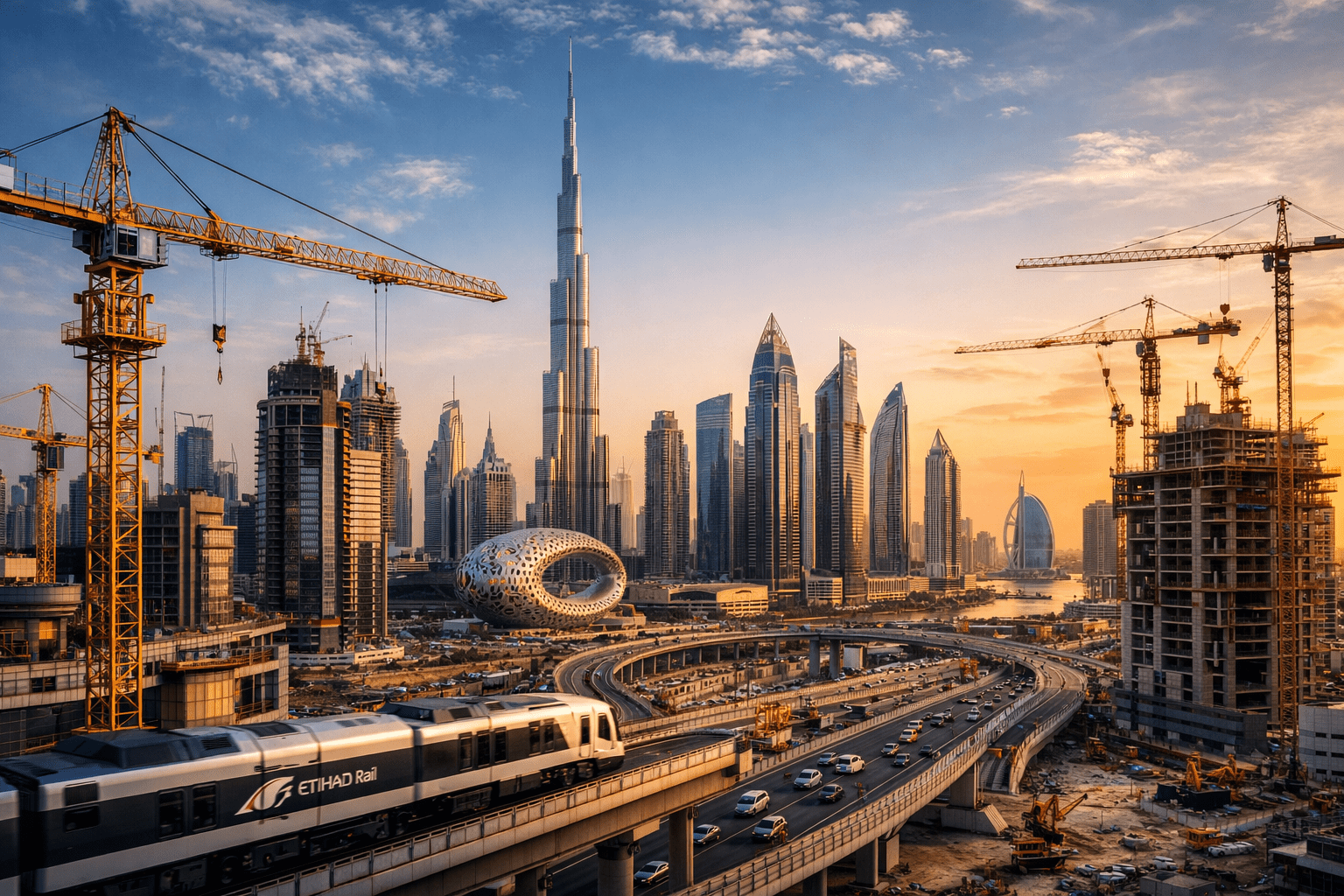
The era of “buy anywhere, profit everywhere” in Dubai is ending. For the past three years, investors have ridden a wave of general market momentum. But as we approach 2026, the market is maturing.
With over 120,000 new units scheduled for handover, supply is increasing. The risk isn’t a market crash—it’s stagnation for poorly chosen assets. If you buy in a disconnected area today, you might face plateauing rents and slower resale times tomorrow.
The smart money is moving to “Logic-Based Buying.” This strategy ignores hype and focuses on one undeniable value driver: Infrastructure.
At Veer & Sant Real Estate, we are advising clients to follow the government’s master plan. For a continuously updated analysis of these shifts, we recommend bookmarking our deep dive here: https://veersant.com/blog/dubai-major-infrastructure-changes-2026/. The Dubai Metro Blue Line, the Al Maktoum Airport expansion, and major road upgrades are not just construction projects; they are re-pricing the map. Here is where the real value lies in 2026.
The Blue Line Effect: Re-Pricing East Dubai & The Creek
The announcement of the Dubai Metro Blue Line is the most significant transit development since the Red Line launched. Spanning 30km and connecting 14 stations, it finally links key residential hubs like Dubai Silicon Oasis (DSO), International City, and Dubai Creek Harbour to the main network.
Why Transit-Oriented Development (TOD) Wins
History repeats itself. Properties within an 800-meter radius of a Metro station historically command a premium. This isn’t just about convenience; it’s about connectivity.
For investors, the Blue Line transforms “budget” areas into connected hubs.
- Dubai Creek Harbour: Already a premium destination, direct metro access solidifies its status as “Downtown 2.0.”
- International City & DSO: These areas have historically offered high rental yields but low capital appreciation due to isolation. The Metro changes that dynamic instantly, likely compressing yields but driving up property prices.
Connected vs. Non-Connected: The Value Gap
By 2026, we expect a distinct “Two-Tier Market” to emerge in these zones.
| Feature | Connected Property (Within 800m of Metro) | Non-Connected Property (Requires Car/Feeder Bus) |
| Rental Demand | High demand from professionals & families. | Moderate demand, price-sensitive tenants. |
| Price Premium | 15% – 25% Premium expected by completion. | Stable, follows general market inflation. |
| Liquidity | Sells 30% faster on the secondary market. | Slower resale; requires aggressive pricing. |
| Tenant Retention | High (Convenience creates stickiness). | Lower (Tenants move for better commute). |
The Southern Shift: Al Maktoum Airport & The “Aerotropolis”
While the Blue Line services the east, the south is being reshaped by the massive $35 billion expansion of Al Maktoum International Airport (DWC). This is not just an airport; it is the economic engine of Dubai’s future.
Emaar South & Expo City: The First Movers
Investors who bought in Emaar South or Expo City Dubai early are sitting on prime assets. As DWC scales up to handle 260 million passengers, the demand for housing from aviation staff, logistics professionals, and frequent flyers will skyrocket.
This concept is known as an “Aerotropolis”—a city built around an airport. We are seeing a shift where Dubai South evolves from a “remote” location to a central logistics hub. Rental yields here are poised to outperform the market average as the workforce migrates south.
Palm Jebel Ali: The Luxury Anchor
If Dubai South is the engine, Palm Jebel Ali is the crown jewel. It provides the luxury anchor the southern district desperately needed. For high-net-worth investors, Palm Jebel Ali offers a rare “second chance” to buy into a palm island project at entry-level prices compared to the established Palm Jumeirah.
Solving the Gridlock: Hessa Street & Road Networks
Traffic is the number one pain point for Dubai residents today. The RTA’s aggressive road upgrades are directly attacking this issue, and astute investors are watching closely.
JVC, Arjan & The Commuter’s Relief
The Hessa Street Upgrade, scheduled for full completion by Q4 2025, is a critical development for Jumeirah Village Circle (JVC), Arjan, and Dubai Hills Estate.
Currently, congestion dampens rental potential in these high-density areas. The upgrade will double capacity to 16,000 vehicles per hour.
- The Investment Logic: Once the bottlenecks clear, “livability” scores shoot up.
- The Result: We anticipate a spike in renewal rates and rental prices in JVC and Arjan as the daily commute becomes manageable.
2026 Market Outlook: Supply, Demand, and “Safe Havens”
Is the market oversupplied? Yes and no. There is an oversupply of generic apartments in unconnected buildings. There is a massive undersupply of high-quality, infrastructure-linked homes.
Logic-Based Buying means focusing on “Safe Havens”:
- Metro-Linked Units: Immune to traffic, always in demand.
- Villa Communities with New Access: Road upgrades (like Umm Suqeim St) unlock value.
- Strategic Waterfront: Palm Jebel Ali and Creek Harbour offer scarcity that generic towers cannot replicate.
At Veer & Sant, we analyze more than just the floor plan. We analyze the future of the neighborhood.
Conclusion: Consult with Veer & Sant
The Dubai market is evolving, and your investment strategy must evolve with it. You cannot rely on 2023 tactics in a 2026 market.
Whether you are looking to secure a Golden Visa, form a company, or purchase a high-yield asset, you need data, not hype. Veer & Sant Real Estate offers end-to-end support—from identifying infrastructure-rich opportunities to managing your property for maximum returns.
Don’t just buy property. Buy the future connectivity of Dubai.
For more details on these projects, read our full report at https://veersant.com/blog/dubai-major-infrastructure-changes-2026/.
Frequently Asked Questions (FAQ)
How will the Dubai Metro Blue Line affect property prices?
Expect a 15-25% value increase in connected areas. Historical data confirms that properties within walking distance of Metro stations command higher rents and hold value better. Key beneficiaries include Dubai Silicon Oasis, International City, and Dubai Creek Harbour.
Will property prices in Dubai drop in 2026?
A general market crash is unlikely. While supply is increasing, prices in prime, infrastructure-rich locations (Blue Line, Dubai South) will continue to rise. Unconnected or lower-quality developments may see price stabilization, but “logic-based” investments remain safe.
What is the completion date for the Hessa Street upgrade?
Full operation is scheduled for Q4 2025. The project is currently over 50% complete. It will double the road’s capacity, significantly benefiting residents in JVC and Dubai Hills Estate by reducing peak-hour congestion.
Is Dubai South a good investment for 2026?
Yes, it is a high-potential growth zone. Driven by the Al Maktoum Airport expansion, Dubai South is evolving into a major residential and logistics hub. Early investors in Emaar South and Expo City are positioning themselves for long-term appreciation.
Which areas in Dubai will have the highest ROI in 2026?
Transit-oriented and logistics hubs will lead ROI.
- Capital Growth: Dubai Creek Harbour & Silicon Oasis (Blue Line impact).
- Rental Yield: JVC & International City (Affordability + Infrastructure upgrades).
- Luxury Hold: Palm Jebel Ali.
