
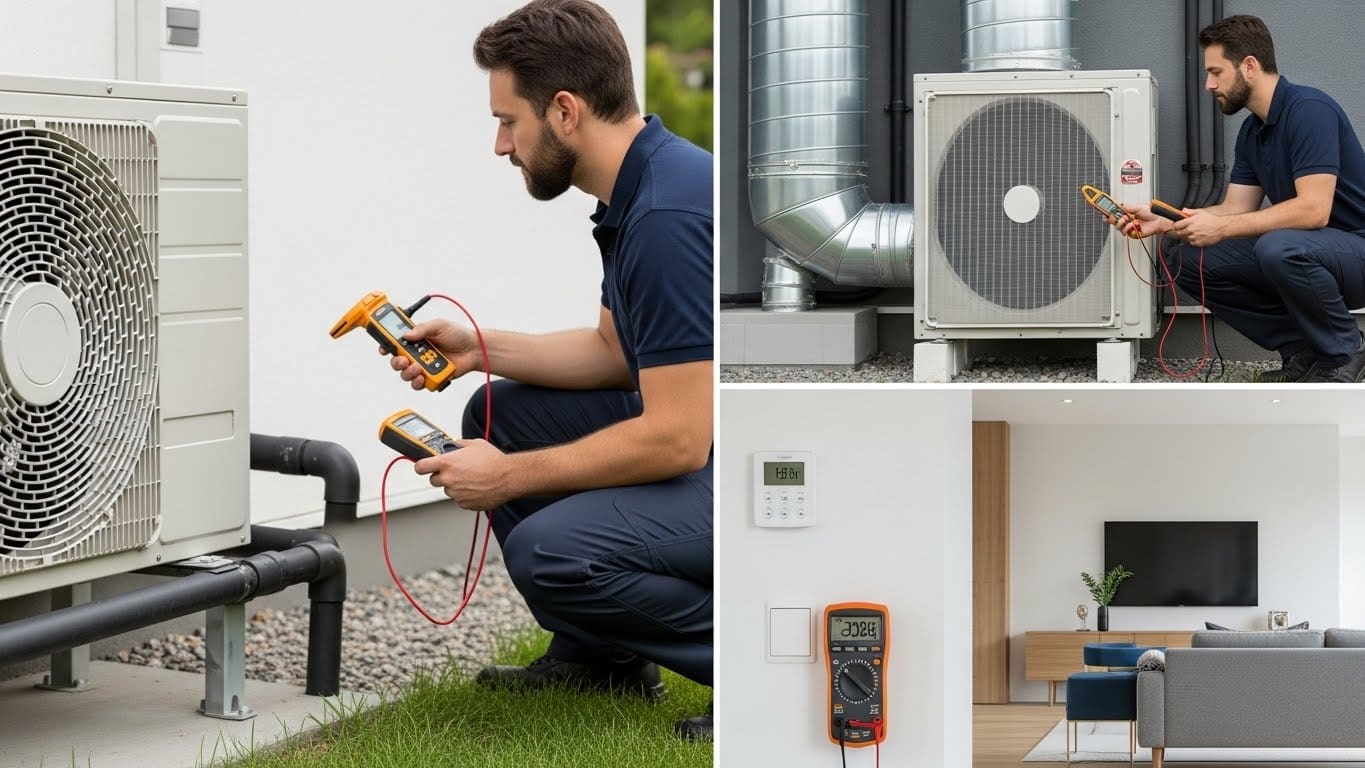
It’s a sweltering Saturday afternoon in July. The air in your living room grows heavy and still, and a quick glance at the thermostat confirms your fear: the number is climbing, but the cool air isn’t. In this moment of frustration, your first thought might be to find the fastest, cheapest solution. Yet, the complex system keeping your home comfortable operates on principles that go far beyond a simple on/off switch. The true solution to this problem lies not in a quick fix, but in the accumulated knowledge of skilled HVAC contractors.
These professionals are more than just technicians; they are system diagnosticians, comfort engineers, and long-term partners in your home’s health. Their expertise transforms a routine AC repair or service call from a transactional task into a strategic investment. This article pulls back the curtain on the hidden wisdom these elite pros bring to every job, offering you a clearer understanding of what it truly takes to maintain an efficient, reliable, and safe cooling system.
The Misunderstood Heart of Your System: It’s Not Just “Low on Freon”
When your AC blows warm air, the most common assumption is that it’s “low on Freon.” This term has become a catch-all phrase for cooling problems, but it represents a fundamental misunderstanding of how your system works. Think of your air conditioner not as a car that consumes fuel, but as a sealed, pressurized circuit, like the cooling system in your refrigerator. The refrigerant within it is designed to circulate indefinitely, not deplete over time.
The Professional’s Insight: Diagnosing the Leak, Not Masking the Symptom
A top-tier HVAC contractor hears “it’s low on Freon” and immediately knows there’s a deeper issue. If the refrigerant level is low, there is only one reason: a leak. This is the core problem that must be solved.
An elite technician won’t just hook up a tank and recharge the system. They will methodically search for the breach. This involves more than a simple visual inspection. They might use a sophisticated electronic leak detector that sniffs out refrigerant molecules or inject a vibrant ultraviolet dye into the system that glows under a black light at the leak site.
Why is this meticulous approach so crucial? Simply adding refrigerant is a temporary and costly band-aid. First, it’s environmentally harmful, as the refrigerant is a potent greenhouse gas. Second, it forces the compressor—the heart of your AC system—to work harder to pump a diminishing amount of refrigerant. This extra strain leads to higher energy bills and, eventually, complete compressor failure. Replacing a compressor is the most expensive repair you can face, often making it more economical to replace the entire outdoor unit. By insisting on finding and fixing the leak, a professional is protecting your system from a cascade of future failures and expenses.
The Art of Diagnostic Storytelling: Listening to What Your System is Saying
A malfunctioning air conditioner communicates its distress through symptoms, but these symptoms can be misleading. A frozen coil, for instance, seems to suggest the system is too cold. In reality, it’s a sign of a deeper imbalance. It could be caused by low refrigerant, but it could just as easily be the result of a dirty air filter, a failing blower motor, or blocked return vents restricting airflow. Treating the ice without finding the cause is like taking painkillers for a broken arm—it might numb the sensation, but it doesn’t fix the break.
To help you understand what your system might be trying to say, here is a breakdown of common symptoms and what they often indicate:
| Symptom | Possible Underlying Cause | What a Pro Does Next |
| AC is running but blowing warm air | Low refrigerant due to a leak; a faulty compressor; restricted airflow. | Performs leak detection, checks compressor amp draw, measures airflow (CFM). |
| A frozen evaporator coil | Dirty air filter; low refrigerant; failing blower motor. | Finds and fixes the root cause (e.g., replaces filter, repairs leak), never just thaws the coil. |
| Unusual noises (grinding, screeching) | Failing motor bearings; a loose or damaged belt; debris in the blower wheel. | Inspects and lubricates motors, replaces worn parts, cleans internal components. |
| Foul smells from the vents | Mold or mildew in the ductwork; a dead animal in the system; burned wire insulation. | Cleans ducts and evaporator coil, inspects electrical components for safety. |
| Spike in monthly energy bills | Dirty coils; low refrigerant; an aging, inefficient system. | Performs an efficiency test, cleans components, provides a system performance report. |
The Technician’s Toolkit: Measuring the Unseen
Elite HVAC contractors are masters of diagnostics. They don’t guess; they measure. They arrive with a toolkit that looks more like a scientist’s lab, and they use it to read the story your system is telling.
- Superheat and Subcooling: These are not just industry jargon; they are vital signs for your AC. By measuring the temperature and pressure of the refrigerant at specific points, a technician can determine if the system is charged correctly, regardless of the ambient temperature. This is a far more accurate method than simply reading the pressure gauges.
- Electrical Integrity: A capacitor might look like a small, harmless battery, but it’s essential for starting the compressor and fan motors. A weak capacitor can cause a motor to hum but not start, leading you to believe the entire motor is broken. A pro uses a multimeter to test the microfarad rating of the capacitor, often identifying a $150 problem that, left unchecked, could cause a $2,000 compressor to burn out.
- Airflow Analysis: Cooling is only half the battle; your system is also a sophisticated dehumidifier. A technician will measure airflow in cubic feet per minute (CFM) to ensure it matches the system’s design. Improper airflow leads to a cold, clammy feeling in your home and allows moisture to build up, creating a perfect environment for mold growth within your ductwork.
The Foundation of Comfort: Why Bigger Isn’t Always Better
In the world of air conditioning, the “bigger is better” mantra is a recipe for discomfort and high costs. An oversized unit will cool your home too quickly, shutting down before it has completed a full cycle. This is known as short-cycling.
The Consequence of a Rushed Cool
Imagine a system that turns on for five minutes, cools the room, and then turns off for ten, only to restart again. This constant on-and-off cycle has several negative impacts:
- Poor Dehumidification: Moisture is removed from the air over time during a longer cooling cycle. A short-cycling system doesn’t run long enough to pull humidity out of the air, leaving your home feeling cold and damp.
- Increased Wear and Tear: The most stressful moment for any electrical motor is the startup. Short-cycling puts this strain on the compressor and fan motors dozens of times a day, dramatically shortening their lifespan.
- Sky-High Energy Bills: All that stopping and starting consumes more electricity than a system that runs a steady, longer cycle.
The Professional Solution: The Manual J Calculation
This is where the true expertise of HVAC contractors shines. They don’t eyeball your house or use a rule of thumb. They perform a detailed Manual J load calculation, an industry-standard engineering analysis. This isn’t just about square footage. It factors in:
- The type and R-value of your insulation
- The size, orientation, and glass-type of every window
- The number of occupants in the home
- The local climate data for your specific region
- Heat generated by appliances and lighting
The result is a system perfectly sized for your home’s unique personality. It will run in longer, more efficient cycles, providing deep, comfortable cooling, superior humidity control, and significantly lower operating costs.
The Silent Guardians: Protecting More Than Just Your Comfort
Your air conditioner is a high-performance machine that interacts with your home’s electricity, structure, and the very air you breathe. A mistake here has consequences that go far beyond discomfort.
Safety as a Standard Protocol
A qualified professional views every service call through a lens of safety.
- Electrical Hazards: They ensure the disconnect box is properly installed and that wiring and breakers are correctly rated. Frayed wires or a double-tapped breaker are fire risks they are trained to identify and rectify.
- Condensate Management: A clogged condensate drain line might seem like a minor leak, but the resulting water damage can ruin drywall, insulation, and even your home’s foundation. More critically, the standing water in the drain pan is a breeding ground for mold, which can then be distributed throughout your house every time the system turns on.
- Carbon Monoxide Risks: For homes with furnaces, a thorough inspection includes checking the heat exchanger for cracks. A compromised heat exchanger can allow carbon monoxide, a deadly, odorless gas, to leak into your home’s air supply.
The Proactive Path: Why Maintenance is the Ultimate AC Repair
The most profound insight an elite contractor can share is this: the most cost-effective AC repair is the one you never have to make. They see professional maintenance not as an optional service, but as the foundational practice for system health, efficiency, and longevity.
A semi-annual maintenance visit is a comprehensive health check-up. It’s the difference between a predictable, planned expense and a catastrophic, sweltering weekend emergency. During a maintenance visit, a technician will:
- Clean the condenser coils, which can restore up to 95% of the system’s original efficiency.
- Check and calibrate the thermostat to ensure accuracy.
- Lubricate moving parts to reduce friction and wear.
- Tighten all electrical connections; a loose connection can increase resistance and operating temperature by 50%, leading to premature component failure.
This proactive care pays for itself. It lowers your monthly energy bills, extends the life of your equipment by years, and preserves the manufacturer’s warranty. Most importantly, it gives you peace of mind. You’re not just maintaining a machine; you’re investing in your comfort, your safety, and your wallet.
Ultimately, partnering with a true professional means moving beyond the thermostat. It means understanding that your home’s cooling system is a complex, interconnected ecosystem. By valuing the hidden wisdom of elite HVAC contractors, you ensure that your home remains a sanctuary of comfort, efficiency, and safety for years to come.