
For most of the last century, getting a personal loan in Latin America meant a branch visit, a stack of paperwork, and a wait that could stretch into weeks. A borrower without a long banking history — which describes a large share of the region’s adults — often left empty-handed. That model is now being dismantled, and the force behind the change is consumer fintech.
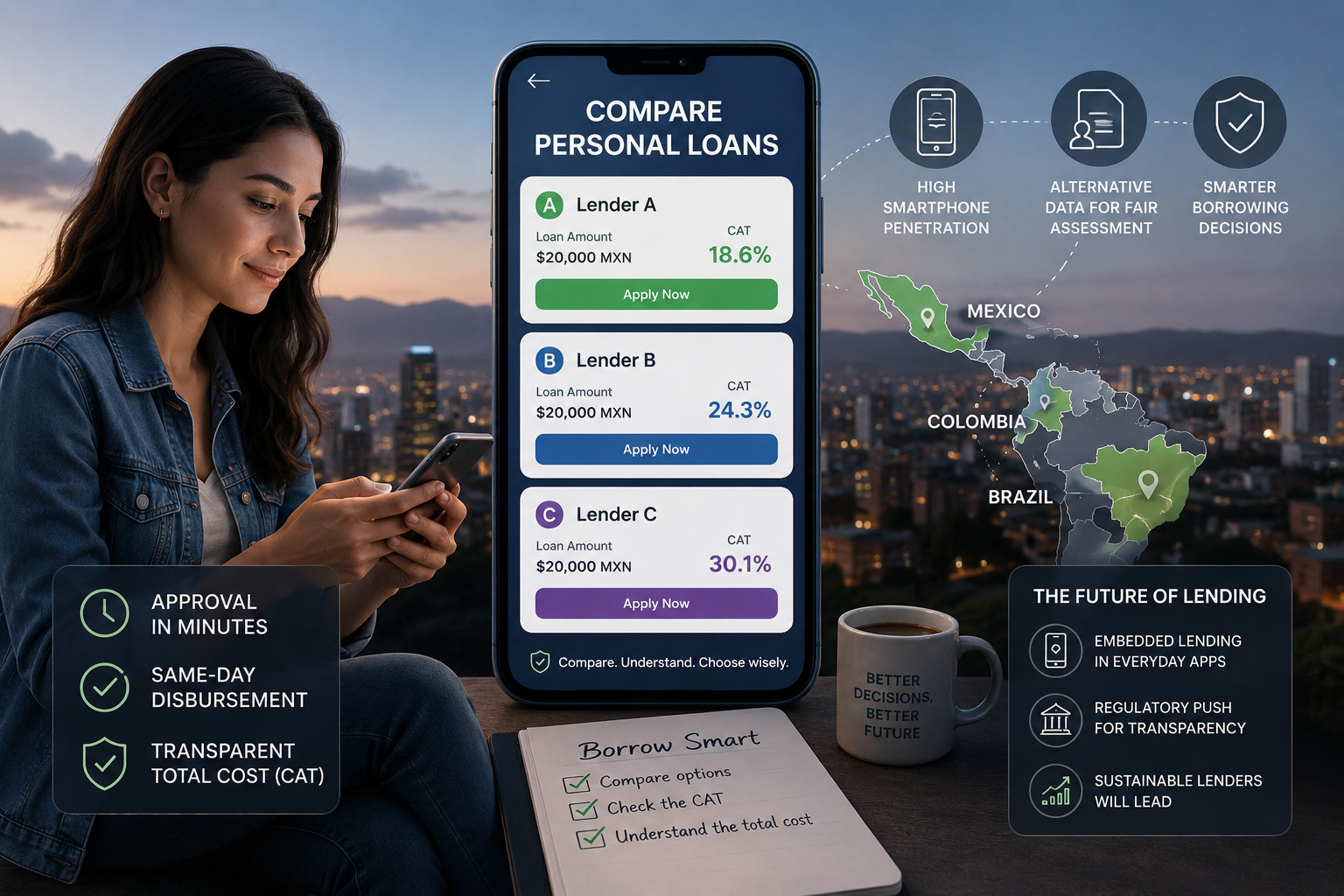
Across Mexico, Colombia, and Brazil, smartphone penetration has outpaced traditional bank-account ownership, creating a generation of consumers who are digitally connected but underserved by legacy finance. Lenders built for this reality assess risk with alternative data — phone usage, transaction history, even bill-payment patterns — rather than relying solely on a thin credit file. The result is a market where comparison and review platforms have become essential navigation tools. In Mexico, for instance, services such as Net Credit help borrowers line up lenders side by side before committing, a step that simply did not exist a decade ago.
Speed has become the headline feature
The single biggest shift is turnaround time. Where approval once took days, many digital lenders now return a decision in minutes and disburse funds the same day. Speed is genuinely useful in an emergency, but it has a flip side: a frictionless “yes” can hide an expensive product. The healthiest part of the ecosystem is the layer of independent comparison tools that slow borrowers down just enough to read the total cost before they sign.
Transparency is the real competitive edge
In a crowded field, the lenders winning long-term trust are the ones that disclose the full cost of credit clearly. In Mexico that means publishing the CAT (Costo Anual Total), the all-in annual cost figure that bundles interest and fees. Borrowers are increasingly savvy about ignoring the headline interest rate and asking for the CAT instead — a small behavioral change that meaningfully improves outcomes.
What comes next
Expect three trends to accelerate: embedded lending inside everyday apps, regulatory pressure for clearer disclosure, and a shake-out that rewards lenders with sustainable economics over those chasing growth at any cost. For consumers, the takeaway is simple — the tools to borrow well now exist; the discipline to compare before borrowing is what separates a good decision from an expensive one.