

The New Standard for Online Product Presentation
Online shoppers make decisions quickly. Before they read descriptions, compare specifications, or check reviews, they look at the product image. A clear, attractive, and trustworthy visual can turn a casual visitor into a buyer, while a weak image can make even a good product feel unprofessional. This is why modern retailers are paying closer attention to eCommerce visuals, product images, AI marketing tools, and smarter creative workflows.
In 2026, product imagery is no longer limited to traditional photography. Brands can now create catalog-ready visuals, clean backgrounds, lifestyle scenes, seasonal banners, and marketplace-friendly product shots with AI-powered tools. These tools help online stores work faster, reduce production costs, and keep visual quality consistent across large catalogs.
The transformation is not only about convenience. It is changing how digital retail communicates value. Product images are becoming sharper, more flexible, and more tailored to customer intent.
Why Product Images Matter More Than Ever
In a physical store, customers can touch, test, and compare products directly. Online, images must do much of that work. They need to show size, texture, color, details, use cases, and quality in a way that feels believable.
Strong product images help customers answer important questions:
- What does the product really look like?
- How large is it?
- What material or texture does it have?
- How would it fit into my lifestyle?
- Can I trust this seller?
When visuals answer these questions clearly, shoppers feel more confident. That confidence can lead to higher engagement, stronger add-to-cart rates, and fewer returns. Poor images create doubt. Blurry photos, inconsistent lighting, distracting backgrounds, and unrealistic edits can make a product look cheap or misleading.
How AI Is Changing Product Image Creation
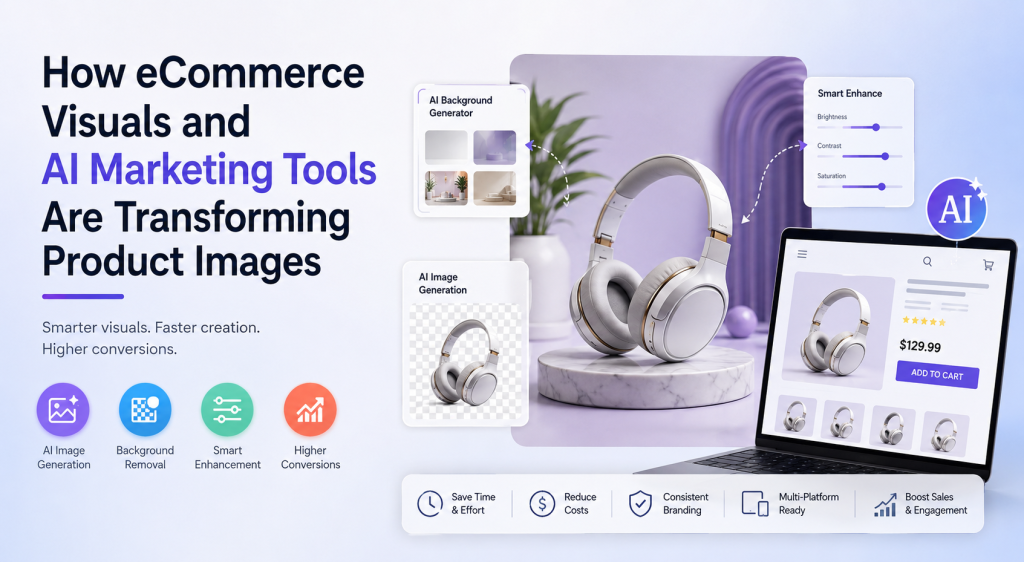
AI tools can support nearly every stage of product image production. They can remove backgrounds, improve lighting, enhance resolution, generate shadows, adjust colors, create lifestyle scenes, and resize visuals for different platforms. For busy store owners, this can save hours of manual work.
A small clothing brand can take a basic product photo and use AI to place it on a clean studio background. A skincare seller can create elegant product images with soft lighting and premium surfaces. A furniture brand can show the same chair in different room styles without arranging several physical sets.
This flexibility allows brands to produce more visual content without starting from zero each time. The product remains the focus, while the setting, mood, and format can be adjusted for campaigns, ads, product pages, and marketplace listings.
AI also helps maintain consistency. When a store has many listings, inconsistent images can make the catalog look messy. AI marketing tools can apply similar lighting, framing, background styles, and dimensions across product photos, creating a more polished shopping experience.
Catalog-Ready Visuals at Faster Speed
One of the biggest advantages of AI-generated product imagery is speed. Traditional product photography requires planning, shipping samples, arranging lighting, booking photographers, editing files, and preparing final exports. This process can take days or weeks, especially for brands with large inventories.
AI reduces that timeline. Sellers can upload a product image, choose a background style, apply cleanup, and generate multiple versions quickly. This is useful for seasonal campaigns, flash sales, product launches, and marketplace updates.
For example, a seller may create:
- A plain background image for marketplace listings
- A soft lifestyle image for social ads
- A close-up detail image for product pages
- A promotional banner image for holiday sales
Instead of building each version through separate photo sessions, AI can generate variations from one controlled visual base. This gives online stores more room to test, refresh, and improve their product presentation.
Clean Backgrounds and Marketplace Appeal
Clean backgrounds remain one of the most important parts of digital retail presentation. Marketplaces often prefer simple backgrounds because they make products easier to compare. White, gray, cream, and lightly textured backgrounds can help the item stand out without distraction.
AI background removal tools have become more accurate and accessible. They can separate products from cluttered surroundings, refine edges, preserve shadows, and create a professional look. This is useful for sellers who start with phone photography or supplier-provided images.
Clean does not mean boring. AI can create subtle depth through realistic shadows, reflections, and lighting gradients. A product placed on a clean surface with natural shadow often feels more credible than a flat cutout.
For beauty, electronics, jewelry, and fashion accessories, background style can influence how customers perceive value. A luxury item may need warm lighting and smooth surfaces, while a tech product may look better against a modern minimal background.
Conversion-Focused Imagery for Online Stores
Product images should not only look nice. They should help customers make decisions. Conversion-focused imagery means each visual has a purpose. One image may show the product clearly from the front. Another may highlight texture or features. Another may show the product in use.
AI tools make it easier to build a complete visual set around customer needs. Instead of using only one standard image, brands can create image sequences that guide the shopper through the product story.
A strong product image set may include:
- Main product image with a clean background
- Close-up image showing material or detail
- Lifestyle image showing how the product is used
- Size comparison image for scale
- Variant image showing available colors or styles
This approach helps reduce uncertainty. When customers feel they have seen enough, they are more likely to take action. It also helps reduce repetitive questions because key product details are visible before the shopper reaches support or reviews.
Supporting Small Businesses and Growing Stores
AI product image tools are especially useful for small businesses. Not every seller has access to a studio, photographer, stylist, or editing team. Many store owners manage product sourcing, listings, marketing, customer service, and fulfillment at the same time.
With AI, smaller brands can create visuals that look more professional without needing a large production budget. This gives them a better chance to compete with larger retailers. A clean catalog, consistent product cards, and attractive promotional visuals can make a new store appear more trustworthy.
For growing stores, AI also solves the problem of scale. As inventory expands, manual image editing becomes harder to manage. AI can help process images in batches, maintain brand style, and prepare product visuals for multiple channels.
The best results still come from careful selection, review, and refinement. AI can create options, but the brand must decide which visuals feel accurate and aligned with customer expectations.
Building Trust Through Realistic Visuals
Trust is essential in online shopping. While AI can create beautiful images, brands must use it responsibly. Product visuals should enhance presentation, not mislead customers. If an image makes a fabric look smoother, a color look different, or a product look larger than it is, customers may feel disappointed after purchase.
Responsible use includes checking that:
- Colors match the real product
- Sizes and proportions are accurate
- Important details are visible
- Textures are not overly changed
- Lifestyle scenes do not create false expectations
The most successful brands will use AI as a creative assistant, not as a tool for deception. Honest visuals can still be polished, attractive, and persuasive.
A Smarter Future for Product Images
The future of online retail will be shaped by better visuals, faster workflows, and more personalized product presentation. AI will continue to make image creation easier, but quality will still depend on thoughtful direction. Brands that use these tools carefully can create cleaner catalogs, stronger campaigns, and more engaging shopping experiences.
Human creativity still leads the process. A tool can generate a background, polish an image, or create variations, but it cannot fully understand a brand’s personality without guidance. The final image should feel polished, accurate, and meaningful to the target customer.
For online stores, marketplaces, and digital retail platforms, product imagery is now a central part of communication. It shows quality, builds trust, and helps customers imagine ownership. As AI tools become more refined in 2026, the brands that succeed will be those that combine speed with honesty, creativity with consistency, and visual beauty with clear customer value.