
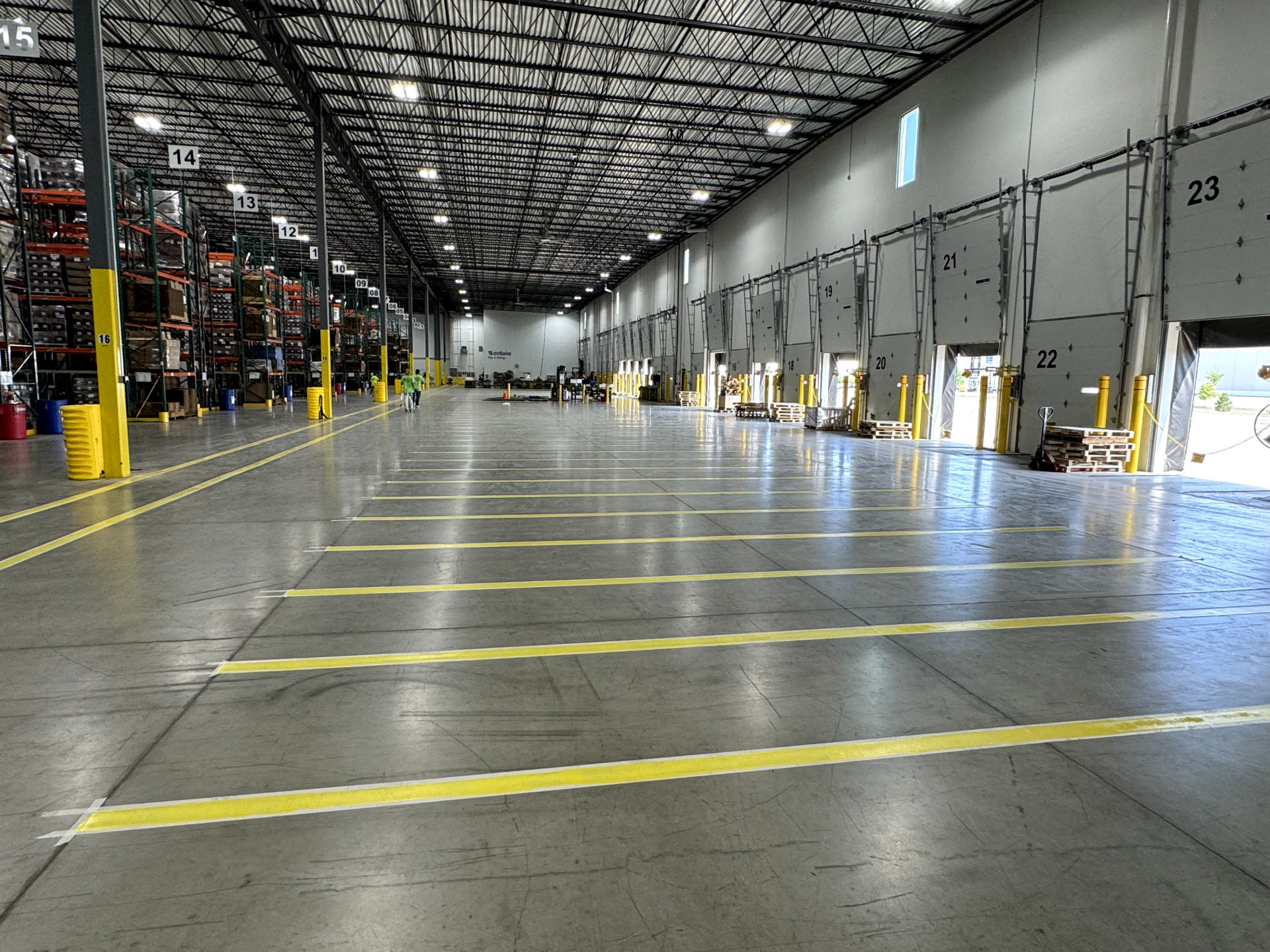
Warehouses involve constant movement from workers, forklifts, and equipment. When people and vehicles operate in the same space, safety risks can increase quickly. Warehouse line marking helps create a clean and organised environment where employees understand designated pathways, work zones, and restricted areas. Clear floor markings support safer operations and help businesses maintain better workplace safety standards.
Why Do Clear Floor Markings Matter?
Warehouse activities often take place across multiple zones throughout the day. Employees move between storage areas, packing stations, loading docks, and dispatch zones while handling different tasks.
Clear floor markings provide visual guidance that helps workers navigate the facility safely. When employees can easily identify designated areas, they make informed decisions and avoid unnecessary risks. Well-planned markings also help visitors and new staff understand the warehouse layout more quickly.
Reducing Risks Between Pedestrians and Vehicles
Forklifts are essential in most warehouses, but they can create hazards when workers share the same routes. A key factor to consider is how clearly defined traffic paths reduce confusion and improve awareness. The following safety measures help support safer movement throughout the facility:
- Pedestrian Walkways: Direct workers along designated routes.
- Forklift Lanes: Separate vehicle traffic from foot traffic.
- Crossing Points: Show where employees can cross safely.
- Exclusion Zones: Limit access to high-risk areas.
These markings help workers and vehicle operators understand their surroundings and follow safer movement patterns.
Identifying Hazardous Areas
Many warehouse environments contain areas that require extra caution. Employees need clear visual indicators to recognise potential hazards before entering these locations.
Markings help identify loading docks, machinery zones, restricted areas, and storage boundaries. Clear visual cues allow workers to remain aware of workplace risks while completing their daily responsibilities. This approach supports a safer working environment and encourages greater attention to safety procedures.
Supporting Emergency Preparedness
Emergencies require employees to react quickly and follow established safety procedures. Clearly marked evacuation routes help workers identify the safest path towards exits when every second matters.
Floor markings can also highlight the locations of fire equipment, emergency access points, and first aid stations. When employees know where these resources are located, they can respond more effectively during unexpected situations.
Improving Organisation and Compliance
An organised warehouse often operates more safely because workers understand where activities should take place. Defined storage zones, staging areas, and traffic routes reduce congestion and help maintain orderly operations.
Regular warehouse line marking maintenance ensures markings remain visible despite heavy traffic and daily wear. Faded markings can create uncertainty and increase workplace risks over time.
Consistent line marking practices help businesses maintain clear boundaries throughout the facility. In addition, effective line marking supports workplace safety efforts by creating a structured environment that employees can follow with confidence.
Conclusion
Workplace safety depends on clear communication as much as training and procedures. Line marking helps employees identify hazards, follow safe routes, and understand operational boundaries. When warehouses maintain visible and accurate markings, they support safer movement, improve organisation, and create a workplace where employees can carry out their duties with greater confidence and awareness.