
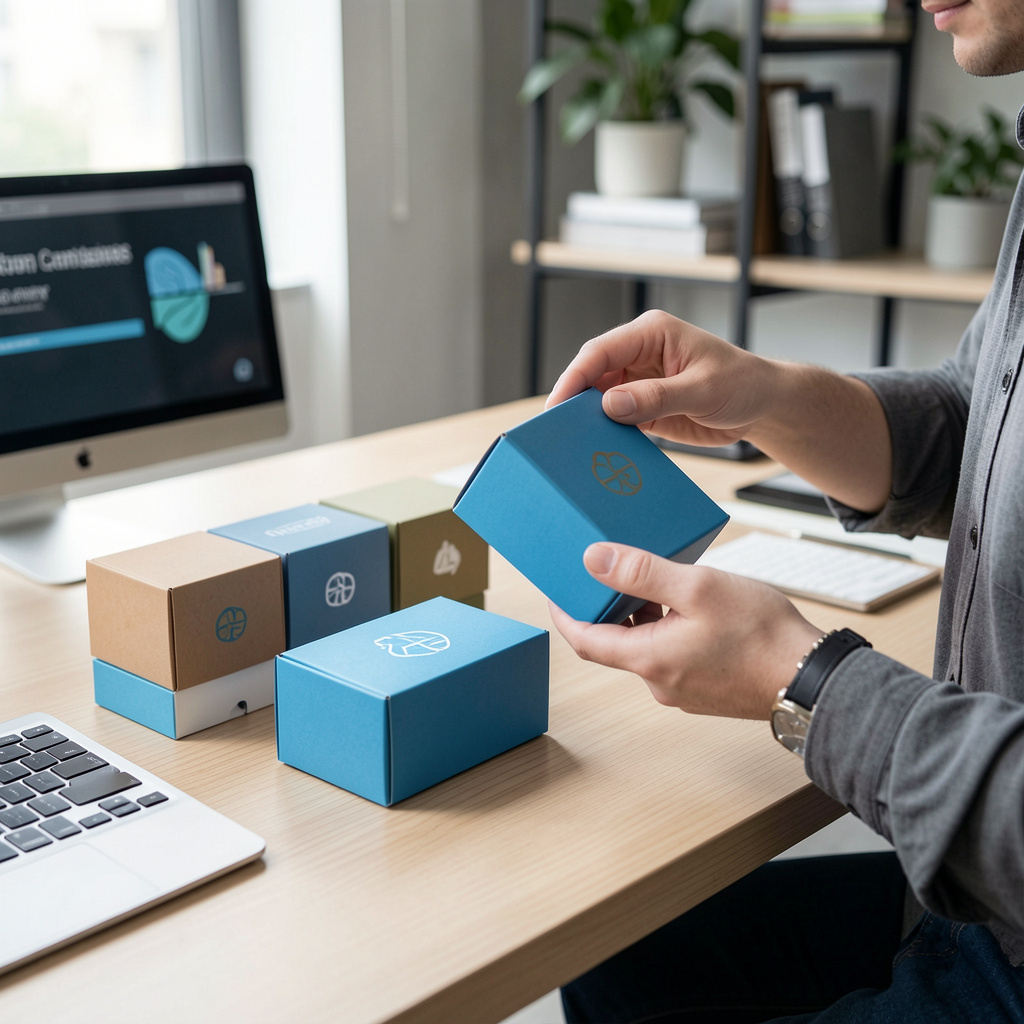
You walk down a crowded retail aisle or scroll through an endless digital marketplace. Thousands of products compete for your gaze. What makes you stop? Is it the price tag? Usually, no. It’s the visual handshake—the packaging. In modern business, your packaging is often the first (and sometimes only) chance to make a physical connection with a customer. It’s not just a box; it’s a silent salesman, a brand ambassador, and a powerful psychological trigger. In this guide, we’ll dive deep into how custom packaging dictates consumer behavior and why your business can’t afford to ignore the “unboxing” phenomenon.
The Psychology of First Impressions: The 7-Second Rule
Research suggests that consumers form a gut opinion about a product within just seven seconds of seeing it. In a world of dwindling attention spans, your packaging does the heavy lifting of communication before a customer even reads the product description.
Color Theory and Emotional Triggers
Colors aren’t just aesthetic choices; they are psychological shortcuts.
- Blue: Evokes trust and professional reliability (think tech and healthcare).
- Green: Signals health, eco-consciousness, and organic origins.
- Black: Communicates luxury, mystery, and high-end pricing.
- Red: Creates a sense of urgency and excitement.
When you invest in custom packaging, you aren’t just picking a box size; you are choosing the emotional frequency at which your brand vibrates.
Establishing Brand Identity Through Custom Packaging
Generic brown boxes tell the customer one thing: “I am a commodity.” On the other hand, custom packaging tells a story. It tells the customer that the brand cares about the details.
Consistency is Key
If your website is sleek and minimalist, but your product arrives in a cluttered, over-designed box, you’ve created cognitive dissonance. The customer feels a disconnect.
Modern businesses use packaging to reinforce their brand DNA. Think of the iconic “Tiffany Blue” box. The box itself is so valuable to the brand identity that people keep the packaging long after the jewelry is worn.
The Power of Typography
The fonts you choose on your packaging signal your brand’s “voice.”
- Serif fonts (like Times New Roman) feel traditional and authoritative.
- Sans-serif fonts (like Helvetica) feel modern and approachable.
- Script fonts feel personal and artisanal.
The “Unboxing” Experience: From Utility to Entertainment
In the age of TikTok and Instagram, the unboxing experience has become a marketing channel of its own. Millions of people watch influencers peel back tissue paper and open magnetic-closure boxes.
Why Unboxing Matters
When a customer receives a package, their brain releases dopamine. If the opening process is tactile, beautiful, and “shareable,” they are significantly more likely to:
- Post about it on social media (free marketing).
- Perceive the product as being of higher value.
- Become a repeat buyer.
Expert Tip: Add a personalized “Thank You” note or a QR code leading to a “How-to” video inside your custom packaging. Small touches turn a transaction into a relationship.
Sustainability: The New Non-Negotiable
Modern consumers, particularly Gen Z and Millennials, are increasingly “values-driven.” They don’t just care what’s in the box; they care about what the box is made of.
The Rise of Eco-Friendly Packaging
Excessive plastic and non-recyclable fillers are now seen as a “brand fail.”
- Mushroom packaging and seaweed-based materials are becoming SOTA (State-of-the-Art) in 2026.
- Minimalism: Using the smallest box possible to reduce carbon footprints.
- Reusable design: Creating boxes that customers want to use for storage rather than throwing away.
Switching to sustainable custom packaging isn’t just “good for the planet”; it’s a calculated business move to capture a market segment that views “waste” as a deal-breaker.
Functional Design: Protecting the Sale
All the beautiful design in the world won’t save you if the product arrives broken. The primary job of packaging remains protection. However, modern businesses are finding the sweet spot where form meets function.
- Frustration-Free Packaging: Customers hate using scissors and pliers to get to their purchase.
- Ergonomics: Is the box easy to carry? Does it fit in a standard mailbox?
- Security: Tamper-evident seals provide peace of mind, especially in the food and beauty industries.
Packaging as a Tool for Premium Pricing
Ever wonder why a generic bottle of water costs $1, but a beautifully designed glass bottle of the same water costs $5? Perceived value.
Premium custom packaging allows businesses to command higher prices. High-quality cardstock, foil stamping, and matte finishes signal to the brain that the contents are “premium.” If the packaging looks expensive, the customer assumes the product is worth the investment.
Informational Transparency and Trust
In 2026, transparency is a currency. Customers want to know exactly what they are buying without hunting for it.
What to Include on Your Packaging:
- Clear Value Proposition: What does this product do?
- Ingredient/Material List: For skin-care or food, this is essential for trust.
- Certifications: Icons for “Cruelty-Free,” “Organic,” or “B-Corp” status.
- Contact Info: Making it easy to reach support builds immediate credibility.
Actionable Tips for Small Businesses
You don’t need a Coca-Cola budget to leverage the power of packaging.
- Start with Inserts: If custom boxes are too pricey, use custom tissue paper or stickers.
- Focus on the “Hand-Feel”: Choose a texture (like soft-touch matte) that feels premium.
- A/B Test Your Designs: If you sell online, try two different packaging styles for a month and see which one gets more social media mentions.
Conclusion
Packaging is no longer just a container; it is the bridge between a brand and its consumer. By investing in thoughtful, sustainable, and visually striking custom packaging, businesses can influence buying decisions, foster brand loyalty, and turn a simple delivery into a memorable event.
In the modern marketplace, you aren’t just selling a product. You are selling the feeling a customer gets when that product arrives at their door. Make it count.
Frequently Asked Questions
1. Does custom packaging really increase sales?
Yes. Studies show that roughly 30% of businesses report an increase in revenue when they pay more attention to their packaging. It enhances perceived value and encourages word-of-mouth marketing.
2. Is custom packaging expensive for startups?
It can be, but it’s scalable. Startups can begin with branded mailer bags or custom-printed tape. As the business grows, they can transition into fully custom-engineered boxes.
3. How does packaging influence impulse buys?
In retail environments, bold colors, unique shapes, and clear messaging act as “visual magnets.” Effective packaging targets the emotional centers of the brain, leading to a “must-have” feeling that overrides strict logical budgeting.
4. What is the most important element of packaging design?
While it depends on the product, clarity is usually most important. A customer should know exactly what the product is and why it benefits them within seconds of looking at the box.
5. Is sustainable packaging always more expensive?
Initially, it may have a higher unit cost. However, it often reduces costs in the long run by using fewer materials, lowering shipping weights, and increasing brand loyalty among eco-conscious demographics.