
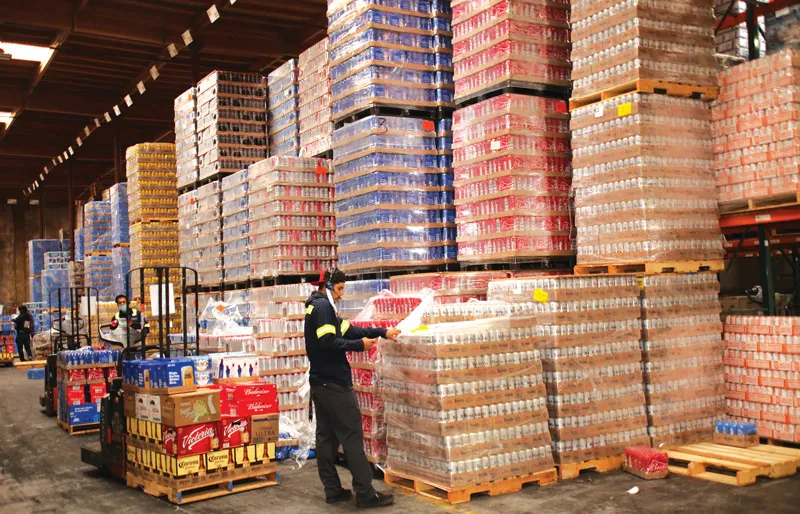
The Shift Toward Structured Wholesale Supply
Over the past few years, the energy drink market has become increasingly fragmented. Buyers now navigate a landscape that mixes legitimate distributors, short-term resellers, unauthorized traders and inconsistent supply channels. The result is a market where sourcing decisions carry more risk than they once did.
Serious distributors are responding by moving toward structured European wholesale suppliers that can deliver real operational reliability. What buyers are looking for today goes well beyond product availability:
- Consistent pallet availability across repeat orders
- Export-ready documentation handled professionally
- Organized shipment coordination from point of origin
- Predictable and responsive communication throughout
- Scalable order coordination that grows with demand
- Genuine support for recurring supply relationships
This shift is especially visible among buyers sourcing internationally for retail distribution, vending operations and convenience-store supply networks. Professional distributors increasingly prefer suppliers that operate with the commercial discipline of an established import and export business, not the informality of an opportunistic trading operation.
Why Logistics Now Matter More Than Pricing Alone
Many buyers entering the energy drink category focus initially on product cost. It is a natural starting point. But experienced distributors understand that wholesale beverage distribution lives or dies on logistics execution, and pricing alone tells only part of the story.
A supplier offering a marginally lower unit cost can still create significant operational problems if they cannot manage the full scope of distribution requirements:
- Shipment coordination and route planning
- Customs documentation and compliance handling
- Pallet consistency and shelf-life positioning
- Delivery scheduling and stock allocation management
For distributors managing multiple retail channels simultaneously, these gaps create real downstream consequences. Reliable logistics handling reduces delivery delays, inventory disruption, damaged commercial relationships, retail stock gaps and unexpected landed costs. These are not minor inconveniences. They are the kinds of operational failures that erode retailer trust and compress margins over time.
Operational capability has become the primary lens through which serious distributors evaluate wholesale partners, and pricing is increasingly viewed in context of that broader picture.
Mixed Pallet Demand Is Growing
One of the clearest structural changes in 2026 is the growing demand for mixed pallet and mixed-brand flexibility. Retailers and distributors are no longer content with rigid single-product shipment structures. They want sourcing relationships that give them genuine flexibility across their range:
- Flavour variants and sugar-free lines
- Performance-focused products alongside mainstream convenience SKUs
- Fast-moving seasonal variants that respond to consumer demand
This trend has pushed wholesale suppliers to significantly improve how they structure pallet planning and stock allocation. Buyers are consolidating purchasing through fewer wholesale partners, and the suppliers gaining ground are those that can support structured mixed-load coordination without adding operational complexity to the relationship.
The ability to simplify procurement while expanding product range has become a genuine competitive advantage in this market.
Brand Diversification Across Retail Channels
Energy drink distribution has moved well beyond the dominance of one or two global brands. Different retail channels now have distinct product preferences, and suppliers that understand this dynamic are better positioned to serve the full breadth of distributor needs.
- Convenience retail prioritizes fast-moving mainstream brands with proven turnover
- Fitness and supplement stores increasingly focus on performance-oriented products
- Vending operators favor recognizable, high-turnover SKUs that minimize risk
- Wholesale distributors require flexible mixed-load availability across categories
- Hospitality groups focus on reliable repeat supply and presentation consistency
Because of this channel diversity, distributors increasingly evaluate whether a single supplier can support multiple product categories through one commercial relationship. That capability has strengthened demand for broader European energy drink wholesale supply networks that can serve varying retail requirements without requiring buyers to manage multiple fragmented sourcing relationships.
Documentation and Compliance Have Become More Important
Import buyers are placing greater emphasis on documentation quality and shipment transparency than at any point in recent years. As cross-border beverage distribution expands, the administrative side of wholesale supply has become a meaningful differentiator between professional suppliers and informal trading operations.
Depending on the destination market, distributors routinely require:
- Commercial invoices and packing lists prepared accurately
- Customs-related paperwork handled without delays
- Pallet traceability and VAT documentation
- Clear export coordination support throughout the shipment process
Suppliers that cannot provide organized commercial handling create delays that ripple through retail operations downstream. Buyers increasingly favor partners that operate with structured commercial processes and clear shipment communication from the outset of the relationship, because the cost of documentation failures falls heavily on the distributor.
Long-Term Supplier Stability Matters More Than Short-Term Deals
Perhaps the most significant shift in wholesale energy drink distribution is the growing premium placed on supplier consistency. One-time opportunities and spot-market deals have lost their appeal for professional buyers who understand the operational risks of supply chain instability.
Distributors today are building relationships around:
- Recurring availability that does not require constant renegotiation
- Operational continuity across seasonal demand fluctuations
- Scalable supply that grows alongside their retail networks
- Long-term coordination and stable, responsive communication
- Repeat shipment planning that reduces procurement friction
This shift reflects a broader maturation across international beverage distribution. Inconsistent supply chains damage retailer relationships and constrain long-term growth in ways that are difficult to recover from. Structured wholesale partnerships have become more valuable precisely because the cost of getting supply wrong has increased.
How Buyers Compare Energy Drink Suppliers Today
Modern wholesale buyers evaluate suppliers through a significantly broader lens than product pricing alone. Distributors reviewing Monster Energy wholesale distribution options and other mainstream beverage brands are assessing the full operational picture before committing to a supply relationship:
- Response speed and communication quality during enquiry and order stages
- Commercial professionalism across all documentation and correspondence
- Export support and customs handling capability
- Mixed-load flexibility and pallet planning sophistication
- Delivery coordination and scheduling reliability
- Repeat supply capability and long-term availability commitment
This more rigorous evaluation process is reshaping how beverage distributors select long-term wholesale partners across Europe and international export markets. Suppliers that score well across all of these dimensions are winning relationships that less operationally mature competitors simply cannot sustain.
Final Thoughts
The wholesale energy drink market in 2026 is more operationally sophisticated than it was only a few years ago. Professional buyers have raised their standards considerably, and the suppliers benefiting most from category growth are those that have matched that evolution with genuine commercial and logistical capability.
For distributors, importers and retail groups, selecting the right wholesale supply structure is a strategic decision with real consequences for operational stability, retailer relationships and long-term growth. The suppliers that combine strong product access with professional distribution support, reliable documentation handling, mixed-load flexibility and genuine supply continuity are the ones best positioned to build lasting value in this market.
As the category continues evolving, that combination of product and operational excellence will only become more important.