
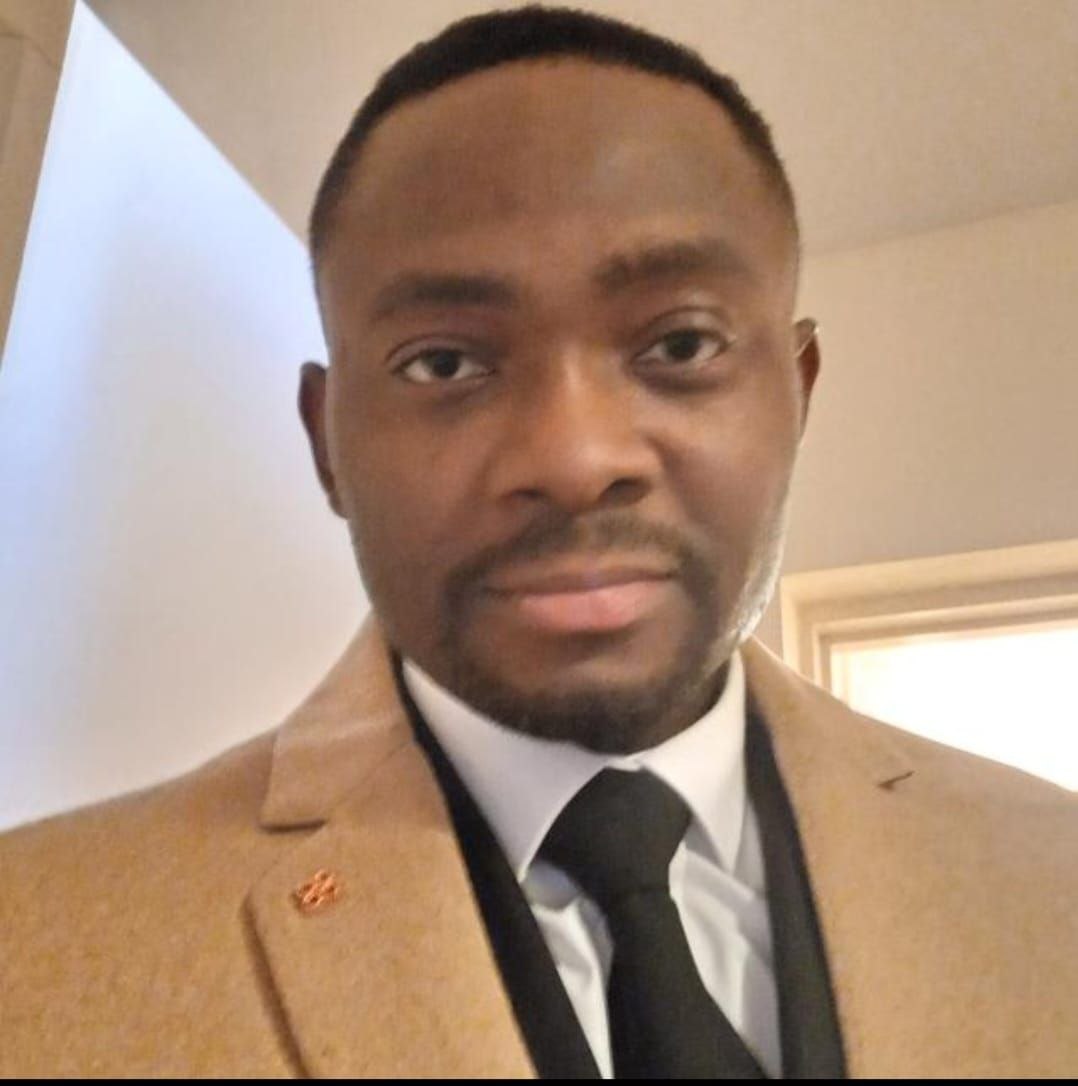
A conversation with Olukunle Michael Odegbesan, Dip CII, MSc, MBAThe commercial insurance market is changing quickly as artificial intelligence, automation and digital platforms become part of everyday business. In this interview, Olukunle Odegbesan discusses his professional journey, the practical role of InsurTech, and how machine learning can support better underwriting decisions, including the management of currency-related insurance exposures.
Q: Olukunle, could you tell us about your professional journey?
My career has centred on helping businesses understand and manage risk. I began in insurance broking, working with clients to identify suitable cover, prepare quotations and negotiate terms with insurers.
I later moved into commercial underwriting, where I assessed risks, considered pricing and policy terms, supported portfolio decisions and worked within regulatory and governance requirements. My experience includes roles with Hogg Robinson, Zenith Insurance, Direct Line Group, Travelers Insurance and Insure Safeline. I have also developed practical experience in finance, tax and compliance through my work with Gramosol Ltd.
Q: What attracted you to AI and InsurTech?
The world is full of problems, chaotic and technical issues that needs human and machine to team up and solve the problems, these problems are looking for simpler and logical ways to handle them, then AI came to assist human in demystifying and creating solutions to these problems be it in Engineering, construction, insurance, Accounting all fields of human expertise. AI is already here creating attention like the rule that says wherever attention goes revenue goes with it. This is already creating attention, people and organisations are already cashing out. I became interested in AI because underwriters often have to review large amounts of information before making a decision. Technology can help organise that information, identify patterns and highlight areas that need closer attention. I developed an intense passion for AI and insurance using machine learning in September 2024, and I began to study, taking courses on how artificial intelligence and machine learning could be applied to commercial insurance. For instance in multinational programmes where a reverse flow policy with a UK entity needs to know the fluctuation of pounds and euros to enable the underwriter and broker to arrive at a reasonable sum insured to avoid underinsurance. This has led me connect my underwriting experience with courses like Python and other selective machine learning that could predict a future exchange rate fluctuation using economic indicators and data-led risk assessment. Prior to that experiment working at Travelers Europe i was privileged to work with different group of Technology underwriters in a different Multinational Programmes which really helped me in gaining confidence and providing quality services and adding value to our clients. In July , 2024 I was nominated for a be-valued award which means so much to me. I was 2nd in Nomination for a Be-valued award at Travelers Europe in July 2024, it is an internal award within Travelers Europe known as Best Valued Creation staff for that time with an Amazon gift card. This was very inspiring and led to the beginning of my creativity and passion for continuous learning and professional development within insurance and Technology envinromnent as am aware that the future belongs to AI and in order to keep making impact and adding more values to organizations i must get ahead of others in terms of personal and professional development.
Another passion that is driving me in a more positive direction is insurTech which is the wider use of technology to improve insurance products and services. It includes digital quotation systems, automated policy administration, data analytics, fraud detection, customer self-service, embedded insurance and real-time risk monitoring. For me, the opportunity is not to remove the underwriter, but to give the underwriter better tools that will improve their delivery.
Q: You have spoken about using machine learning to understand currency movements. How would that work in practice?
One area I am exploring through the HERIP concept using python and other machine learning out there with few codings to know the effect of exchange-rate movements on the adequacy of sums insured and limits of liability in multinational insurance programmes and commercial lines nsurance.
For example, a parent company may arrange its global insurance programme in euros or US dollars, while a UK subsidiary owns buildings, equipment or stock valued in pounds. A major movement in the exchange rate could reduce the real value of the insured limit when it is converted back into the local currency. This can create an underinsurance problem, especially at renewal or after a large loss. This was one of the critical question often asked by most customers looking for multinational placements to place values for some of their critical assets in other countries approach with problems caused by exchange rates affecting the values of their insured assets abroad in a multinational insurance programmes I handled at Travelers Europe. This made me to develop interest in AI and tools that will predict future exchange rate fluctuations.
A practical machine-learning model could combine historical exchange rates with relevant economic information such as inflation, interest-rate changes and market volatility. Time-series methods such as ARIMA or Python can be used as a baseline, while models such as XGBoost or Long Short-Term Memory networks can test more complex patterns. The system would not claim to predict the exact future rate. Instead, it would produce a range of possible scenarios and show how each scenario could affect the value of the sum insured which would make an underwriter or broker to agree to a certain measures , sum insured or limit of liability that will curtail lost of money.
The underwriter or broker could then use the output to consider whether an indexation clause, currency buffer, mid-term review or higher limit may be appropriate. This is a realistic example of AI supporting professional judgement rather than replacing it.
Q: How is artificial intelligence influencing underwriting more generally?
AI can help insurers process structured data, such as claims history and financial information, alongside unstructured information from reports, emails and risk surveys. It can identify trends, support pricing, flag possible fraud and automate routine checks. Like the example I have sited above which are practical solutions to what AI could do in a multinational insurance programmes.
However, commercial insurance often involves unusual or complex risks. A model may identify a pattern, but an experienced underwriter must still understand the client’s business, the quality of risk management, the policy wording, the wider market and the commercial relationship. The strongest approach is a combination of technology and human judgement.
Q: What opportunities do you see in InsurTech?
I see opportunities in faster quotation, better customer service, more accurate data capture, automated claims handling and improved access to insurance for small and medium-sized businesses.
InsurTech can also help brokers and insurers monitor risk after a policy has started. Rather than waiting until renewal, data can be reviewed during the policy period so that important changes are identified earlier. This may be particularly useful for property values, cyber exposures, supply-chain risks and international programmes affected by inflation or currency movements.
Q: Having worked in Nigeria and the United Kingdom, what have you learned from both markets?
Both markets have important strengths. The UK has a mature regulatory framework, established underwriting processes and a strong international insurance market. Nigeria has significant growth potential and a strong need for technology that can improve access, customer engagement and operational efficiency. Even though the work, processes and systems are the same, the technology and risk are different. In the UK there are varieties of available tools and technology which underwriter use to manage and control risk to a minimum level. In Nigeria the technology are not sufficient to control and reduce such big risk. For instance most of the Brokers in Nigeria with complex special risk account may seek for re-insurance, FAC abroad or bringing their large special risk to Lloyd’s Broker in the UK apart from regulatory and capacity, the large infrastructure to manage such complex special risks are not sufficient.
Working across both environments has taught me that insurance solutions must fit the market in which they are used. Technology should not be introduced simply because it is new. It must solve a clear problem, remain available, understandable to users and operate within local regulatory requirements.
Q: How does your finance and accounting experience support your insurance work?
Insurance and finance are closely linked. An underwriter needs to understand whether a business is financially stable, whether the declared figures are reasonable and whether the proposed cover reflects the real exposure.
My studies in Accounting and Finance, together with practical work in tax and compliance, have strengthened my ability to read financial information and consider it as part of a wider risk assessment. This is useful when reviewing turnover, profitability, asset values, business interruption exposure and the financial effect of a major loss.
Q: Do you believe AI will replace insurance professionals?
I do not believe AI will replace experienced insurance professionals. It will replace some repetitive tasks and change how certain roles are performed, but insurance still depends on judgement, communication, negotiation, ethics and trust.
Technology can make a recommendation, but a professional must decide whether the recommendation is fair, commercially sensible and suitable for the client. Human accountability remains essential, particularly where decisions affect cover, pricing or claims.
Q: What skills should future insurance professionals develop?
Technical insurance knowledge will remain the foundation. In addition, professionals should understand data, AI, digital systems, financial information, regulation, cyber risk and customer experience.
They do not all need to become software engineers. However, they should know what a model can do, what data it uses, where bias or error may arise, and when a human review is required. Professionals who combine insurance knowledge with a practical understanding of technology will be well placed to lead the industry.
Q: What motivates you professionally?
I am motivated by helping organisations make informed decisions about risk. Every business faces uncertainty, and good insurance advice can make a real difference when something goes wrong.
I also value continuous learning. The industry is changing, and I want to contribute by bringing together my experience in commercial insurance, financial compliance, AI and InsurTech.
Q: Where do you see insurance over the next decade?
I expect the next decade to bring wider use of intelligent automation, predictive analytics, embedded insurance and real-time risk monitoring. There will also be closer collaboration between insurers, brokers, technology companies and regulators.
At the same time, trust, transparency, data protection and professional standards will become even more important. The most successful businesses will be those that use technology responsibly and can explain how important decisions are made.
My aim is to continue developing practical ideas that improve underwriting and help businesses understand their risks. The future of insurance should be more efficient and more data-led, but it must also remain fair, clear and centred on the customer.
About Olukunle Odegbesan
Olukunle Michael Odegbesan is a commercial insurance professional with more than 15 years of experience across insurance broking, underwriting, risk management and financial compliance. He has worked in Nigeria and the United Kingdom with organisations including Hogg Robinson, Zenith Insurance, Direct Line Group, Travelers Europe and Insure Safeline. He holds qualifications in Insurance, Business Administration, and Accounting and Finance, and has achieved the Diploma of the Chartered Insurance Institute. His professional interests include AI-supported underwriting, Insurance Broking, InsurTech, financial risk analysis and the responsible use of technology in commercial insurance.
Editorial note: Currency forecasting models provide estimates and scenarios, not guaranteed future exchange rates. Any insurance decision should remain subject to professional review, appropriate data controls and regulatory requirements.