

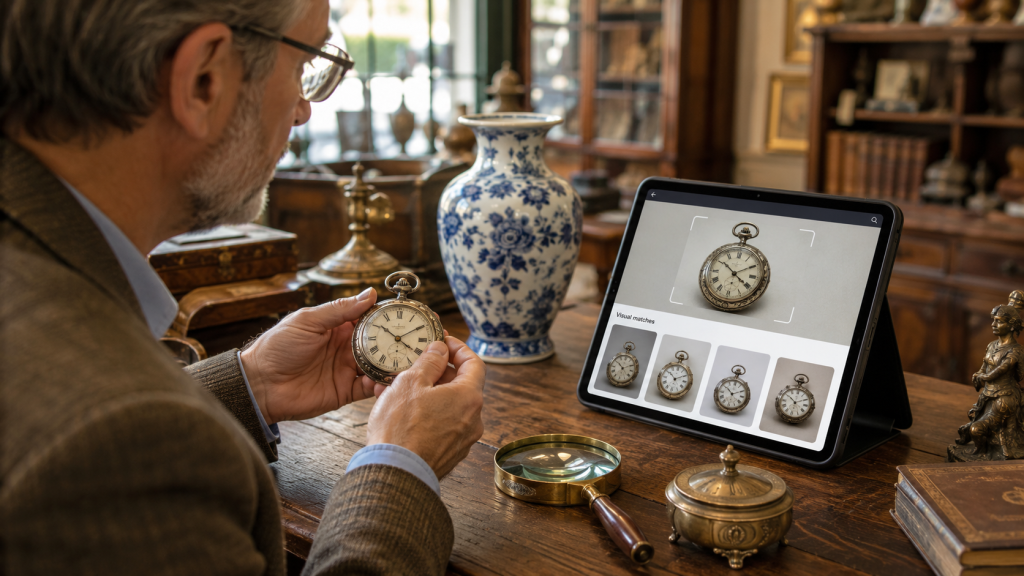
Antique collecting has always carried a sense of mystery. A dusty vase from an estate sale, a strange brass object from a grandparent’s attic, or a carved wooden box found at a flea market can raise the same exciting question: what exactly is this? For years, collectors relied on reference books, dealer opinions, auction catalogs, and long hours of comparison research to solve those mysteries.
Today, AI image search is changing that process in a practical and surprisingly accessible way. Instead of starting with vague guesses or endless keyword searches, collectors can now upload a photo and receive visual matches, style clues, maker suggestions, and possible age indicators within seconds. This does not replace expert appraisal, but it gives collectors a stronger starting point than ever before.
For anyone who has ever typed identify antique by photo, antique image search, or what is this antique worth photo into a search bar, the shift is clear. Image-based discovery is becoming one of the most useful tools in modern collecting.
Why Unknown Antiques Are So Difficult to Identify
Antiques are rarely labeled in a simple way. Many objects have no maker’s mark, no date, and no paperwork. Even when markings exist, they may be faded, hidden, regional, or difficult to interpret. A porcelain plate, for example, could be Japanese, French, English, or a later reproduction inspired by one of those traditions.
Collectors often face several challenges at once:
- Similar designs appear across different countries and time periods
- Reproductions can look convincing at first glance
- Maker’s marks may change over time
- Materials can be hard to judge from appearance alone
- Family stories are often inaccurate or incomplete
Traditional research is still valuable, but it can be slow. If a collector does not know the correct terms for an item, even the best search engine may return poor results. AI image search helps solve this problem by letting the object itself become the search query.
What AI Image Search Actually Does
AI image search uses visual recognition technology to compare an uploaded image with large collections of online images. It studies shapes, patterns, colors, textures, symbols, and visual relationships. Instead of depending only on typed words, it looks for objects that appear visually similar.
For antique collectors, this means a photo can lead to helpful clues such as:
- Similar auction listings
- Museum collection entries
- Dealer descriptions
- Marketplace results
- Blog posts or collector forum discussions
- Manufacturer or artist references
The results are not always perfect, but they can quickly point collectors in the right direction. A person who cannot describe a silver serving tool may discover that it resembles an asparagus server, sugar tongs, or fish slice. That single clue can completely change the research path.
How Collectors Use Photo Search in Real Situations
The most common use case is simple: a collector takes a clear picture of an object and uploads it to an image search tool. The tool then shows visually similar items, allowing the collector to compare features.
Imagine finding a small ceramic figurine at a charity shop. It has no box, no label, and only a faint mark on the underside. A text search for “old ceramic figure” would be too broad. But an antique image search may reveal similar figures from a specific factory, region, or decade.
The same approach works for many categories, including:
- Pottery and porcelain
- Glassware
- Silver and metalware
- Furniture
- Jewelry
- Clocks and watches
- Paintings and prints
- Toys and dolls
- Tribal, folk, and decorative objects
The key advantage is speed. What once required flipping through multiple reference books can now begin with a single photograph.
Better Identification Starts With Better Photos
AI image tools work best when the image is clear, well-lit, and focused. Poor photos often lead to poor matches. Collectors who want reliable results should treat the photo like evidence.
Use natural light when possible, avoid harsh reflections, and photograph the item from multiple angles. For shiny objects, indirect lighting can reduce glare. For furniture, include full views as well as close-ups of joints, hardware, labels, and carving details.
Important photos to capture include:
- Front, back, sides, top, and bottom
- Any maker’s marks, signatures, stamps, or labels
- Close-ups of damage, repairs, or unusual features
- Scale reference, such as a ruler or coin
- Details of materials, texture, seams, and construction
When people search identify antique by photo, they often expect the software to do all the work. In reality, the quality of the photo has a major effect on the quality of the answer.
Why Visual Matches Are Only the Beginning
AI image search is powerful, but collectors should not treat every match as a final answer. Many antiques share similar designs, especially objects influenced by popular styles such as Art Nouveau, Art Deco, Victorian, Georgian, or mid-century modern.
A visual match can tell you what an object resembles, but it may not confirm:
- Exact age
- Authenticity
- Maker
- Country of origin
- Material composition
- Restoration history
- True market value
This is especially important with high-value categories such as fine jewelry, paintings, rare ceramics, and signed furniture. An AI result may show a similar item listed for thousands, but that does not mean the object in hand has the same value.
Collectors should use image search as a research assistant, not a final appraiser.
The Role of AI in Estimating Value
One of the most searched questions in this space is what is this antique worth photo. It is easy to understand why. Value is often the most exciting part of identification, especially when an object comes from an estate, inheritance, or unexpected discovery.
AI tools can help by finding comparable items online. These comparisons may include auction records, dealer listings, or marketplace prices. However, asking prices and sold prices are not the same thing. A dealer may list a vase for $900, but the actual sale price could be much lower.
When estimating value, collectors should look for:
- Recently sold examples, not only active listings
- Items with the same maker, size, condition, and pattern
- Auction house results where available
- Clear descriptions from reputable sellers
- Evidence of rarity or documented provenance
Condition matters enormously. A small chip, missing part, replaced handle, or repaired crack can reduce value significantly. On the other hand, strong provenance, original packaging, or a rare pattern can increase it.
How AI Helps Beginners Learn Faster
New collectors often struggle because they do not yet know the language of antiques. They may see a chair but not know whether to search for “ladder-back,” “Windsor,” “ball-and-claw,” or “Queen Anne style.” They may see a porcelain mark but not know how to describe it.
AI image search narrows that gap. By showing similar objects with written descriptions, it teaches collectors the vocabulary they need. Over time, users begin to recognize repeated terms, styles, and makers.
This learning effect is one of the biggest benefits. The tool is not just identifying objects. It is helping collectors build visual memory and category knowledge.
For example, after comparing several results, a beginner might learn to notice:
- The difference between transferware and hand-painted decoration
- How dovetail joints can suggest furniture age
- Why pontil marks matter on glass
- How hallmarks help identify silver
- Why glaze, paste, and shape matter in ceramics
This makes the research process more enjoyable and more educational.
Risks Collectors Should Watch For
As useful as AI image search is, it also has limitations. Online data can be messy. Some listings are mislabeled, some sellers exaggerate age or rarity, and some images are copied across websites without proper context. If an AI tool uses those sources, it may repeat those mistakes.
Collectors should be careful with results that seem too certain or too valuable. A common reproduction may visually match a rare original. A decorative modern import may resemble an older handmade piece. A family heirloom may be sentimental but not especially valuable.
Common mistakes include:
- Assuming the first image match is correct
- Confusing style with age
- Trusting asking prices instead of sold prices
- Ignoring condition issues
- Overlooking reproductions
- Forgetting regional variations
The best approach is to compare multiple sources, look for consistent details, and consult a qualified appraiser for valuable or uncertain pieces.
Combining Technology With Human Expertise
The most successful collectors use AI as one part of a broader research process. Technology can quickly gather clues, but human judgment still matters. Experienced dealers, appraisers, museum specialists, and collector communities can interpret details that image tools may miss.
For instance, AI might identify a chair as “Victorian style,” but an expert may notice that the screws, finish, and joinery suggest a twentieth-century reproduction. AI may find a similar painting, but an art specialist can examine brushwork, canvas age, and signature authenticity.
A smart workflow looks like this:
- Photograph the item clearly.
- Run an image search to find visual matches.
- Note repeated names, styles, and terms.
- Research sold prices and trusted references.
- Inspect marks, materials, and construction.
- Ask an expert when value or authenticity matters.
This balanced method saves time without sacrificing accuracy.
A New Era for Curious Collectors
AI image search is making antique identification more approachable, faster, and more engaging. It gives beginners a useful starting point and helps experienced collectors compare objects across a wider range of sources. It also brings fresh excitement to the hunt, because every unknown item can now be investigated with more confidence.
Still, the best collectors remain careful. They use image results as clues, not guarantees. They compare, question, verify, and learn. That combination of curiosity and caution is what turns a simple photo search into meaningful discovery.
For collectors standing over a mysterious object and wondering where to begin, the answer is no longer hidden in a dusty bookcase alone. A clear photo, a thoughtful search, and a trained eye can now work together to reveal the story behind the piece.