
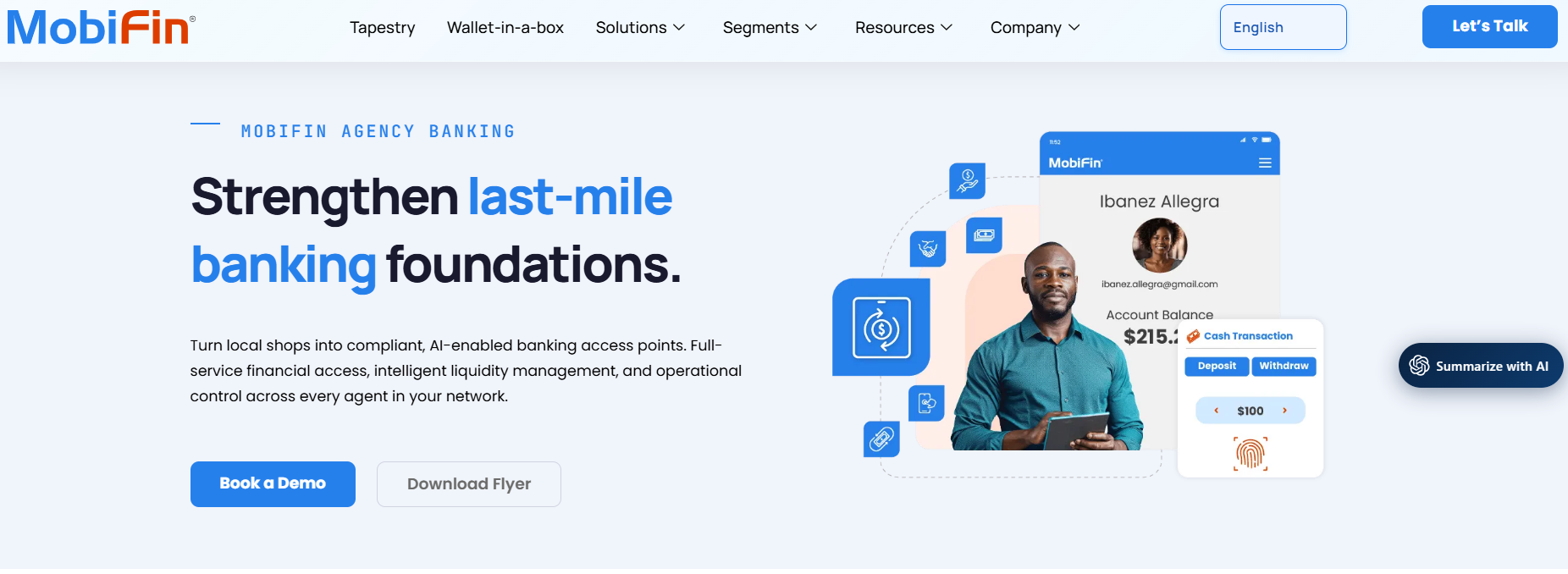
Financial inclusion remains one of the most significant challenges facing developing and emerging economies. Despite advancements in banking technology and financial services, millions of people around the world still lack access to basic banking facilities. Rural populations, low-income households, and individuals living in remote areas often face barriers such as limited banking infrastructure, long travel distances to branches, and high service costs.
To address these challenges, financial institutions are increasingly adopting agency banking as a strategic approach to extending financial services beyond traditional branch networks. Agency banking enables banks and financial service providers to deliver essential financial services through authorized agents, creating greater accessibility and convenience for underserved populations.
As digital transformation continues to reshape the financial sector, agency banking has emerged as a powerful tool for promoting financial inclusion, driving economic growth, and accelerating the transition toward digital financial ecosystems.
Understanding Agency Banking
Agency banking is a banking model where financial institutions appoint third-party agents to provide banking services on their behalf. These agents may include:
- Retail stores
- Convenience shops
- Post offices
- Pharmacies
- Fuel stations
- Community businesses
Using secure digital platforms and mobile devices, agents perform banking transactions for customers without requiring them to visit a physical bank branch.
Agency banking allows financial institutions to expand their reach while minimizing infrastructure and operational costs.
The Financial Inclusion Challenge
According to global financial inclusion studies, millions of adults remain unbanked or underbanked. Many individuals face obstacles that prevent them from accessing traditional financial services.
Geographic Barriers
In many rural regions, the nearest bank branch may be several kilometers away, making access difficult and costly.
Limited Banking Infrastructure
Banks often hesitate to establish branches in low-density areas due to high operational expenses and lower profitability.
Lack of Financial Awareness
Many underserved populations have limited exposure to formal banking systems and financial education.
High Service Costs
Maintaining physical branches and providing in-person services can increase costs for both banks and customers.
Agency banking helps overcome these barriers by bringing financial services directly into local communities.
How Agency Banking Works
Agency banking platforms connect financial institutions with authorized agents through secure digital systems.
Agents use mobile devices, point-of-sale terminals, or specialized applications to perform transactions on behalf of customers.
Typical services include:
- Cash deposits
- Cash withdrawals
- Account opening
- Balance inquiries
- Bill payments
- Money transfers
- Government benefit disbursements
- Loan repayments
Transactions are processed in real time and integrated directly with the institution’s core banking infrastructure.
This enables customers to access financial services closer to home while maintaining the security and reliability of formal banking systems.
Expanding Banking Access in Rural Communities
One of the most significant benefits of agency banking is its ability to extend banking services into remote and underserved regions.
Bringing Services Closer to Customers
Instead of traveling long distances to reach a bank branch, customers can visit nearby agents within their communities.
This convenience increases financial participation and encourages greater use of formal financial services.
Lowering Access Barriers
Agency banking reduces transportation costs, travel time, and other obstacles that often discourage individuals from using banking services.
As a result, more people can open accounts, save money, and conduct transactions safely.
Supporting Financial Inclusion Goals
Financial inclusion is not simply about opening bank accounts. It involves providing individuals with access to a broad range of financial services that improve economic well-being.
Agency banking contributes to financial inclusion by enabling:
Safe Savings
Customers can securely deposit funds without relying on informal saving methods.
Affordable Payments
Individuals can pay bills, transfer funds, and receive payments through accessible local channels.
Access to Credit
Agency networks often support loan applications and repayments, helping customers access financing opportunities.
Government Payments
Governments can use agency networks to distribute social benefits and welfare payments efficiently.
These capabilities help integrate underserved populations into the formal financial system.
Building Trust Through Local Presence
Trust is a critical factor in financial inclusion.
Many individuals in underserved communities may be unfamiliar with formal banking institutions. Local agents help bridge this trust gap.
Community-Based Relationships
Agents are often established members of the local community.
Their familiarity and accessibility help customers feel more comfortable engaging with financial services.
Personalized Assistance
Agents can provide guidance on transactions, account usage, and financial products.
This support improves customer confidence and encourages long-term adoption of banking services.
Driving the Transition to Digital Finance
Agency banking serves as an important bridge between cash-based economies and digital financial ecosystems.
Encouraging Digital Transactions
Customers who initially visit agents for cash transactions often become more comfortable using digital financial services over time.
Supporting Mobile Banking Adoption
Agents can educate customers about mobile wallets, digital banking applications, and electronic payments.
Expanding Digital Payment Networks
Agency banking helps create broader acceptance of digital payments within local communities and businesses.
These developments support national goals for digital transformation and financial modernization.
Benefits for Financial Institutions
Agency banking provides significant advantages for banks, microfinance institutions, fintech companies, and payment providers.
Cost-Effective Expansion
Establishing traditional bank branches requires significant investment in infrastructure, staffing, and maintenance.
Agency networks allow institutions to expand coverage without the expense of building new branches.
Faster Market Penetration
Institutions can quickly establish a presence in underserved regions by partnering with existing local businesses.
Increased Customer Acquisition
Expanded accessibility enables financial institutions to reach new customer segments that were previously difficult to serve.
Higher Transaction Volumes
As more customers gain access to financial services, transaction activity increases across the network.
Technology Behind Modern Agency Banking
The success of agency banking depends heavily on digital technology.
Modern agency banking platforms include features such as:
Real-Time Transaction Processing
Transactions are processed instantly and synchronized with banking systems.
Digital Onboarding
Customers can open accounts electronically through agent-assisted processes.
Biometric Authentication
Fingerprint and facial recognition technologies enhance security and identity verification.
Agent Management Systems
Financial institutions can monitor agent performance, liquidity levels, and transaction activity in real time.
Fraud Detection and Compliance
Automated compliance monitoring helps institutions maintain regulatory requirements and reduce risk.
These technologies ensure secure and efficient operations across large agent networks.
Agency Banking and Small Business Growth
Agency banking also benefits local economies by supporting small businesses.
Additional Revenue Streams
Agents earn commissions for providing financial services.
This creates new income opportunities for local merchants and entrepreneurs.
Increased Customer Footfall
Customers visiting agents for banking services often make additional purchases, benefiting local businesses.
Economic Development
Expanded access to financial services supports entrepreneurship, savings, and investment within communities.
As financial inclusion increases, local economies become more resilient and productive.
Challenges and Best Practices
While agency banking offers significant benefits, successful implementation requires careful planning.
Agent Training
Agents must be properly trained to provide accurate and secure financial services.
Liquidity Management
Institutions must ensure agents have sufficient cash and electronic funds to support transactions.
Regulatory Compliance
Robust compliance processes are essential to maintain trust and meet regulatory requirements.
Technology Reliability
Platforms must provide secure, scalable, and reliable performance across diverse operating environments.
Organizations that address these factors can build sustainable and effective agency banking networks.
The Future of Agency Banking
Agency banking continues to evolve as financial institutions embrace digital transformation.
Emerging trends include:
- AI-powered agent management
- Digital identity verification
- Mobile-first banking experiences
- Integrated digital wallets
- Embedded financial services
- Real-time analytics and reporting
These innovations will further strengthen agency banking’s role in expanding financial access and supporting inclusive economic growth.
Agency banking has become one of the most effective tools for expanding financial inclusion in underserved communities. By leveraging local agent networks and digital technology, financial institutions can deliver essential banking services to populations that have historically been excluded from the formal financial system.
Beyond improving access to banking, agency banking supports economic development, encourages digital financial adoption, and helps build more inclusive financial ecosystems. As banks, fintech companies, and governments continue to prioritize financial inclusion, agency banking will remain a critical strategy for reaching unbanked and underbanked populations worldwide.