

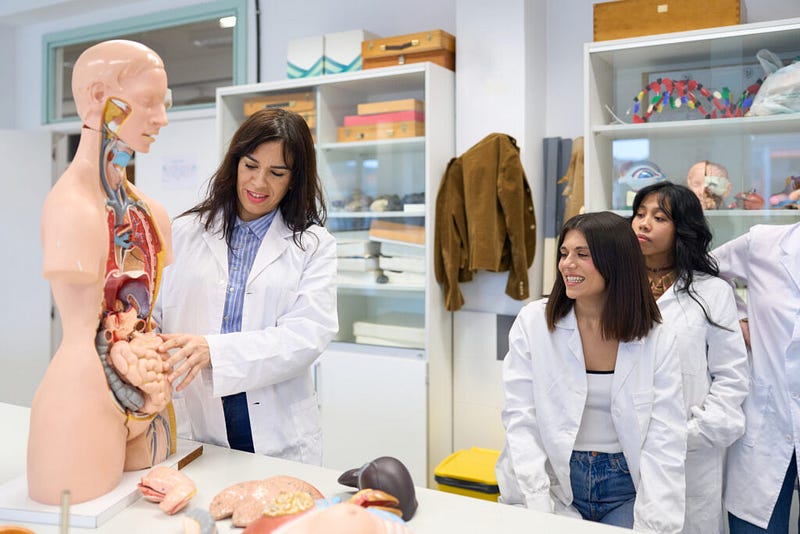
Biology is a fascinating subject that reveals how life functions at every level, from the smallest cell to entire ecosystems. While many students find biology intriguing, it can also be challenging due to its detailed concepts and scientific terminology. Learning biology effectively requires more than memorization; it involves understanding processes, applying knowledge, and connecting ideas. This is where a skilled biology tutor can make a meaningful difference.
A tutor helps students navigate complex topics and provides support tailored to their individual needs. With personalized guidance, students can better understand difficult concepts, improve problem-solving skills, and gain confidence in their abilities. By learning at a comfortable pace and asking questions freely, students often discover that biology is more approachable and enjoyable than they initially thought.
Understanding the Challenges of Biology Learning
Many students struggle with biology because the subject builds on layers of interconnected knowledge. For example, understanding genetics requires familiarity with cell division and DNA structure, while ecology depends on an understanding of energy flow and population dynamics. Without a clear grasp of foundational concepts, students may find advanced topics confusing.
Additionally, biology combines theoretical knowledge with practical application. It is not enough to memorize terms; students must apply their understanding in experiments, lab reports, and problem-solving exercises. A tutor provides the guidance needed to connect these ideas, turning confusing material into manageable lessons.
Personalized Learning Through One-on-One Tutoring
Individual tutoring allows students to focus on their unique learning needs. Unlike classroom instruction, where teachers must follow a set schedule, tutoring sessions are flexible and student-centered. Tutors can adjust the pace, revisit difficult topics, and provide clear explanations tailored to the student’s understanding.
This personalized approach helps reduce stress and frustration. Students gain confidence as they master challenging topics, and tutors can introduce learning techniques that suit the student’s style. Whether it’s through visual aids, diagrams, or step-by-step explanations, one-on-one tutoring ensures that learning is effective and meaningful.
Breaking Down Complex Biology Topics
Biology topics often involve multiple steps, processes, or cycles. Concepts like cellular respiration, mitosis, photosynthesis, and DNA replication can feel overwhelming if studied all at once. Tutors help by breaking these topics into smaller, more understandable parts, making it easier for students to learn and retain information.
By simplifying complex material, tutors guide students to see the connections between ideas. This approach not only improves understanding but also prepares students to apply knowledge in exams, lab work, or real-world scenarios.
Flexible Tutoring Options to Fit Any Schedule
Modern tutoring offers flexibility to meet diverse student needs. Students can choose in-person or online sessions, depending on their preferences. Online tutoring allows learning from home, creating a relaxed environment and saving travel time. In-person sessions provide hands-on support and direct interaction when needed.
Tutoring sessions can be scheduled weekly, biweekly, or even as short-term support before exams. This flexibility ensures that students can maintain consistent learning without disrupting their daily routines.
Building Long-Term Academic Skills
A biology tutor does more than help students complete assignments or prepare for tests. Tutors teach study habits, note-taking techniques, and strategies for understanding complex topics. These skills improve overall academic performance and are valuable beyond biology class.
Students also learn to approach learning with confidence. By understanding how to analyze questions, apply knowledge, and solve problems systematically, learners become more independent and better prepared for future coursework.
Supporting Lab Work and Practical Understanding
Laboratory work is an essential part of biology education. Students often struggle with experiments, data interpretation, and recording observations accurately. Tutors provide guidance on lab techniques, explain scientific procedures, and help students understand how theoretical knowledge applies to practical experiments.
This hands-on support ensures that students not only complete lab work correctly but also gain a deeper understanding of scientific principles. Over time, this experience builds confidence in both academics and real-world applications.
How Tutoring Enhances Exam Preparation
Preparing for biology exams can be stressful, especially when topics are broad and detailed. Tutors help students organize study materials, focus on key concepts, and practice answering questions similar to those on tests. This targeted preparation reduces anxiety and improves performance.
Students also benefit from learning how to approach different types of questions, including multiple-choice, short answer, and essay formats. Tutors guide learners in thinking critically and applying knowledge rather than relying solely on memorization.
Encouraging a Positive Learning Environment
A supportive and patient learning environment is crucial for student success. Tutors create a space where students feel comfortable asking questions and expressing difficulties without fear of judgment. This encouragement often leads to a stronger interest in biology and improved motivation to learn.
Over time, students begin to enjoy studying biology and develop curiosity about living systems. Tutors help them recognize patterns, see connections, and appreciate how the subject applies to real-life processes.
FAQ
Who benefits from biology tutoring?
Students at any level can benefit, whether they need help with foundational concepts, advanced topics, or exam preparation. Tutoring provides clarity, support, and confidence in learning.
Can online tutoring be as effective as in-person sessions?
Yes. Online tutoring is highly effective when sessions are interactive, explanations are clear, and materials are shared digitally. It offers convenience without compromising learning quality.
How often should tutoring sessions be scheduled?
The frequency depends on the student’s needs. Some require weekly sessions, while others benefit from short-term tutoring before exams or assignments.
Can tutors help with practical lab skills?
Absolutely. Tutors guide students in understanding procedures, recording observations, and applying theoretical knowledge to experiments.
How quickly can students see improvement?
Progress varies, but many students notice improvements in understanding and performance within a few sessions, especially with consistent practice and guidance.