
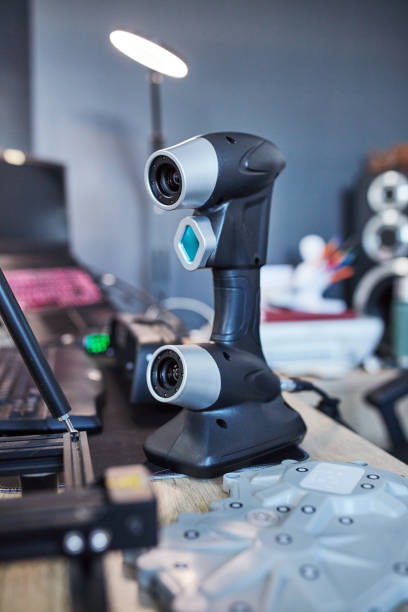
The line between the physical and digital worlds is becoming smaller every year. Today, creators no longer have to start every project from a blank screen. With a modern 3d scanner, real-world objects can be captured, digitized, modified, and transformed into entirely new creations.
This technology is changing how designers, engineers, artists, educators, and hobbyists approach their work. Instead of spending hours manually recreating shapes and measurements in software, users can scan existing objects and instantly begin working with accurate digital models.
As 3D scanning technology continues to advance in 2026, it is unlocking new levels of creativity and efficiency. From product design and prototyping to art and manufacturing, scanning is helping people turn everyday objects into limitless creative possibilities.
Understanding How 3D Scanning Works
A 3D scanner is a device that captures the shape, dimensions, and surface details of a physical object. Using technologies such as structured light or laser scanning, the device records thousands of data points across the object’s surface.
The collected information is then processed into a digital 3D model. This model can be viewed, edited, analyzed, shared, or prepared for manufacturing and 3D printing.
Unlike traditional measuring tools, which only capture specific dimensions, a scanner records the complete geometry of an object. This provides a much more detailed and accurate digital representation.
The result is a workflow that is both faster and more flexible than manual modeling methods.
Bringing Real-World Objects into Digital Design
One of the biggest advantages of scanning technology is its ability to bridge the gap between physical objects and digital creation.
Almost any object can become the starting point for a new project. A designer might scan a handmade prototype, an artist might digitize a sculpture, or an engineer might capture a machine component for redesign.
Once the object exists as a digital model, the possibilities expand dramatically.
Users can:
- Modify shapes and dimensions
- Combine multiple objects into one design
- Add new features and details
- Create customized variations
- Prepare models for production or printing
This flexibility allows creators to build upon real-world inspiration rather than starting from scratch.
Speeding Up the Creative Process
Creativity often involves experimentation. Ideas evolve through testing, refining, and making adjustments.
Traditional modeling can slow this process because every modification must be built manually. Scanning technology eliminates much of this work by providing an accurate starting point.
A typical workflow may look like this:
Scan → Edit → Prototype → Improve → Finalize
This process allows creators to focus on innovation rather than spending countless hours recreating existing objects.
The ability to move quickly between physical and digital environments helps speed up development while maintaining precision.
Transforming 3D Printing Workflows
The growth of 3D printing has increased demand for accurate digital models. Creating those models manually can often be one of the most time-consuming parts of a project.
This is where scanning technology becomes especially valuable.
A 3d printer scanner allows users to capture real-world objects and convert them into files that can be refined and prepared for printing. Instead of measuring every detail manually, creators can work directly from scanned data.
This provides several benefits:
- Faster model creation
- Improved accuracy
- Easier replication of objects
- Better customization opportunities
- Reduced design errors
For designers and makers, the combination of scanning and 3D printing creates a highly efficient workflow that supports both creativity and productivity.
Supporting Reverse Engineering and Innovation
Many industries use scanning technology for reverse engineering. Sometimes a part exists physically, but the original digital design files are missing or unavailable.
By scanning the object, engineers can create a detailed digital model and use it to reproduce, repair, or improve the design.
This process is commonly used for:
- Replacing damaged machine parts
- Recreating discontinued components
- Updating older products
- Customizing existing designs
- Improving manufacturing processes
Instead of relying on manual measurements, professionals can work from highly accurate digital representations.
This not only saves time but also improves reliability and consistency.
Revopoint and Modern 3D Scanning Solutions
As scanning technology becomes more important across industries, Revopoint is helping to make advanced solutions accessible to a wider audience.
At Revopoint, users can explore a range of portable and high-precision scanning devices designed for creators, engineers, manufacturers, educators, and 3D printing enthusiasts.
Revopoint scanners are recognized for combining portability, ease of use, and detailed scanning performance.
Some notable features include:
- High-resolution scanning for capturing fine details
- Real-time tracking for smoother scan capture
- Portable handheld designs for flexible workflows
- Compatibility with popular CAD and 3D printing software
- Solutions suitable for both beginners and professionals
These capabilities help users integrate scanning technology into a variety of creative and technical projects.
Expanding Opportunities Across Industries
The applications of 3D scanning continue to grow every year.
- Product Design: Designers can scan prototypes and improve them digitally before moving into production.
- Manufacturing: Companies use scanning for quality control, inspection, and process optimization.
- Engineering: Engineers rely on scanned data for analysis, reverse engineering, and product development.
- Education: Students can learn digital design concepts by working with real-world objects and transforming them into digital models.
- Art and Creative Projects: Artists can preserve physical creations digitally while exploring new forms of expression.
These examples shows how scanning technology is creating opportunities in both technical and creative fields.
Final Thoughts
The ability to capture physical objects and transform them into digital assets is changing how people create and innovate. A 3d scanner gives users the power to bring real-world objects into digital environments quickly and accurately.
Whether supporting product design, reverse engineering, artistic projects, or manufacturing, scanning technology opens the door to new possibilities. Creators can move seamlessly from physical objects to digital models and finished products.
With advanced solutions from Revopoint, 3D scanning is helping designers, engineers, makers, and artists unlock new levels of creativity, efficiency, and innovation in 2026 and beyond.