
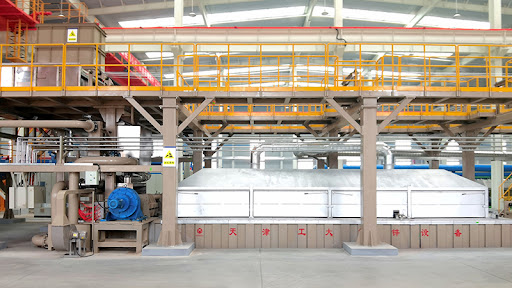
Steel products used in construction, transportation, and industrial manufacturing are constantly exposed to moisture and environmental conditions that can cause corrosion. To improve durability and extend service life, manufacturers rely on galvanizing technology to create a protective zinc coating on steel surfaces. Among the most widely used methods is the hot dip galvanizing process, which provides strong corrosion resistance and long-term reliability.
A modern hot dip galvanizing line follows a carefully controlled process flow that transforms raw steel into a corrosion-resistant material suitable for demanding applications. From cleaning and pretreatment to zinc coating and cooling, each stage plays an important role in ensuring coating quality and production efficiency.
Importance of Process Control in Galvanizing
The effectiveness of galvanized steel depends heavily on the consistency of the production process. Every stage in the galvanizing line must be optimized to ensure proper coating adhesion, thickness, and surface finish.
Poor surface preparation or incorrect temperature control can affect the bonding between zinc and steel. For this reason, modern galvanizing systems use automation and monitoring technologies to maintain stable operating conditions throughout production.
Step 1: Surface Cleaning and Degreasing
The first stage of the galvanizing process involves removing contaminants from the steel surface. Steel coils or sheets often contain oil, grease, dirt, and other residues from previous manufacturing operations.
Cleaning is usually performed using alkaline solutions or chemical degreasers. This stage is essential because contaminants can prevent zinc from bonding properly to the steel.
After degreasing, the steel is rinsed thoroughly to remove any remaining cleaning agents before moving to the next stage.
Step 2: Pickling for Oxide Removal
Once the steel is cleaned, it enters the pickling section. During this step, the steel is treated with acidic solutions, commonly hydrochloric or sulfuric acid, to remove rust, scale, and surface oxides.
Pickling creates a chemically clean metal surface that improves zinc adhesion during galvanizing. Without proper oxide removal, the final coating may become uneven or weak.
The steel is then rinsed again to eliminate any acid residue before further processing.
Step 3: Flux Treatment
Fluxing is a critical stage that prepares the steel surface for immersion in molten zinc. A flux solution, typically containing zinc ammonium chloride, is applied to the steel to prevent oxidation before galvanizing.
This treatment helps maintain a clean surface while improving the wetting reaction between steel and molten zinc. As a result, the zinc coating becomes more uniform and strongly bonded to the base metal.
In continuous production lines, flux application is carefully controlled to ensure consistent coating quality across large steel surfaces.
Step 4: Drying and Preheating
Before entering the zinc bath, the steel must be dried and preheated. Any remaining moisture can create safety hazards or interfere with coating quality during immersion.
Preheating also helps reduce thermal shock when the steel enters the molten zinc bath. Maintaining the correct temperature improves coating adhesion and supports smoother production flow.
Modern galvanizing lines use automated furnace systems to regulate heating conditions accurately.
Step 5: Immersion in Molten Zinc
The core stage of the process is hot dip galvanizing itself. The prepared steel is immersed in a bath of molten zinc, typically heated to around 450°C.
During immersion, zinc reacts metallurgically with the steel surface to form multiple zinc-iron alloy layers. These layers create a durable protective barrier that resists corrosion and environmental damage.
The thickness of the coating depends on factors such as immersion time, steel composition, and bath temperature.
Step 6: Air Wiping and Coating Control
After leaving the zinc bath, excess zinc is removed using air knives or wiping systems. High-pressure air controls the coating thickness and ensures a smooth, uniform finish.
This stage is important for maintaining product consistency and meeting industry specifications. Proper coating control also improves the appearance and performance of galvanized steel products.
Automated systems continuously monitor coating thickness to achieve precise production standards.
Step 7: Cooling and Inspection
Once coated, the steel passes through cooling sections where the zinc layer solidifies. Controlled cooling helps maintain coating integrity and prevents surface defects.
After cooling, the galvanized steel undergoes inspection and quality testing. Manufacturers check coating thickness, surface appearance, adhesion strength, and overall uniformity.
Only materials that meet quality standards proceed to packaging and delivery.
Applications of Galvanized Steel Products
Steel processed through a hot dip galvanizing line is widely used in industries that require long-lasting corrosion protection.
Common applications include:
- Structural steel components
- Roofing and wall panels
- Automotive parts
- Electrical transmission towers
- Agricultural machinery
- Industrial storage systems
The durability of galvanized steel makes it especially valuable in outdoor and high-humidity environments.
Conclusion
The hot dip galvanizing process involves several carefully controlled stages, from cleaning and pickling to zinc coating and inspection. Each step contributes to the creation of a durable protective layer that helps steel resist corrosion for many years.
By combining advanced process control with efficient coating technology, modern galvanizing lines support the production of high-quality steel products used across multiple industries worldwide.