

In the food service industry, where margins are razor-thin and competition is relentless, profitability isn’t just a goal — it’s a survival requirement. For financial managers overseeing restaurant chains, catering operations, or institutional kitchens, every purchasing decision carries significant weight. Yet one of the most persistent challenges they face is accurately calculating profits and building a compelling case for investing in industrial kitchen equipment.
The stakes are high. A poorly justified equipment purchase can strain budgets, while an overlooked opportunity to upgrade can quietly erode efficiency and profits over time. The complexity deepens when factoring in variables like operational costs, equipment lifespan, and supplier pricing models.
This guide cuts through that complexity. Whether you’re evaluating a new commercial oven, a high-capacity refrigeration system, or a full kitchen overhaul, you’ll find practical frameworks here for understanding profit margins, mastering ROI calculations, and making smarter procurement decisions. We’ll also explore how factory direct sales can reduce acquisition costs and how professional-grade performance translates directly into long-term financial gains. By the end, you’ll have the tools to make confident, data-driven investment decisions.
Understanding Profit Margins in Industrial Kitchen Operations
Profit margin is the percentage of revenue remaining after all costs are deducted — and in food service, this number is notoriously unforgiving. For financial managers overseeing industrial kitchens, understanding exactly where margins are gained or lost is foundational to every strategic decision, particularly when it comes to equipment procurement.
Several interconnected factors shape profit margins in kitchen operations. Equipment efficiency sits at the top of that list. A commercial fryer that consumes 20% more energy than its modern equivalent, or a refrigeration unit that requires frequent servicing, quietly bleeds profitability month after month. These costs rarely appear as a single dramatic line item — they accumulate gradually, making them easy to overlook without deliberate tracking.
Operational costs extend beyond energy consumption. Labor efficiency is directly tied to how well equipment performs. Slow cooking times, inconsistent temperature control, or frequent breakdowns force staff to compensate manually, increasing labor hours and reducing throughput during peak service periods. Each of these inefficiencies translates into measurable margin compression.
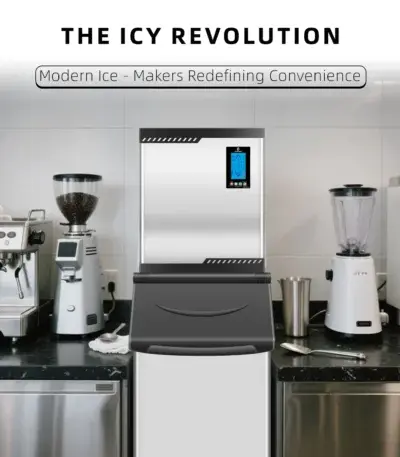
Food waste represents another critical variable. Equipment that fails to maintain precise temperatures or deliver consistent results contributes to spoilage and rejected output — costs that compound quickly in high-volume operations. A single malfunctioning blast chiller or underperforming ice maker, for instance, can result in hundreds of dollars in wasted inventory per incident. Brands like Smartool have demonstrated how purpose-built commercial ice-making equipment can reduce such losses by maintaining consistent output even under sustained demand.

For financial managers, developing a clear picture of these margin drivers means going beyond surface-level cost reviews. It requires correlating equipment performance data with operational outcomes. Only with this level of insight can purchasing decisions be evaluated not just on acquisition cost, but on their true impact on the bottom line.
Mastering ROI Calculations for Industrial Kitchen Equipment
For financial managers, return on investment isn’t just a metric — it’s the language that turns purchasing proposals into approved budgets. When evaluating industrial kitchen equipment, a rigorous ROI framework separates emotionally driven decisions from financially sound ones, giving stakeholders the hard numbers they need to act with confidence.
What is ROI and Why It Matters for Financial Managers
ROI measures the financial return generated by an investment relative to its cost, expressed as a percentage. In the context of industrial kitchen equipment, it quantifies how much value a new piece of machinery — whether a combi oven, a high-efficiency dishwasher, or a commercial blast chiller — delivers against its total acquisition and operational costs. For financial managers, this matters because equipment purchases rarely justify themselves on performance specs alone. Budget committees and executive stakeholders demand clear, defensible numbers. A well-constructed ROI calculation transforms a qualitative argument (“this oven is faster and more reliable”) into a quantitative one (“this investment returns 140% over three years”), making approvals significantly easier to secure.
Step-by-Step Guide to Calculating ROI
Start by identifying the total investment cost, which includes purchase price, installation, staff training, and any facility modifications. Next, quantify the expected gains — these typically include energy savings, reduced labor hours, lower maintenance expenses, and decreased food waste. Use the standard formula: ROI (%) = [(Net Gain from Investment − Cost of Investment) ÷ Cost of Investment] × 100. For example, if a high-efficiency refrigeration unit costs $18,000 and generates $6,000 in annual savings across energy and maintenance, the three-year net gain is $18,000 — yielding a 100% ROI. Always calculate across the equipment’s realistic lifespan, not just the first year, to capture the full financial picture and present the most compelling case to decision-makers.
Leveraging Factory Direct Sales for Cost Efficiency
When procurement teams bypass traditional distribution channels and purchase industrial kitchen equipment directly from manufacturers, the financial advantages can be substantial. Factory direct sales eliminate the markup layers added by wholesalers and retailers, often reducing acquisition costs by 15% to 30% — savings that flow directly into improved profit margins and stronger ROI projections.
Beyond price reductions, direct manufacturer relationships offer several operational benefits that compound over time. Financial managers gain access to accurate, unfiltered product specifications, making it easier to compare equipment capabilities against operational requirements. Manufacturers can also provide customized configurations — whether that’s a specific voltage rating, capacity adjustment, or material specification — without the premium typically charged through intermediaries. This precision reduces the risk of purchasing equipment that underperforms in your specific kitchen environment.
Support and warranty terms tend to be more favorable in direct purchasing arrangements as well. When issues arise, resolving them with the manufacturer directly cuts response times and eliminates the frustrating back-and-forth that often occurs through third-party channels. For high-volume operations where equipment downtime directly impacts revenue, this responsiveness has real dollar value. When evaluating factory direct options, financial managers should request detailed cost breakdowns, verify warranty coverage terms, and confirm the manufacturer’s track record with comparable operations. These due diligence steps ensure that the cost savings achieved at purchase aren’t offset by inadequate post-sale support down the line.
Ensuring Professional-grade Performance to Maximize Profit
The difference between commercial-grade and professional-grade kitchen equipment isn’t just a marketing distinction — it’s a measurable financial one. Professional-grade equipment is engineered for sustained high-volume output, tighter operational tolerances, and longer service intervals. For financial managers, these characteristics translate directly into cost reductions and stronger profit margins over the equipment’s lifespan.
Efficiency is the most immediate benefit. Professional-grade combi ovens, for instance, use precise humidity and temperature control to reduce cooking times and minimize energy consumption simultaneously. A unit that completes the same output in less time with less energy doesn’t just lower utility bills — it increases kitchen throughput, allowing operations to serve more covers or fulfill more orders without adding labor costs. That capacity gain compounds into meaningful revenue growth over a full fiscal year.
Downtime is where the financial impact becomes most acute. Equipment failures during peak service hours don’t just create operational chaos — they generate quantifiable revenue losses. Professional-grade machinery, built with higher-quality components and more robust construction, experiences fewer breakdowns and requires less frequent maintenance intervention. When maintenance is needed, parts are typically standardized and more readily available, reducing both repair costs and the duration of service interruptions.
Long-term cost of ownership is the metric that truly separates professional-grade investments from budget alternatives. A unit purchased at a lower price point that requires replacement in five years will almost always cost more than a professional-grade system with a ten-year service life when total expenditure is calculated honestly. Financial managers who incorporate lifespan, maintenance frequency, and efficiency ratings into their procurement analysis consistently find that professional-grade performance delivers superior ROI — making it not a premium expense, but a strategically sound financial commitment.
Practical Steps for Profit Calculation and Investment Justification
Translating financial theory into actionable procurement decisions requires a structured approach. For financial managers navigating equipment investments, these five steps provide a clear path from assessment to stakeholder approval.
1. Assess current profit margins with precision. Begin by auditing existing equipment performance against operational costs. Pull energy bills, maintenance logs, labor hour reports, and food waste records for the past 12 months. Map these costs to specific equipment, identifying which units are quietly compressing margins. This baseline gives you the contrast needed to make any investment case credible.
2. Conduct a full ROI analysis for each equipment candidate. Apply the ROI formula outlined earlier — factoring in purchase price, installation, training, and projected savings across energy, labor, and maintenance. Run calculations across the equipment’s full service lifespan, not just year one. Where possible, request energy performance data and maintenance frequency statistics directly from manufacturers to strengthen your projections.
3. Evaluate factory direct sales options systematically. Contact manufacturers directly and request itemized quotes alongside warranty terms and post-sale support documentation. Compare these against distributor pricing to quantify the savings differential. Verify the manufacturer’s reputation by speaking with existing clients in comparable operations before committing.
4. Confirm professional-grade performance standards are met. Review equipment specifications against your operational volume requirements. Prioritize units with documented efficiency ratings, standardized replacement parts, and proven service intervals that align with your kitchen’s throughput demands.
5. Build a stakeholder justification report. Compile your findings into a concise investment brief — include the current cost baseline, projected ROI, acquisition savings from direct purchasing, and long-term ownership cost comparisons. Quantified data presented clearly is what converts skeptical budget committees into confident approvers.
From Cost Management to Proactive Profit Optimization
Profitability in the food service industry is never accidental — it’s the result of deliberate, data-driven decisions made at every level of operations, including how equipment is selected, purchased, and evaluated over time. For financial managers, the frameworks covered in this guide provide a concrete foundation for doing exactly that.
Accurate profit margin analysis reveals where operational costs are quietly eroding returns. Rigorous ROI calculations transform equipment proposals from speculative requests into defensible financial commitments. Factory direct purchasing removes unnecessary cost layers, improving both acquisition economics and long-term supplier relationships. And prioritizing professional-grade performance ensures that initial savings aren’t undermined by premature failures, excessive downtime, or escalating maintenance costs.
The practical five-step process outlined here gives financial managers a repeatable methodology — one that works whether you’re evaluating a single replacement unit or planning a full kitchen overhaul. Applied consistently, these strategies don’t just improve individual purchasing decisions; they build a culture of financial rigor that strengthens the entire operation over time.
The food service industry will always be demanding. But with the right analytical tools and procurement strategies in place, financial managers can move from reactive cost management to proactive profit optimization — making confident, well-justified investment decisions that drive sustainable, long-term success.
